
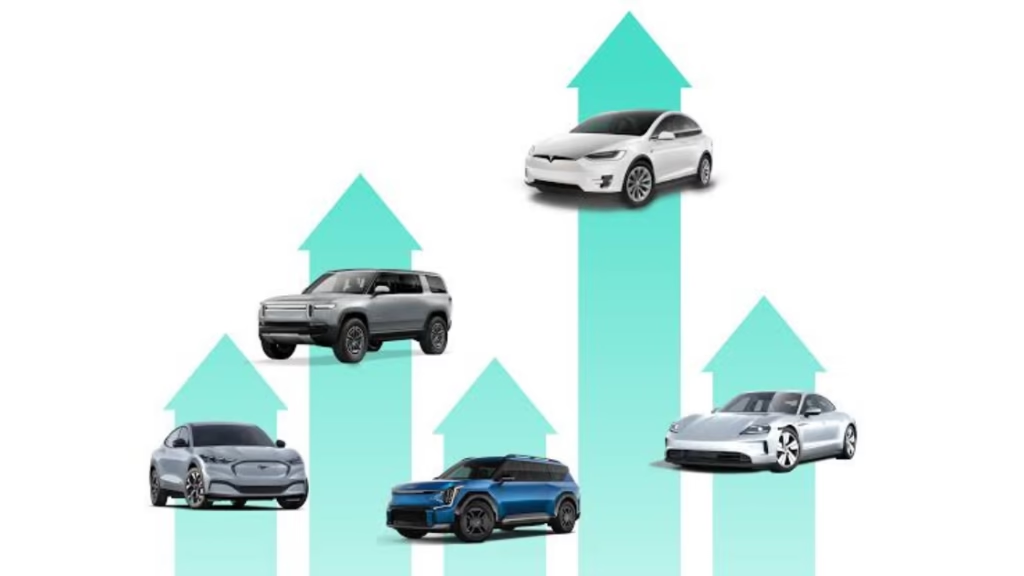
Buying an electric vehicle does not necessarily mean buying a brand-new one. For many Canadians, a carefully selected pre-owned EV can offer a more manageable purchase price while still providing the advantages of electric driving. The challenge is finding financing that makes sense for both the vehicle and your long-term budget. That is where used EV financing Canada becomes important.
Financing a pre-owned electric vehicle requires more than simply comparing monthly payments. Lenders may consider your credit history, income, existing debts, the vehicle’s age and mileage, its value, and the requested loan amount. At the same time, you need to examine battery condition, remaining warranty coverage, charging requirements, insurance costs, and the total cost of borrowing. A lower vehicle price does not automatically mean a cheaper loan.
This guide explains how used EV financing Canada works, what lenders may look for, how to compare offers, how government incentives apply to pre-owned vehicles, and how to prepare an application that gives you the strongest possible chance of approval.
What Is Used EV Financing Canada?
Used EV financing Canada refers to financing used or pre-owned electric vehicles through a structured auto loan rather than paying the entire purchase price upfront. Depending on the lender and transaction, financing may be available for eligible pre-owned battery-electric vehicles and other electric vehicle configurations.
The basic process is straightforward. You choose a vehicle, determine how much you need to borrow, submit your financial information, and the lender evaluates your application. If approved, the loan is generally repaid through scheduled payments over an agreed term. The vehicle may serve as security for the financing, depending on the structure of the loan.
For buyers, pre-owned electric car loans Canada can make an EV accessible at a lower purchase price than a comparable new vehicle. However, the right financing decision depends on the complete transaction rather than the monthly payment alone.
Before accepting an offer, review the interest rate, term, amount financed, total borrowing cost, payment frequency, fees, and any conditions attached to the agreement. The Financial Consumer Agency of Canada advises borrowers to carefully review disclosure information before finalizing a car loan because it explains the total cost of borrowing and other important terms.
Why Pre-Owned EV Financing Canada Can Make Financial Sense
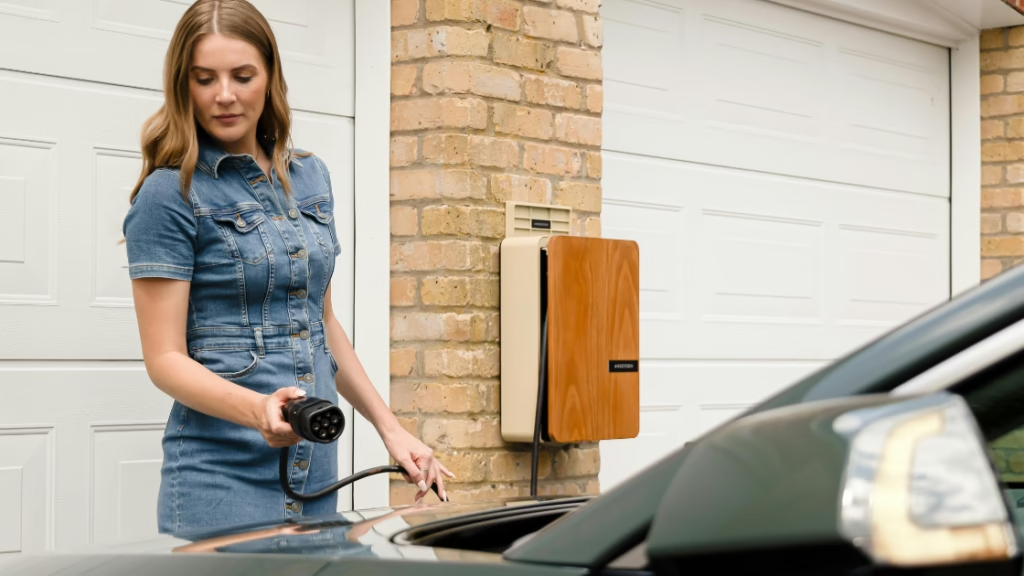
The primary attraction of pre-owned electric car loans Canada is the opportunity to purchase an EV at a lower initial price. New vehicles can carry significant upfront costs, while depreciation may create opportunities in the pre-owned market.
A used EV can also allow a buyer to choose a better-equipped vehicle without financing the full price of a new model. For example, someone with a fixed budget may be able to purchase a pre-owned EV with features that would otherwise require a much larger new-vehicle loan.
However, affordability should be assessed carefully. A lower purchase price can be offset by a higher financing rate, an older battery, increased maintenance requirements, insurance costs, or a shorter available loan term.
That is why used EV financing Canada should always be evaluated using the total cost of ownership. Consider the purchase price, financing cost, expected charging expenses, insurance, maintenance, registration-related expenses, and potential battery-related costs.
The Government of Canada notes that EV ownership can provide savings on fuel and maintenance, but individual savings depend on how the vehicle is used and the cost of electricity and other ownership expenses.
Certified Used EV Financing Canada: What Should You Check?
Certified used EV financing Canada can be particularly attractive when the vehicle has undergone a documented inspection and comes with additional warranty or certification benefits. Certification, however, should not replace your own financial and vehicle due diligence.
When reviewing a certified pre-owned EV, ask for documentation covering the vehicle’s inspection, accident history, service records, battery-related information, warranty coverage, and remaining manufacturer coverage.
Battery condition deserves special attention because it is one of the most important components of an electric vehicle. Ask whether the seller can provide battery health information and whether any battery warranty remains transferable to you.
Also verify the vehicle identification number and obtain a vehicle history report. Look for accident claims, salvage or rebuilt status, unusually high mileage, previous commercial use, and gaps in the service history.
For certified used EV financing Canada, the financing decision and vehicle inspection should be treated as two separate decisions. Approval does not mean the vehicle is automatically a good purchase.
How Used Electric Vehicle Auto Loans Canada Work
Used electric vehicle auto loans Canada generally follow the same fundamental structure as other vehicle financing, but lenders may apply additional vehicle-specific criteria.
The lender first assesses the borrower. This can include credit history, income, employment or income stability, existing debts, and other financial information. Credit scores are important, but they are not the only factor lenders may consider. TransUnion explains that lenders can use credit scores together with other information when assessing creditworthiness.
The lender may then assess the vehicle itself. Vehicle age, mileage, market value, condition, and the requested loan amount can influence financing availability and terms.
Finally, the lender determines the structure of the loan. This may include the interest rate, amount financed, repayment period, and payment schedule.
A buyer should therefore avoid assuming that the same financing terms available for a new vehicle will automatically apply to a pre-owned EV.
Step-by-Step Guide to Used EV Financing Canada
Step 1: Establish Your Used EV Financing Canada Budget
Start with the total amount you can comfortably allocate toward the vehicle. Used EV financing Canada should fit within your broader household budget rather than being based solely on the payment a lender says you can afford.
Include insurance, charging, maintenance, registration, parking where applicable, and an emergency reserve. A payment that appears affordable can become difficult if the vehicle consumes too much of your monthly cash flow.
Step 2: Review Your Credit Before Applying
Your credit profile can influence the financing options available to you. TransUnion states that credit scores generally range from 300 to 900 in Canada and that lenders may use them to evaluate credit risk and determine lending decisions and rates.
Before applying for used electric vehicle auto loans Canada, review your credit report for inaccurate information. Make sure outstanding accounts, payment histories, and personal information are correct.
If your credit profile has weaknesses, avoid assuming that approval is impossible. Instead, consider whether reducing outstanding balances, improving payment consistency, increasing your down payment, or selecting a less expensive vehicle can strengthen the application.
Step 3: Compare the Vehicle, Not Just the Price
For certified used EV financing Canada, examine the vehicle’s complete history. Check battery information, mileage, accident records, charging equipment, warranty status, tires, brakes, suspension, and overall condition.
A vehicle that costs $24,000 may not necessarily be the better financial choice than one priced at $26,000 if the cheaper vehicle has significantly higher mileage or requires major repairs.
Step 4: Compare Financing Offers
Do not choose financing simply because it produces the lowest monthly payment. Compare the interest rate, loan term, total interest, fees, amount financed, and total repayment.
The Bank of Canada publishes lending-rate statistics, including auto-loan rates reported by chartered banks. For example, its May 2026 data showed a 6.66% rate for funds advanced for auto loans. This is a market-level statistical reference, not a guaranteed rate for an individual borrower.
Step 5: Review the Final Agreement
Before signing, confirm that the final documents match the financing offer you agreed to. Check the amount borrowed, payment amount, frequency, term, interest rate, fees, insurance requirements, and any additional products.
The Financial Consumer Agency of Canada recommends obtaining and reviewing the disclosure statement because it provides important information about the total cost of borrowing.
Used EV Loan Rates Canada: Understanding the Real Cost
Best used EV loan rates Canada depend on multiple factors, including creditworthiness, vehicle characteristics, loan amount, term, lender, and overall risk assessment. There is no single rate available to every Canadian borrower.
The following examples are illustrative calculations rather than advertised lending offers.
| Loan Amount | Illustrative Rate | Term | Approx. Monthly Payment | Approx. Total Interest |
|---|---|---|---|---|
| $20,000 | 6.99% | 60 months | $396 | $3,760 |
| $20,000 | 9.99% | 60 months | $425 | $5,500 |
| $25,000 | 9.99% | 60 months | $531 | $6,860 |
| $25,000 | 12.99% | 60 months | $568 | $9,080 |
These examples demonstrate why best used EV loan rates Canada should be evaluated over the entire repayment period. A difference of several percentage points can materially change the total cost.
A longer term can reduce the monthly payment but increase the amount of interest paid. It can also increase the risk that the outstanding loan balance remains high while the vehicle depreciates.
A Practical Used EV Financing Canada Example
Consider a Canadian buyer purchasing a pre-owned EV for $25,000 and making a $5,000 down payment. The amount financed would be approximately $20,000 before applicable taxes, fees, and other transaction adjustments.
If the borrower receives a hypothetical 7% rate over five years, the payment would be considerably lower than financing the full $25,000. The down payment reduces the amount borrowed and can also reduce total interest.
Now consider a buyer who finances the entire purchase at a substantially higher rate over a longer term. The monthly payment may initially appear attractive, but the total borrowing cost can be much higher.
This is why used electric vehicle auto loans Canada should be compared using both monthly affordability and total repayment cost.
Banks vs Lenders vs Brokers for Used EV Financing Canada
Different financing channels can serve different borrower needs.
| Financing Source | Potential Advantage | Potential Limitation |
|---|---|---|
| Banks | Established financial relationships and conventional lending products | May have stricter qualification criteria |
| Credit unions | Potentially personalized lending relationships | Membership and eligibility rules may apply |
| Specialized lenders | May consider broader borrower profiles | Rates can be higher depending on risk |
| Financing brokers | Can help compare available lender options | Terms vary by lender and borrower |
| Dealership financing | Convenient at the point of purchase | Buyers should compare the offer independently |
For used EV financing Canada, the best source depends on your credit profile, income, vehicle, and priorities. A borrower with excellent credit may prioritize the lowest available rate, while someone with a limited credit history may place greater value on approval flexibility.
A broker can potentially help connect borrowers with multiple financing sources, but you should still understand who is providing the financing, what the rate is, and what fees or conditions apply.
Eligibility Requirements for Used Electric Vehicle Auto Loans Canada
Used electric vehicle auto loans Canada typically require enough information for a lender to assess both repayment ability and vehicle suitability.
Common documentation may include:
- Government-issued identification
- Proof of Canadian residence
- Proof of income
- Employment information
- Banking information
- Details about existing financial obligations
- Vehicle identification and purchase information
- Down-payment information, where applicable
The exact requirements vary by lender.
Credit history is one consideration, but income and affordability also matter. A strong income with a manageable debt load can improve an application even when the credit profile is not perfect.
Similarly, a large down payment can reduce the amount financed and may strengthen the overall transaction.
Does the 2026 Federal EV Incentive Apply to Used EVs?

This is an important distinction for anyone researching used EV financing Canada.
Canada’s current Electric Vehicle Affordability Program provides incentives for eligible new EV purchases and leases. Transport Canada explicitly states that pre-owned EVs are not eligible. Demonstrator vehicles can qualify under specific conditions, including an odometer reading below 10,000 kilometres.
The current program began in 2026 and offers incentives of up to $5,000 for eligible battery-electric and fuel-cell vehicles and up to $2,500 for eligible plug-in hybrids, subject to the program’s eligibility requirements and declining incentive structure.
That means a buyer should not assume that purchasing a used EV creates eligibility for the federal incentive. If the vehicle is genuinely pre-owned, the federal EVAP incentive does not apply.
This distinction can materially affect your budget. If a new eligible EV qualifies for an incentive while a comparable used vehicle does not, compare the final transaction costs rather than assuming used is automatically cheaper.
The previous iZEV program also ended on March 31, 2025, so older articles discussing its incentives should not be treated as current guidance.
Canadian Case Study: Strong Credit and a Large Down Payment
A buyer with stable income and strong credit is considering a $30,000 pre-owned EV. Instead of financing the entire amount, the buyer contributes $7,000 and finances the remaining purchase amount.
The buyer compares multiple best used EV loan rates Canada offers and chooses a shorter term with a manageable payment. The larger down payment reduces the financed balance and lowers the interest paid over time.
The important lesson is not that every buyer should make a specific down payment. Rather, the case demonstrates how reducing the amount borrowed can improve the overall economics of used EV financing Canada.
Canadian Case Study: Limited Credit History
A second buyer has a shorter Canadian credit history and is concerned about approval. Instead of choosing the most expensive EV that fits the lender’s maximum approval amount, the buyer selects a less expensive pre-owned vehicle, provides complete income documentation, and compares financing options.
For this buyer, certified used EV financing Canada may be especially useful if certification provides stronger documentation about vehicle condition and warranty coverage.
The key lesson is affordability. Approval for a larger loan does not mean borrowing the maximum amount is financially wise.
Canadian Case Study: Choosing Between New and Used
A third buyer compares a pre-owned EV with a new eligible EV. The used vehicle has a lower sticker price, but the new vehicle qualifies for the current federal EVAP incentive.
The buyer calculates the final purchase price, financing cost, insurance, expected charging expenses, warranty coverage, and expected ownership period.
The result demonstrates an important principle: used EV financing Canada should be compared against the complete cost of alternatives, not simply the advertised vehicle price.
How to Improve Approval Chances for Used EV Financing Canada
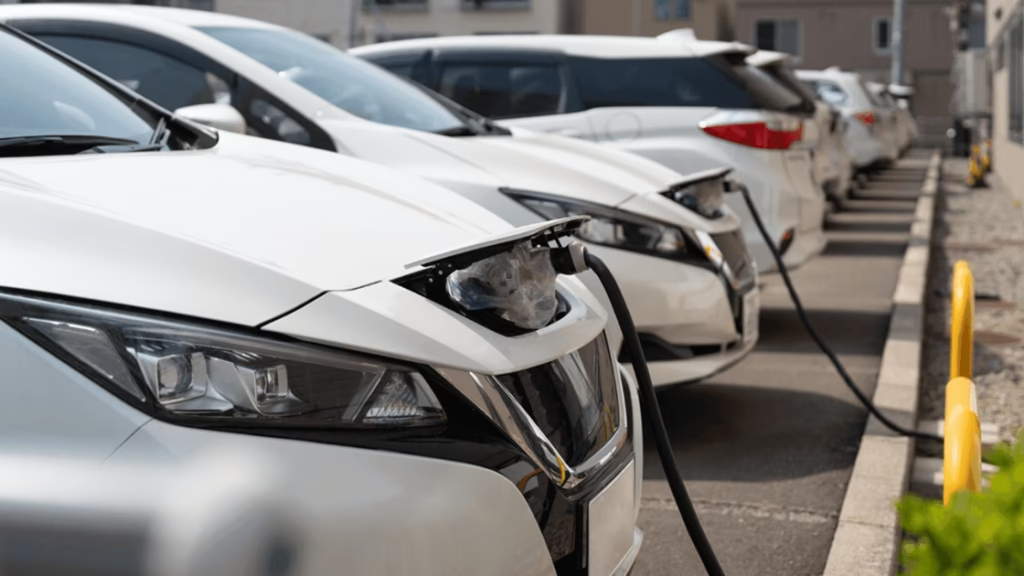
Preparation can make the financing process smoother.
First, know your credit position before applying. Second, establish a realistic purchase budget. Third, organize your income and identification documents before submitting an application. Fourth, choose a vehicle whose price and age are appropriate for your financial profile.
A reasonable down payment can also reduce the amount financed. If possible, avoid unnecessary new credit applications immediately before applying for vehicle financing.
For pre-owned electric car loans Canada, vehicle selection is equally important. A newer, well-documented EV with reasonable mileage and a clear history may be easier to finance than an older vehicle with high mileage, uncertain battery condition, or questionable history.
Finally, compare the complete financing agreement rather than accepting the first approval.
Critical Mistakes to Avoid
Focusing Only on the Monthly Payment
A low payment can result from a long repayment term. Always examine the total interest and total amount repaid.
Assuming Every Used EV Qualifies for an Incentive
The current federal EVAP program is for eligible new vehicles. Pre-owned EVs are not eligible.
Ignoring Battery Condition
Battery performance is fundamental to an EV. Ask for available battery-health documentation and understand remaining warranty coverage.
Buying Based Only on the Financing Approval
Approval means the lender is willing to finance the transaction under its conditions. It does not prove that the vehicle is mechanically or financially suitable for you.
Skipping the Vehicle History
Review accident history, ownership history, mileage, service records, and registration information before completing the purchase.
Choosing the Longest Term Automatically
Longer repayment periods can reduce monthly payments but increase total interest and may create greater depreciation risk.
Frequently Asked Questions About Used EV Financing Canada
1. Can I get used EV financing Canada for a pre-owned electric vehicle?
Yes, financing may be available for eligible pre-owned EVs, depending on the lender, your financial profile, and the vehicle’s age, mileage, value, and condition. Used EV financing Canada is not governed by one universal approval standard. Each lender can establish its own underwriting requirements.
2. Are pre-owned EVs eligible for the federal EV incentive?
No. The current Electric Vehicle Affordability Program applies to eligible new EVs. Transport Canada specifically states that pre-owned EVs are not eligible, although qualifying demonstrator vehicles may be treated differently.
3. What affects best used EV loan rates Canada?

Best used EV loan rates Canada depend on factors such as credit history, income, debt obligations, loan amount, vehicle characteristics, term, lender policies, and overall risk. A borrower with stronger credit and a lower amount financed may qualify for more favourable terms, but there is no universal rate for every applicant.
4. Is certified used EV financing Canada better than ordinary used EV financing?
Certification can provide additional confidence about the vehicle’s inspection, history, and warranty coverage, but it does not automatically guarantee a better financing rate. Certified used EV financing Canada should still be compared based on the complete vehicle and loan transaction.
5. Can someone with weaker credit qualify for used electric vehicle auto loans Canada?
Potentially, yes. Lenders assess applicants differently, and some financing options are designed for borrowers with less-established or weaker credit. However, weaker credit can result in higher borrowing costs. Improving income documentation, reducing the amount borrowed, selecting an affordable vehicle, and making a suitable down payment may strengthen the application.
6. Should I choose a shorter loan term for a used EV?
A shorter term generally means higher scheduled payments but can reduce total interest. A longer term may make the monthly payment easier to manage but can increase the total borrowing cost. The appropriate term depends on your budget and financial circumstances.
7. How should I compare pre-owned electric car loans Canada?
Compare the interest rate, amount financed, term, payment frequency, total interest, fees, and total amount repaid. Then evaluate those financing costs alongside the EV’s battery condition, warranty, insurance, charging costs, maintenance expectations, and purchase price.
8. Where can I start comparing financing options?
If you are ready to explore financing, QuickApprovals.ca provides an online application process for Canadian vehicle financing and connects applicants with financing specialists and lender options. Approval and terms depend on individual circumstances and lender decisions.
Expert Checklist Before Signing Used EV Financing Canada
Before finalizing used EV financing Canada, make sure you have:
- Confirmed the vehicle’s exact purchase price.
- Reviewed the vehicle history.
- Checked available battery-health information.
- Confirmed remaining warranty coverage.
- Compared multiple financing offers where possible.
- Reviewed the interest rate and loan term.
- Calculated the total repayment amount.
- Confirmed all fees and additional products.
- Determined the impact of insurance and charging costs.
- Verified whether any government incentive actually applies.
- Read the final financing disclosure before signing.
Conclusion: Choosing the Right Used EV Financing Canada Strategy
The strongest used EV financing Canada strategy is not necessarily the loan with the lowest advertised payment. It is the financing arrangement that balances vehicle quality, borrowing cost, monthly affordability, battery condition, warranty protection, and long-term ownership needs.
Pre-owned EVs can provide an attractive path into electric vehicle ownership because buyers may access lower purchase prices than comparable new vehicles. But financing still requires careful evaluation. Credit profile, income, vehicle age, mileage, loan term, interest rate, and total borrowing cost can all change the financial outcome.
It is also essential to understand Canada’s current incentive environment. The federal EVAP program introduced in 2026 supports eligible new EV purchases and leases, but pre-owned EVs do not qualify.
If you are considering pre-owned electric car loans Canada, start with a realistic budget, review your credit, investigate the vehicle thoroughly, compare financing options, and read the final agreement carefully. If certified used EV financing Canada is available for the vehicle you are considering, evaluate the certification and warranty benefits alongside the financing terms.
Most importantly, do not let a lender’s maximum approval determine your budget. Choose a vehicle and financing structure that you can comfortably maintain throughout the entire loan term.
For Canadians ready to explore their financing options, QuickApprovals.ca offers an online starting point for vehicle financing. A carefully prepared application and a well-researched vehicle can put you in a stronger position to pursue financing that fits your needs rather than simply accepting the first available offer.
Internal Links for QuickApprovals.ca
- https://quickapprovals.ca/used-ev-financing-canada/
- https://quickapprovals.ca/electric-vehicle-car-loans-canada/
- https://quickapprovals.ca/pre-owned-electric-car-loans-canada/
- https://quickapprovals.ca/certified-used-ev-financing-canada/
- https://quickapprovals.ca/best-used-ev-loan-rates-canada/
- https://quickapprovals.ca/used-electric-vehicle-auto-loans-canada/
Authority Outbound References
- Transport Canada — Electric Vehicle Affordability Program
- Transport Canada — EVAP Questions and Answers
- Financial Consumer Agency of Canada — Car Loan Consumer Protection
- Bank of Canada — Interest Rates for New and Existing Lending
- TransUnion Canada — Credit Scores
- Government of Canada — Zero-Emission Vehicle Incentives