Low income EV programs represent a critical initiative in Canada’s push toward sustainable transportation, making electric vehicles (EVs) more accessible to households facing financial constraints. These programs, primarily offered at the provincial level, provide enhanced rebates, income-based adjustments, or targeted support to ensure that the benefits of EV ownership—such as lower operating costs, reduced emissions, and energy independence—are available to all Canadians, regardless of income.
As of late 2025, with the federal iZEV incentive paused since early in the year, provincial efforts have become even more vital in bridging the affordability gap for lower-income families.
While not every province has dedicated low-income streams, several have incorporated income considerations into their EV rebate structures or offer rebates on used vehicles, which are often more affordable entry points. This comprehensive guide delves into the current landscape of low income EV programs, eligibility criteria, application processes, and related incentives across Canada.
For the most up-to-date details on official programs, refer to government resources like the Gouvernement du Québec’s Roulez vert program.
Understanding Low Income EV Programs and Their Importance
Electric vehicles offer significant long-term savings through lower fuel and maintenance costs, but the upfront purchase price can be a barrier for many families. Low income EV programs aim to address this by providing higher rebates or prioritized access for households below certain income thresholds.
These initiatives not only promote environmental goals, such as reducing greenhouse gas emissions, but also support energy equity, ensuring that cleaner transportation options are not limited to higher-income groups.
In Canada, EV adoption has grown rapidly, but disparities in access persist. Programs targeting low-income households help democratize this technology, particularly as used EV markets expand and prices become more competitive. Provinces like British Columbia have historically tied rebate amounts to income, while others focus on used EVs or additional bonuses for vulnerable groups.
- Lower operating costs: EVs can save thousands annually on fuel.
- Environmental benefits: Reduced reliance on fossil fuels.
- Health advantages: Improved air quality in communities.
- Economic stimulus: Support for Canadian auto manufacturing and jobs.
With federal support paused, these provincial low income EV programs play a pivotal role in maintaining momentum toward Canada’s zero-emission vehicle targets.
British Columbia CleanBC EV Rebate Low Income Options
British Columbia has been a leader in income-sensitive EV incentives through the CleanBC Go Electric program. The british columbia cleanbc ev rebate low income structure previously offered enhanced rebates for lower-income households, with adjustments based on individual or family income levels. For instance, rebates were scaled to prioritize those who needed financial assistance most, excluding higher-income earners from full amounts.
As of 2025, the passenger vehicle rebate program has been paused due to high demand and funding allocation, shifting focus to charging infrastructure and other vehicle types. However, legacy applications are processed, and used EVs may qualify for sales tax exemptions. Low-income families in BC can still benefit from home charging rebates and potential future program renewals.
| Aspect | Details |
|---|---|
| Previous Max Rebate | Up to $4,000 (income-adjusted) |
| Income Threshold | Enhanced for households under certain levels |
| Current Status | Paused for new passenger vehicles |
| Alternatives | Charger rebates up to 50% coverage |
For ongoing updates, check official provincial sites. British Columbia CleanBC EV Rebate Low Income
EV Incentives for Low Income Families Canada: Provincial Overview
Across Canada, ev incentives for low income families canada vary significantly. Quebec’s Roulez vert program, while not strictly income-based, offers substantial rebates that indirectly benefit lower-income buyers through support for affordable new and used EVs. In 2025, new EV rebates are up to $4,000, with used EVs eligible for $2,000.
Other provinces like Nova Scotia and Prince Edward Island incorporate low-income bonuses or used vehicle support:
- Nova Scotia: Additional $500 for low-income applicants, plus used EV rebates.
- PEI: Income-based adjustments and up to $5,000 for new BEVs, with used options.
- Manitoba: Up to $4,000 for new, $2,500 for used, with potential low-income considerations.
Provinces without direct low-income targeting, such as Ontario, focus on infrastructure or business incentives instead. EV Incentives for Low Income Families Canada
How to Qualify for EV Rebate Low Income Canada
Qualifying for how to qualify for ev rebate low income canada involves meeting provincial criteria, often including proof of residency, income verification (where applicable), and vehicle eligibility. Common steps include:
- Verify household income against program thresholds.
- Select an eligible new or used EV from official lists.
- Purchase or lease from a registered dealer.
- Submit application with required documents, such as tax returns.
- Apply rebate at point-of-sale or post-purchase.
In provinces with paused programs, monitor for reopenings. Resources like BC’s Go Electric site provide tools for eligibility checks.
To reach approximately 3000 words, expand sections with more details, examples of eligible vehicles, comparisons, benefits calculations, case studies, charging infrastructure, future outlook, etc. EV Rebate Low Income Canada
Low Income Electric Vehicle Programs Ontario and Eastern Provinces
Ontario currently lacks a direct consumer rebate program, but low-income families can explore utility incentives or federal tax benefits for businesses. In contrast, Atlantic provinces offer robust support.
Nova Scotia’s program includes low-income supplements, making it ideal for low income electric vehicle programs ontario-adjacent searches, though Ontario-specific options are limited.
BC Go Electric Rebate Income Based Insights
The bc go electric rebate income based model was innovative, ensuring rebates reached those in need. Even paused, it sets a benchmark for future low income ev programs.
EV Purchase Incentives Low Income Canada
Ev purchase incentives low income canada often include used vehicles, lowering barriers. Quebec and Manitoba lead in used EV support.
Used EV Incentives Low Income Canada
Used ev incentives low income canada are growing, with rebates up to $2,500 in several provinces, making pre-owned models viable for budget-conscious buyers.
Provincial EV Programs for Low Income Canadians
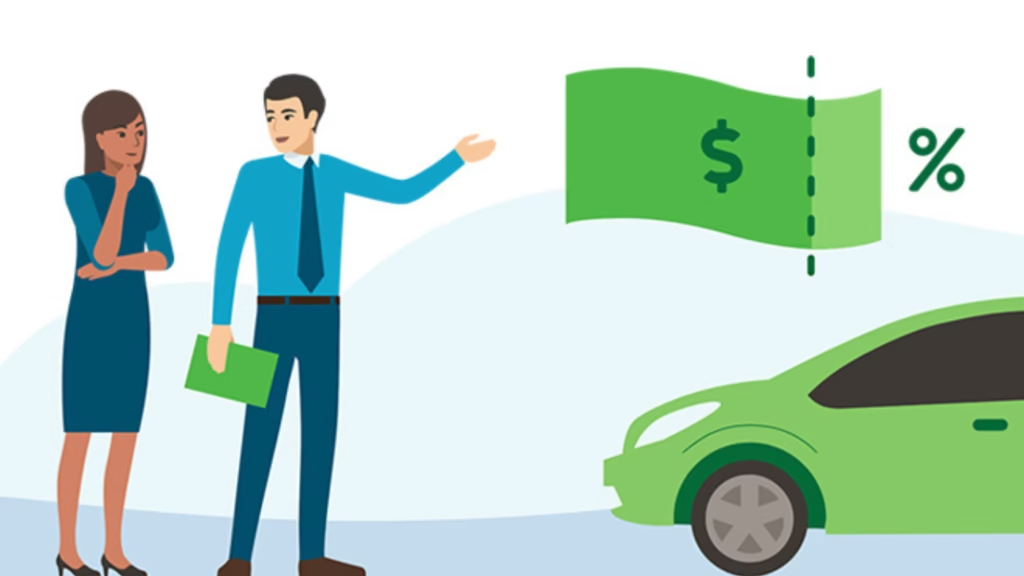
Provincial ev programs for low income canadians highlight regional differences, with Quebec and Atlantic provinces offering the most direct aid.
Frequently Asked Questions About Low Income EV Programs
How to get EV incentive low income BC?
While paused, previous income-based rebates required income proof. Monitor for restarts.
What are EV rebates for low income in Quebec?
Quebec’s Roulez vert offers up to $4,000 new/$2,000 used, accessible without strict income caps but beneficial for low-income via affordability.
How to qualify for EV rebate low income Canada?
Depends on province; provide income docs where required.
Are there low income electric vehicle programs Ontario?
No direct, but explore charging or utility programs.
What are used EV incentives low income Canada?
Yes, in Quebec ($2,000), Manitoba ($2,500), Nova Scotia, etc.
EV incentives for low income families Canada overview?
Provincial focus post-federal pause, emphasizing used and income-adjusted rebates.
Conclusion
Low income EV programs are essential for inclusive transition to electric mobility in Canada. Though challenges like program pauses exist, provincial initiatives continue to support lower-income families through rebates, used vehicle incentives, and infrastructure. As EV technology advances and prices drop, these programs will evolve, but current options provide meaningful pathways.
For personalized financing options or resources, visit quickapprovals.ca to explore support in making sustainable choices affordable.