

lease vs buy car calculator Canada, Deciding whether to lease or buy a car in Canada is a significant financial choice that depends on your budget, driving habits, and long-term goals. Using a lease vs buy car calculator Canada can simplify this decision by providing a clear comparison of costs and benefits.
This article explores the intricacies of leasing versus buying a car in Canada, offering detailed insights, practical tools, and answers to common questions. For a reliable resource to explore your options, visit Quick Approvals. Authoritative sources like government and bank websites, such as the Government of Canada’s consumer information portal, provide additional clarity on automotive financing.
Understanding Should I Lease or Buy a Car in Canada
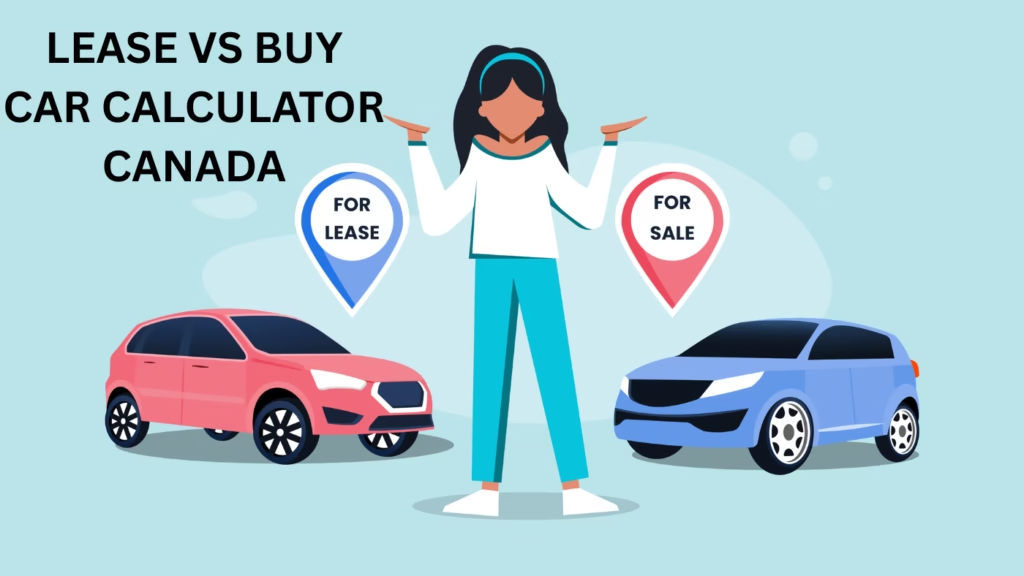
Should I Lease or Buy a Car in Canada, The decision to lease or buy a car hinges on several factors, including financial flexibility, vehicle ownership preferences, and usage patterns. Leasing typically involves lower monthly payments and allows you to drive a new car every few years, while buying grants full ownership and long-term cost savings. A lease vs buy car calculator Canada helps quantify these differences by factoring in variables like loan interest rates, lease terms, down payments, and depreciation.
Key Differences Between Leasing and Buying
- Leasing: You pay for the car’s depreciation during the lease term, typically 2-4 years, with lower upfront costs. At the end, you return the vehicle or buy it out.
- Buying: You finance the full vehicle cost through a loan or cash, owning it outright once paid off, with potential for higher monthly payments.
- Tax Implications: In Canada, lease payments include GST/HST on the monthly amount, while buying involves paying tax on the full purchase price upfront.
Should I Lease or Buy a Car in Canada, Using a calculator tailored for Canada accounts for regional factors like provincial taxes and incentives, ensuring accurate comparisons.
Exploring the Car Lease vs Buy Calculator Ontario
For Ontario residents, a car lease vs buy calculator Ontario adjusts for local taxes (13% HST) and regulations. These tools allow you to input variables like vehicle price, lease term, loan interest rate, and expected mileage to estimate total costs. For example, leasing a $30,000 car might result in monthly payments of $400, while financing could be $600, but owning the car outright after five years may save money if you drive extensively.
Benefits of Using a Calculator in Ontario
- Accuracy: Incorporates Ontario’s specific tax rates and fees.
- Customization: Adjusts for your driving habits, such as annual mileage (important for lease agreements).
- Transparency: Highlights hidden costs like lease-end fees or interest on loans.
Quick Approvals offers tools to help Ontarians make informed decisions tailored to their financial situation.
Analyzing Pros and Cons Leasing vs Buying Car Canada
Understanding the pros and cons leasing vs buying car Canada is crucial for making an informed choice. Below is a detailed breakdown:
Pros of Leasing
- Lower monthly payments compared to financing.
- Access to newer models with advanced features every few years.
- Maintenance costs often covered under warranty during the lease term.
- Flexibility to return the car without resale hassle.
Cons of Leasing
- No ownership at the end of the term unless you buy it out.
- Mileage restrictions (e.g., 20,000 km/year) with penalties for exceeding limits.
- Potential lease-end fees for wear and tear.
Pros of Buying
- Full ownership allows unlimited modifications and mileage.
- No ongoing payments after the loan is paid off.
- Potential to sell the car and recover some costs.
Cons of Buying
- Higher upfront costs or monthly payments.
- Depreciation affects resale value over time.
- Maintenance costs increase as the car ages.
A lease vs buy car calculator Canada can quantify these trade-offs by comparing total costs over a set period, such as five years.
How to Use a How to Calculate Lease vs Buy Car Canada

To effectively use a how to calculate lease vs buy car Canada, follow these steps:
- Gather Financial Details: Know the car’s price, your down payment, and credit score to estimate interest rates.
- Input Lease Terms: Include lease duration (e.g., 36 months), residual value, and mileage limits.
- Enter Loan Details: Provide loan term (e.g., 60 months), interest rate, and down payment for buying.
- Adjust for Taxes and Fees: Ensure the calculator accounts for Canadian taxes (e.g., GST/HST) and registration fees.
- Compare Outputs: Review total costs, monthly payments, and long-term savings.
For reliable calculations, tools like those on Quick Approvals simplify the process by automating these inputs.
Finding the Best Lease vs Buy Car Calculator for Canadians
Not all calculators are created equal. The best lease vs buy car calculator for Canadians should offer:
- Canadian-Specific Inputs: Accounts for provincial taxes, incentives, and regulations.
- User-Friendly Interface: Simplifies data entry for non-experts.
- Comprehensive Outputs: Shows monthly payments, total costs, and break-even points.
Popular tools include those from automotive websites and financial institutions like the Bank of Canada, which provides interest rate data to inform your calculations.
Comparing Leasing vs Financing Car Calculator Canada
A leasing vs financing car calculator Canada focuses on the financial structure of both options. Leasing involves paying for the car’s depreciation plus interest (money factor), while financing covers the full purchase price over time. For a $35,000 vehicle:
- Leasing: $450/month for 36 months, with a residual value of $18,000.
- Financing: $650/month for 60 months, with full ownership at the end.
Calculators help compare total interest paid and equity built over time, factoring in Canadian interest rates (e.g., 5-7% for loans in 2025).
Evaluating Is Leasing Better Than Buying Car in Canada 2025
The question is leasing better than buying car in Canada 2025 depends on economic conditions and personal priorities. With high interest rates in 2025, leasing may appeal due to lower monthly payments. However, buying could be advantageous for those planning to keep the car long-term, especially with rising electric vehicle (EV) incentives.
Factors to Consider in 2025
- Interest Rates: Higher rates increase financing costs, making leasing more attractive.
- EV Incentives: Federal and provincial rebates (e.g., $5,000 iZEV program) reduce costs for both options.
- Market Trends: New car prices are stabilizing, but used car values remain high, impacting buyout decisions.
Use a lease vs buy car calculator Canada to model these scenarios based on current rates.
Using a Car Lease vs Purchase Calculator Canada
A car lease vs purchase calculator Canada provides a side-by-side comparison of leasing and buying costs. For example, for a $40,000 SUV:
| Option | Monthly Payment | Total Cost (5 Years) | Ownership |
|---|---|---|---|
| Lease | $500 | $30,000 (plus fees) | None |
| Purchase | $750 | $45,000 (including interest) | Full |
This table highlights how leasing saves upfront but buying builds equity. Tools like those on Quick Approvals offer such comparisons.
Understanding Differences Between Leasing and Buying Car Canada
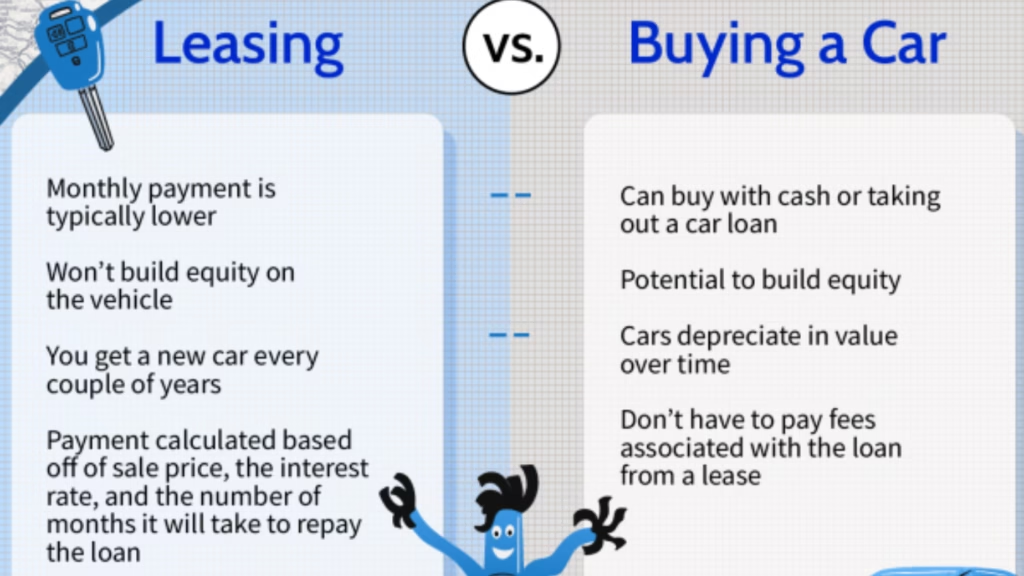
The differences between leasing and buying car Canada extend beyond cost. Leasing suits those who prioritize flexibility and lower payments, while buying appeals to those seeking ownership and long-term savings. Key differences include:
- Contract Terms: Leases have fixed terms with mileage caps; loans have flexible terms but higher payments.
- Maintenance: Leases often include warranties; buyers cover repairs post-warranty.
- Customization: Buyers can modify vehicles; lessees face restrictions.
A calculator helps quantify these differences based on your driving habits and financial goals.
Deciding When to Lease vs Buy a Car in Canada
Timing matters when considering when to lease vs buy a car in Canada. Ideal times include:
- Year-End Sales: Dealerships offer discounts in December to clear inventory.
- Spring Promotions: April-May often see lease incentives for new models.
- Economic Shifts: Monitor interest rates and incentives, especially for EVs in 2025.
A lease vs buy car calculator Canada can model these scenarios to identify cost-effective timing.
Answering What Is Cheaper Lease or Buy Car Canada
The question what is cheaper lease or buy car Canada depends on your time horizon and usage. Leasing is often cheaper short-term due to lower payments, but buying is more cost-effective over 7+ years as you avoid ongoing payments. For a $30,000 car:
- Lease (3 years): $12,600 in payments, plus potential fees.
- Buy (5 years): $36,000 total, but you own a $15,000 asset afterward.
Calculators clarify these break-even points.
Explaining How Does Car Leasing Work vs Buying in Canada
Understanding how does car leasing work vs buying in Canada involves breaking down the mechanics:
- Leasing: You sign a contract to use the car for a set term, paying for depreciation and interest. At the end, return or buy the car at its residual value.
- Buying: You finance the full price via a loan or cash, paying interest until the loan is cleared, then own the car outright.
Both options involve taxes and fees, but leasing spreads tax payments monthly, while buying requires upfront payment. Use Quick Approvals for tools to compare these structures.
Q&A: Common Questions About Lease vs Buy Car Calculator Canada
1. How do I use a lease vs buy car calculator Canada effectively?

To use a lease vs buy car calculator Canada, input accurate data like vehicle price, lease term, loan interest rate, and mileage. Compare monthly payments, total costs, and ownership outcomes. Tools from Quick Approvals simplify this process.
2. What are the pros and cons leasing vs buying car Canada?

Leasing offers lower payments and flexibility but no ownership. Buying provides equity but higher costs upfront. Weigh these using a lease vs buy car calculator Canada to see long-term impacts.
3. Is leasing better than buying car in Canada 2025 with current rates?
In 2025, high interest rates make leasing attractive for lower payments, but buying suits long-term ownership. Check rates via the Bank of Canada and use a calculator to compare.
4. When is the best time to decide when to lease vs buy a car in Canada?
Year-end (December) and spring (April-May) offer promotions. Monitor EV incentives and rates to optimize timing with a lease vs buy car calculator Canada.
5. How do I know what is cheaper lease or buy car Canada for my situation?
Compare total costs over your planned ownership period. Leasing is cheaper short-term; buying saves long-term. A car lease vs purchase calculator Canada clarifies break-even points.
6. What are the main differences between leasing and buying car Canada?
Leasing involves renting with restrictions; buying grants ownership with flexibility. Use a lease vs buy car calculator Canada to quantify costs and benefits.
Conclusion
Choosing between leasing and buying a car in Canada requires careful consideration of costs, ownership goals, and driving habits. A lease vs buy car calculator Canada is an essential tool to compare monthly payments, total costs, and long-term value. By using calculators from trusted sources like Quick Approvals, you can make an informed decision tailored to your needs. Explore authoritative resources like the Government of Canada for additional insights on financing. Whether you prioritize flexibility or ownership, a calculator ensures clarity in your automotive journey.