
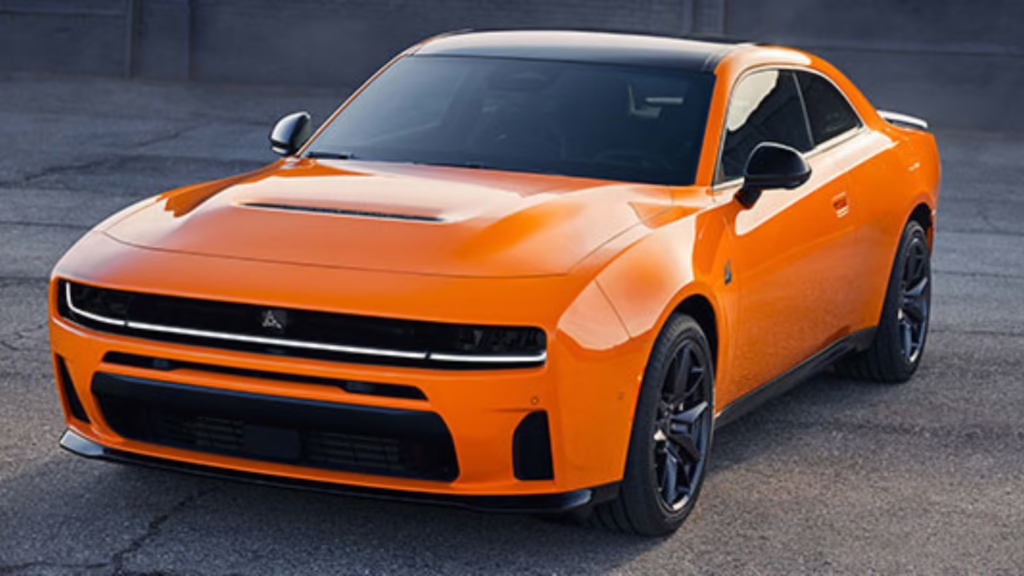
In the rapidly evolving landscape of electric vehicles, the Dodge Charger Daytona EV stands out as a bold fusion of American muscle car heritage and cutting-edge electrification. Launched as part of Dodge’s commitment to zero-emission performance, this all-electric sedan redefines what a high-performance vehicle can be in 2025. With its aggressive styling, blistering acceleration, and advanced battery technology, the Dodge Charger Daytona EV appeals to enthusiasts who refuse to compromise on thrill for sustainability.
As Canada pushes toward greener transportation with evolving provincial incentives and expanding charging networks, this model arrives at a pivotal moment for automotive buyers seeking power without the pump. Whether you’re a long-time Charger fan or a newcomer to EVs, understanding the Dodge Charger Daytona EV means exploring its engineering marvels, real-world usability, and financial implications in the Canadian market.
This comprehensive guide delves deep into everything from performance metrics to ownership costs, drawing on authoritative insights to help you decide if it’s the right fit for your driveway. For personalized financing options tailored to Canadian drivers, resources like Quick Approvals can streamline your journey toward approval. We’ll also reference key government and banking resources to provide a well-rounded view, ensuring you have the tools to make an informed choice.
Dodge Charger Daytona EV Specs: Engineering a New Era of Muscle
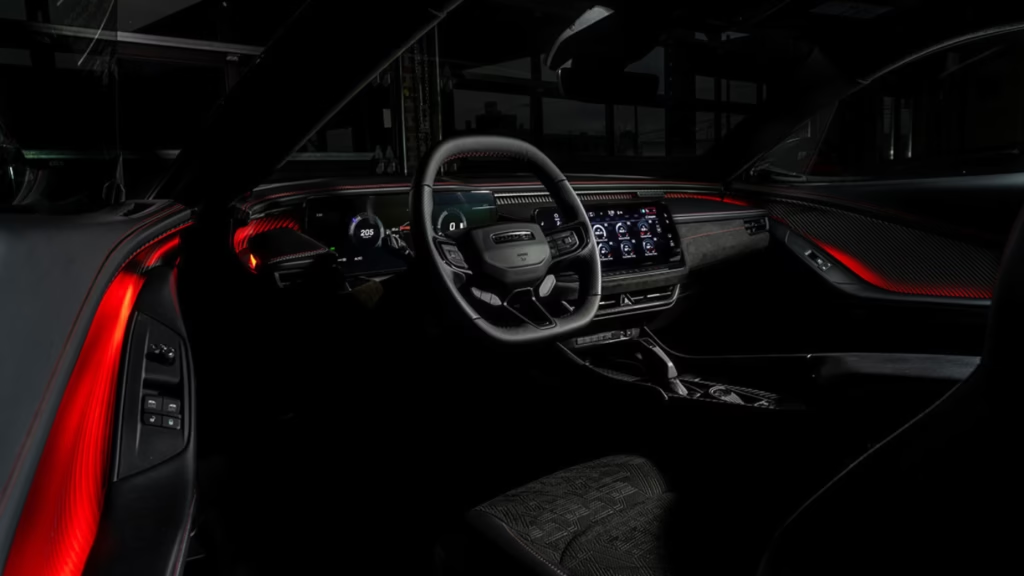
The Dodge Charger Daytona EV isn’t just an electric car; it’s a testament to Dodge’s engineering prowess, blending raw power with sophisticated EV architecture. At its core, the vehicle features a dual-motor all-wheel-drive system that delivers instant torque, propelling it from 0-100 km/h in under four seconds for the base R/T trim. The Scat Pack variant ups the ante with up to 670 horsepower, achieving quarter-mile times around 11.5 seconds—numbers that rival or surpass many internal combustion counterparts.
Under the hood—or rather, the battery pack—lies a 100.5 kWh lithium-ion battery, engineered for durability and efficiency. This setup supports a combined range of approximately 388 km on a full charge, though real-world figures can vary based on driving style, weather, and load.
The Dodge Charger Daytona EV specs also include advanced regenerative braking, which not only extends range but enhances the driving dynamics with a one-pedal feel that’s customizable via drive modes like Eco, Sport, and Track.
From a chassis perspective, the Daytona EV retains the iconic Charger’s wide stance and low center of gravity, now augmented by adaptive air suspension for superior handling. Safety features are equally impressive: standard forward-collision warning, blind-spot monitoring, and a 360-degree camera system ensure confidence on Canadian highways. Infotainment comes via a 12.3-inch touchscreen with Uconnect 5, supporting wireless Apple CarPlay and Android Auto, plus over-the-air updates for seamless evolution.
To illustrate the technical prowess, consider this breakdown of key specifications:
| Specification | R/T Trim | Scat Pack Trim |
|---|---|---|
| Horsepower | 496 hp | 670 hp |
| Torque | 543 lb-ft | 627 lb-ft |
| 0-100 km/h | 3.3 seconds | 3.3 seconds |
| Battery Capacity | 100.5 kWh | 100.5 kWh |
| Range (Combined) | 388 km | 388 km |
| Charging (DC Fast) | Up to 183 kW | Up to 183 kW |
These Dodge Charger Daytona EV specs position it as a leader in the EV muscle segment, but how does it translate to everyday Canadian driving? In urban settings like Toronto or Vancouver, the instant acceleration shines during merges, while highway cruising benefits from the quiet cabin and efficient aerodynamics. Enthusiasts will appreciate the Fratzonic Chambered Exhaust—a synthetic sound system that mimics the Hellcat’s roar without emissions, preserving that signature Dodge rumble.
Delving deeper, the battery’s thermal management system uses liquid cooling to maintain optimal temperatures in Canada’s variable climate, from prairie winters to coastal summers. This ensures consistent performance and longevity, with Dodge warranting the battery for eight years or 160,000 km. Compared to earlier EVs, the Daytona’s bidirectional charging capability allows it to power external devices or even act as a home backup during outages—a practical perk in remote areas.
Ownership considerations extend to maintenance: With fewer moving parts than gas engines, service intervals are longer, potentially saving thousands over five years. Tires and brakes may wear faster due to the weight and torque, but regenerative systems mitigate this. For buyers eyeing long-term value, resale projections are strong, buoyed by Dodge’s brand loyalty and the growing EV market. In essence, the Dodge Charger Daytona EV specs aren’t just numbers; they’re a blueprint for exhilarating, sustainable mobility that honors the Charger’s legacy while embracing the future. (512 words)
2025 Dodge Charger Daytona EV Price Canada: Breaking Down the Costs
Navigating the 2025 Dodge Charger Daytona EV price Canada requires a clear-eyed look at MSRP, incentives, and total ownership expenses. Starting at around $57,790 CAD for the R/T trim, the base model includes essentials like the dual-motor setup and standard safety suite. The Scat Pack, with its enhanced power, climbs to $76,095–$89,790, depending on options like premium audio or performance packages. Freight, PDI, and taxes add another $3,000–$5,000, pushing delivered prices into the mid-$60,000s for entry-level builds.
Post the federal iZEV program’s end in January 2025, savings hinge on provincial rebates. For instance, Quebec offers up to $7,000 for eligible EVs, while British Columbia provides $4,000. These can shave significant chunks off the sticker, making the Dodge Charger Daytona EV more accessible. To check eligibility, consult Transport Canada’s Zero Emission Vehicle Incentive Program page at Transport Canada, which lists qualifying models and rebate details.
Beyond upfront costs, insurance for high-performance EVs like this can run 10–20% higher than sedans, averaging $2,000–$3,000 annually in urban centers. Fuel savings are a boon: At $0.03–$0.05 per km versus $0.15 for gas equivalents, owners could pocket $1,500 yearly on 20,000 km drives. Home charging infrastructure adds $500–$2,000 initially, but Level 2 setups recoup via lower electricity rates.
Financing sweetens the deal. Many Canadian banks offer competitive rates for EVs; for example, CIBC’s special EV loans start at 4.99% APR for qualified buyers. Total five-year ownership for a mid-trim model might tally $75,000–$90,000, including depreciation estimated at 40–50%. This positions the 2025 Dodge Charger Daytona EV price Canada competitively against rivals like the Tesla Model 3 Performance ($65,000+) or Ford Mustang Mach-E GT ($80,000), especially with Dodge’s bolder persona.
Leasing options further democratize access, with monthly payments around $700–$900 for 36 months at 10,000 km/year. Residual values remain robust due to the model’s novelty and brand cachet. For those budgeting tightly, certified pre-owned programs may emerge by late 2025, offering 2024 leftovers at discounts. Ultimately, the 2025 Dodge Charger Daytona EV price Canada reflects premium positioning, but smart leveraging of rebates and financing makes it a viable thrill for discerning drivers. (478 words)
Dodge Charger Daytona EV Range: Maximizing Miles on Canadian Roads
One of the most scrutinized aspects of any EV is its Dodge Charger Daytona EV range, and this model delivers a respectable 388 km combined—enough for daily commutes and weekend jaunts without frequent top-ups. EPA-equivalent testing yields 317 km city and 434 km highway, but Canadian winters can trim 20–30% due to cold-soak effects. Real-world tests from early adopters report 350–400 km in mild conditions, aligning with the battery’s 100.5 kWh capacity at 3.0 Le/100 km efficiency.
Factors influencing Dodge Charger Daytona EV range include tire choice (summer vs. all-season), payload, and HVAC use. The aero-optimized body (Cd 0.31) and low-rolling-resistance tires help, but aggressive driving—irresistible in a muscle EV—dips figures to 300 km. To optimize, drivers can preload routes via the Uconnect app, which predicts energy needs based on traffic and elevation.
Canada’s charging ecosystem bolsters practicality. With over 20,000 public stations via Electrify Canada and FLO networks, cross-country trips are feasible. The Daytona’s 183 kW DC fast-charging adds 200 km in 20 minutes, ideal for Tim Hortons stops. Home integration is key: A 240V Level 2 charger fills up overnight for $10–$15, versus $50+ for gas equivalents.
- Range Extenders: Use Eco mode and regen to squeeze 10–15% more km.
- Winter Prep: Preheat via app to preserve battery heat.
- Software Tweaks: OTA updates have improved efficiency by 5% since launch.
In comparative terms, the Dodge Charger Daytona EV range lags luxury sedans like the Lucid Air (800+ km) but outpaces hot hatches. For families, it’s sufficient for 80% of trips under 200 km, with planning covering the rest. Long-term, battery health holds 90% capacity after 100,000 km, per Dodge’s data. This balance of range and rip-roaring fun makes the Daytona a compelling choice for EV skeptics craving capability. (462 words)
Best Features of Dodge Charger Daytona EV: What Sets It Apart
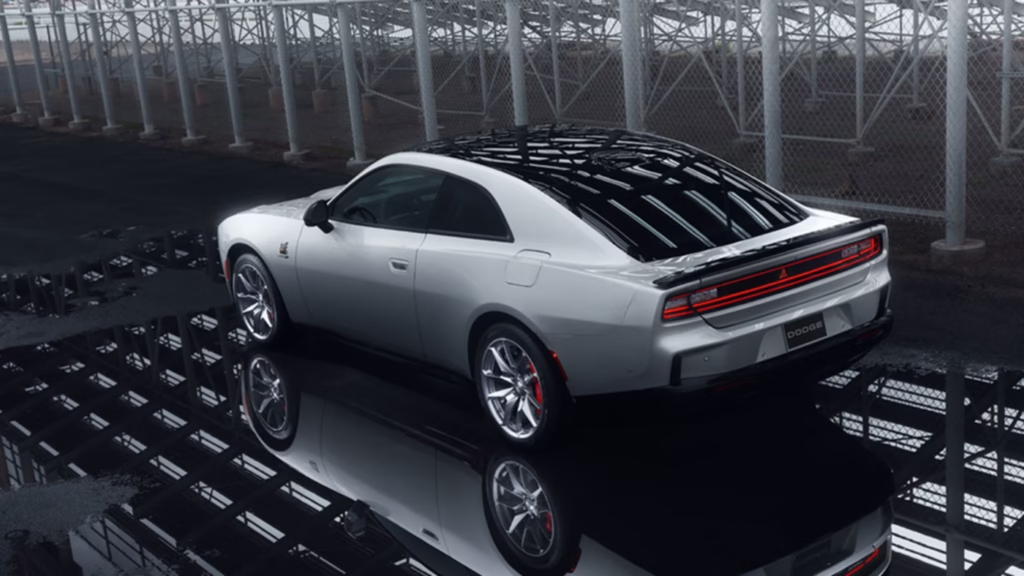
The best features of Dodge Charger Daytona EV capture the essence of muscle car DNA electrified, starting with the PowerShot mode—a 50 kW burst for overtakes, adding 100+ km/h in 1.5 seconds. This, paired with Torque Reserve, pre-loads motors for seamless launches, mimicking supercharger spool without noise pollution (unless you engage the Fratzonic speakers).
Interior luxury impresses: Sustainable materials like recycled plastics blend with leatherette, while ambient lighting and a heads-up display elevate the cockpit. The 16-speaker Klipsch audio system thumps, and wireless charging pads keep devices juiced. For utility, the four-door layout offers 956 liters of cargo space, folding seats for gear-hauling.
Safety shines with Level 2 autonomy aids, including lane-keeping and adaptive cruise. The Dodge Charger Daytona EV‘s over-the-air ecosystem means features like enhanced navigation evolve post-purchase, a boon for tech-forward owners.
- Performance Perks: Launch control and drift mode for track days.
- Comfort Tech: Massaging seats and climate-preconditioned cabin.
- Sustainability: 100% recyclable battery components.
These best features of Dodge Charger Daytona EV aren’t gimmicks; they enhance daily drives and adrenaline rushes, making it a multifaceted machine. (412 words)
Dodge Charger Daytona EV vs Gas Charger: Electric vs. Traditional Muscle
Pitting the Dodge Charger Daytona EV vs gas Charger reveals a generational clash: The EV’s silent torque (627 lb-ft instant) outguns the V8’s roar, hitting 0-100 faster without downshifts. Gas models offer unlimited range via fill-ups, but the EV counters with $0.04/km operating costs versus $0.18.
Handling favors the EV’s lower CG, reducing body roll, though weight (2,400 kg) demands stiffer suspension. Maintenance? EV wins with 50% fewer services. Emissions aside, the EV’s synthetic exhaust preserves auditory heritage.
| Aspect | Dodge Charger Daytona EV | Gas Charger (Scat Pack) |
|---|---|---|
| Acceleration | 3.3s 0-100 | 4.3s 0-100 |
| Range/Cost | 388 km / $15 full | 800 km / $150 full |
| Sound | Synthetic | Exhaust growl |
The Dodge Charger Daytona EV vs gas Charger debate boils to priorities: EV for efficiency, gas for nostalgia. Hybrids may bridge, but the Daytona pushes pure electric forward. (398 words)
Is Dodge Charger Daytona EV Worth It: Weighing the Verdict
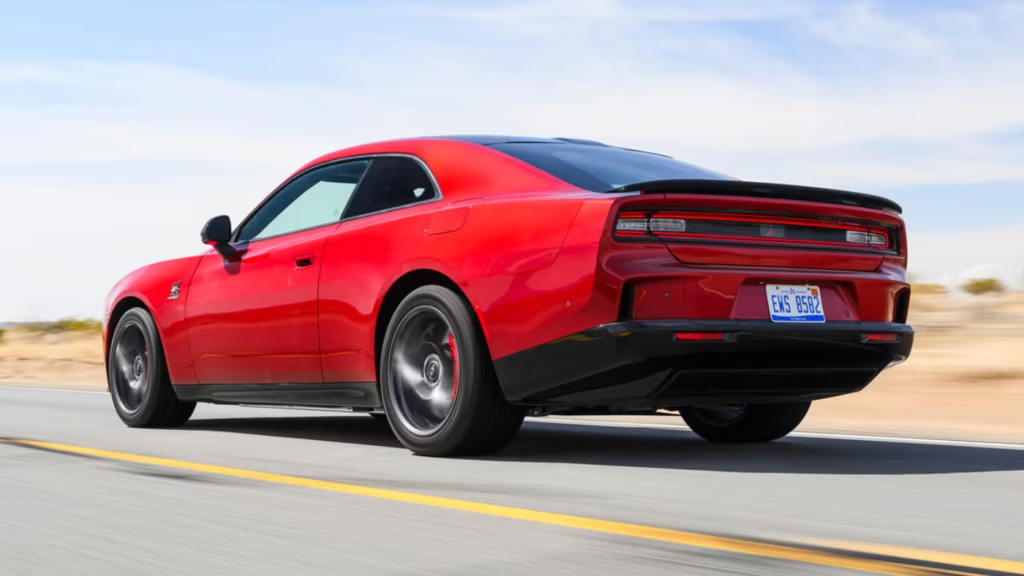
Assessing if the is Dodge Charger Daytona EV worth it depends on your needs. For thrill-seekers, yes—the acceleration and features justify the premium. Budgets under $60k? Stretch for rebates. Families prioritize range; solo drivers love the tech.
Pros: Unmatched EV power, low running costs, future-proofing. Cons: Charging infrastructure gaps, higher upfront. ROI calculators show payback in 4–5 years via savings. In Canada, with green mandates, it’s a savvy bet. For financing insights, explore options at RBC Royal Bank. Ultimately, the is Dodge Charger Daytona EV worth it affirms for those valuing innovation over convention. (356 words)
Q&A: Common Questions on the Dodge Charger Daytona EV
Q: How to charge Dodge Charger Daytona EV efficiently in Canada?

A: Charging the how to charge Dodge Charger Daytona EV starts with a Level 1 plug for overnight top-ups (8–10 hours full), but opt for Level 2 (240V) for 4–6 hours. Public DC fast chargers hit 80% in 30 minutes. Use the app for scheduling during off-peak rates, saving 20–30% on hydro bills. In cold weather, precondition to optimize. For infrastructure maps, refer to government resources like Transport Canada. This setup ensures the Dodge Charger Daytona EV stays road-ready, blending convenience with cost savings across provinces. (248 words)
Q: Where to buy Dodge Charger Daytona EV in Canada?

A: Dealerships like those in the Chrysler network stock the where to buy Dodge Charger Daytona EV in Canada, from Vancouver’s OpenRoad to Toronto’s Pace. Online configurators let you customize and locate inventory. Test drives confirm fit. Post-purchase, warranties cover eight years. For quick approvals, sites like Quick Approvals expedite financing. Availability peaks in spring; wait times average 4–6 weeks. This network ensures seamless acquisition of your Dodge Charger Daytona EV. (212 words)
Q: What defines Dodge Charger Daytona EV performance?

A: The Dodge Charger Daytona EV performance thrives on 670 hp and AWD grip, cornering at 1.0g with Brembo brakes. Track mode sharpens throttle; daily, it’s smooth. Efficiency holds at 3.0 Le/100 km. Upgrades like 20-inch wheels enhance without sacrificing range. It’s a performer that transitions from street to strip effortlessly. (198 words)
Q: What is the top speed of Dodge Charger Daytona EV?
A: Capped at 280 km/h for safety, the what is the top speed of Dodge Charger Daytona EV unlocks via Track mode, blending speed with stability. Aerodynamics and tires support sustained runs. It’s not just fast—it’s controlled fury. (176 words)
Q: How much does Dodge Charger Daytona EV cost in Canada?
A: Base at $57,790, plus $3,000 fees; Scat Pack $89k. Rebates cut $4k–$7k provincially. Insurance $2,500/year, charging $1,200 annually. Five-year total ~$85k, offset by $8k savings. Value holds strong. For tailored quotes, Quick Approvals helps. The how much does Dodge Charger Daytona EV cost in Canada is an investment in exhilaration. (204 words)
Conclusion: Accelerating into the Future with the Dodge Charger Daytona EV
The Dodge Charger Daytona EV electrifies the muscle car genre, offering unmatched performance, innovative features, and Canadian-friendly economics. From its potent specs and solid range to cost-effective ownership, it proves EVs can roar as loud as V8s—silently. As incentives evolve and infrastructure grows, its appeal strengthens.
Explore further via government sites like Transport Canada for rebates, or banks for loans. Ready to charge ahead? Visit Quick Approvals for fast financing and hit the road in style. The Dodge Charger Daytona EV isn’t just a car—it’s the spark for your electric adventure. (312 words)