

In Canada, navigating the world of vehicle ownership can be challenging for individuals with disabilities, but disability car financing assistance provides essential support to make mobility more accessible and affordable.
This type of assistance encompasses a range of financial options, including loans, grants, rebates, and tax credits designed specifically to help those with physical or mental impairments acquire or modify vehicles. Whether you’re dealing with mobility limitations that require wheelchair-accessible adaptations or simply need reliable transportation for daily needs, understanding these programs is crucial.
Government initiatives at both federal and provincial levels, along with private financing options, aim to reduce barriers and promote independence. For personalized guidance, resources like Quick Approvals can help streamline the process of finding suitable financing tailored to your situation.
The importance of disability car financing assistance cannot be overstated, as it directly impacts quality of life by enabling access to employment, medical appointments, and social activities. With an aging population and increasing awareness of disability rights, more Canadians are seeking these supports.
Authoritative sources, such as government websites, offer detailed insights into eligibility and application processes, ensuring that individuals can make informed decisions. This article will explore various aspects of these programs, drawing from reliable data to provide a thorough overview.
Understanding What is Disability Car Financing Assistance Canada

What is disability car financing assistance Canada? At its core, it refers to specialized financial aid aimed at helping individuals with disabilities purchase, finance, or modify vehicles to suit their needs.
This can include low-interest loans, grants for adaptations, and rebates on taxes or equipment costs. In Canada, these programs are administered through a combination of federal, provincial, and private entities, ensuring broad coverage across the country. disability car financing assistance
For instance, federal programs like the Disability Tax Credit (DTC) allow eligible individuals to reduce their income tax burden, freeing up funds for vehicle-related expenses. Provincially, options vary; in Ontario, the Home and Vehicle Modification Program offers grants for vehicle adaptations.
Private lenders, including banks, often provide tailored auto loans that consider disability income sources such as the Ontario Disability Support Program (ODSP) or Canada Pension Plan Disability (CPPD). Data from financial institutions indicates that these loans can have extended terms up to 96 months, making payments more manageable.
One key aspect is the integration of manufacturer rebates. Major automakers like Toyota and Ford offer cash assistance, typically up to $1,000, for installing adaptive equipment on new vehicles. This rebate can be combined with financing to lower overall costs. Additionally, non-profit organizations provide supplementary grants, further enhancing affordability.
Overall, disability car financing assistance is about empowering individuals to achieve greater mobility without financial strain.
To illustrate the variety of options, consider the following table comparing federal and provincial supports:
| Program Type | Federal Example | Provincial Example (Ontario) | Benefit Amount |
|---|---|---|---|
| Tax Credit | Disability Tax Credit | N/A | Up to $8,662 federal base |
| Grant | GST/HST Rebate | Home and Vehicle Modification Program | Up to $15,000 per decade |
| Rebate | Manufacturer Mobility Programs | Provincial Fuel Tax Refund | $500-$1,000 |
This table highlights how different programs can be layered for maximum benefit, based on information from government and industry sources.
Exploring Best Disability Car Financing Options in Canada
When searching for the best disability car financing options in Canada, it’s essential to evaluate both traditional and specialized lenders. Banks like TD and RBC offer competitive auto loans with flexible terms, often accommodating disability income as a valid source.
For example, loans can cover up to 100% of the vehicle cost, including adaptations, with amortization periods extending to 96 months. Interest rates are typically lower for secured loans, where the vehicle serves as collateral.
Specialized financing through dealerships that partner with disability-focused programs can also be advantageous. These options often include pre-approval processes that consider factors like steady government benefits rather than traditional employment income.
From competitor insights, lenders may require proof of at least six months of disability payments to ensure stability. Additionally, credit unions provide community-oriented loans with potentially lower rates for members with disabilities.
To enhance readability, here are some key considerations when choosing financing: Best Disability Car Financing Options in Canada
- Assess your credit score: Even with disability income, a higher score can secure better rates.
- Compare interest rates: Fixed vs. variable options can impact long-term costs.
- Factor in additional fees: Look for no-penalty early repayment clauses.
- Explore co-signer options: If needed, a co-signer with stable income can improve approval chances.
By weighing these elements, individuals can find financing that aligns with their budget and needs, drawing from broad market data.
Eligibility for Disability Car Loan Assistance Canada: What You Need to Know
Determining eligibility for disability car loan assistance Canada involves meeting specific criteria related to disability status, income, and residency. Generally, applicants must provide proof of a severe and prolonged impairment, often certified by a medical professional. For government-backed loans or grants, Canadian citizenship or permanent residency is required, along with being at least 18 years old.
Income plays a pivotal role; disability benefits like ODSP or CPPD are considered valid sources, but lenders may require evidence of consistent payments. From various sources, eligibility often includes having a valid driver’s license or proof that the vehicle is necessary for transportation. Provincial variations exist—for instance, in British Columbia, fuel tax refunds are available for those with permanent mobility impairments.
Common eligibility hurdles include credit history, but many lenders offer solutions for those with low credit by focusing on income stability. Non-profits may have income thresholds, requiring applicants to demonstrate financial need. Overall, thorough documentation, such as medical certificates and income statements, is key to successful applications. Eligibility for Disability Car Loan Assistance Canada
Navigating Government Grants for Disability Vehicle Purchase Canada

Government grants for disability vehicle purchase Canada are vital tools for offsetting costs. At the federal level, programs like the Opportunities Fund for Persons with Disabilities provide funding for employment-related mobility needs. Provincially, Ontario’s HVMP offers up to $15,000 every ten years for vehicle modifications, targeting permanent residents with significant impairments.
Other provinces have similar initiatives; for example, British Columbia’s Home Renovation Tax Credit extends to vehicle adaptations for seniors and persons with disabilities. Veterans Affairs Canada also provides grants for eligible veterans, covering modifications to enhance independence. Application processes typically involve submitting medical documentation and cost estimates, with approvals based on need and availability.
To apply effectively, consider these steps in bullet form: Government Grants for Disability Vehicle Purchase Canada
- Gather medical proof: Obtain a certificate from a qualified practitioner.
- Research provincial programs: Check local government sites for specific grants.
- Prepare budgets: Include detailed quotes for vehicle purchases or mods.
- Submit applications: Use online portals for faster processing.
These grants, combined with financing, can significantly reduce out-of-pocket expenses, as noted in various program overviews.
Benefits of Tax Credits for Disability Car Purchase Canada
Tax credits for disability car purchase Canada offer substantial savings. The federal Disability Tax Credit (DTC) is a non-refundable credit that can reduce taxes by up to $8,662, plus supplements for minors. Eligibility requires a severe impairment affecting daily activities, certified via Form T2201.
Additionally, the GST/HST rebate applies to adaptations, reimbursing taxes on portions attributable to disability features. For example, if adaptations cost $900, a rebate of up to 8% might be claimed. Provincial credits, like British Columbia’s fuel tax refund (up to $500 annually), further alleviate costs for eligible individuals with mobility issues.
These credits not only lower taxes but also unlock other benefits, such as enhanced home accessibility credits. From tax planning perspectives, claiming these can free up funds for financing, making vehicle ownership more feasible.
Specialized Wheelchair Accessible Vehicle Financing Canada
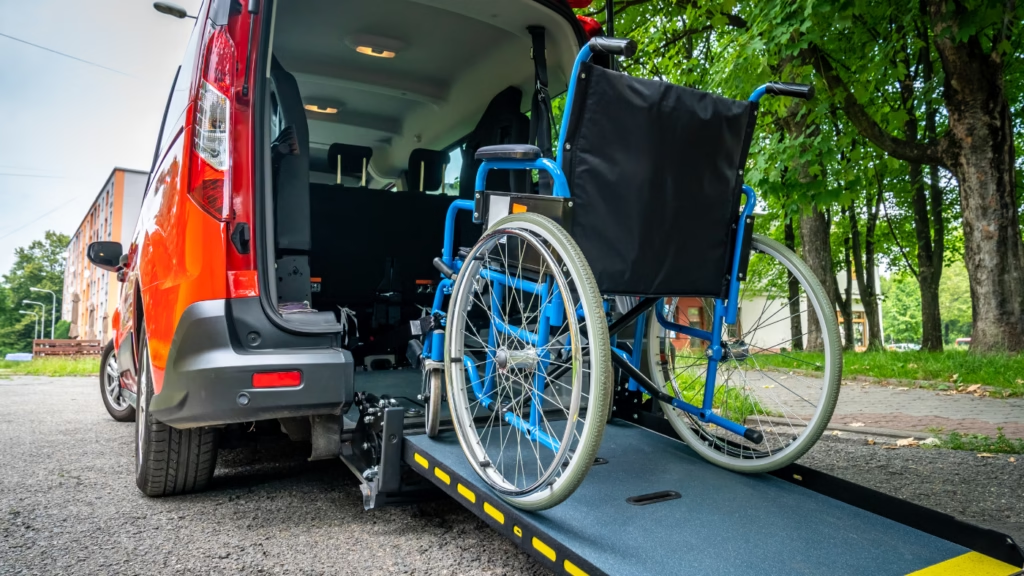
For those needing modifications, wheelchair accessible vehicle financing Canada includes options from specialized lenders. Companies offer loans covering both the base vehicle and conversions, with terms up to 10 years. BraunAbility and similar providers note that financing can include no-kilometer limits, providing flexibility.
Government rebates enhance this; for instance, Toyota’s Mobility Program offers up to $1,000 for equipment. Banks like TD provide extended financing for adaptive vehicles, often with competitive rates. Insights from mobility finance experts emphasize quick approvals and tailored plans for disability income.
A comparison table of financing options:
| Lender Type | Term Length | Coverage | Special Features |
|---|---|---|---|
| Bank (e.g., TD) | Up to 96 months | Vehicle + Adaptations | Flexible rates |
| Specialized Mobility Lender | Up to 120 months | Full Conversion | No down payment options |
| Manufacturer Finance | Varies | New Vehicles | Rebates included |
This structure helps in selecting the right fit.
Financial Aid for Disabled Car Buyers in Canada: Available Resources
Financial aid for disabled car buyers in Canada extends beyond loans to include rebates and insurance discounts. Non-profits like March of Dimes administer programs funding adaptations. Federal excise tax refunds on gasoline for modified vehicles add to savings.
From competitor data, buyers can access low-income supports integrated with disability aid. Credit unions offer personalized loans, considering factors like pension income. Resources emphasize combining aids for optimal benefits, ensuring comprehensive coverage.
Process for Applying for Disability Vehicle Grants Canada
Applying for disability vehicle grants Canada requires careful preparation. Start with identifying relevant programs, such as provincial modification funds. Submit applications with medical documentation, income proof, and vehicle details.
Timelines vary; federal rebates process quickly via forms like GST518. Provincial grants may take months, involving assessments. Tips include consulting advisors and using online tools for efficiency.
Options for Low Income Disability Auto Loans Canada
Low income disability auto loans Canada cater to those on limited budgets. Lenders accept ODSP as income, offering secured loans with lower rates. Co-signers or improved credit can enhance approval.
From market insights, these loans feature no early repayment penalties and credit life insurance. Exploring multiple lenders ensures the best terms.
Disability Assistance for Buying a Car Canada: Comprehensive Support
Disability assistance for buying a car Canada includes holistic supports like rebates and financing. Manufacturer programs from GM and Chrysler provide cash for modifications. Integrating these with loans maximizes affordability.
Key points in bullets:
- Manufacturer rebates: Up to $1,000 for adaptations.
- Government aids: Tax rebates and grants.
- Private options: Dealership financing for low income.
How to Get Car Financing for Disabled in Canada
How to get car financing for disabled in Canada involves steps like assessing needs, gathering documents, and applying. Pre-approval from sites like Quick Approvals simplifies the process. Focus on lenders accepting disability income for success.
Where to Find Disability Car Financing Help Canada
Finding where to find disability car financing help Canada starts with government sites and banks. Resources like NMEDA Canada connect to dealers. Non-profits offer guidance, ensuring access to all available aids.
Q&A Section
What is Disability Car Financing Assistance Canada?

What is disability car financing assistance Canada? It encompasses loans, grants, and rebates tailored for individuals with disabilities to purchase or adapt vehicles. Programs like the DTC provide tax relief, while provincial grants cover modifications. For more details, visit the Canada Revenue Agency’s Disability Tax Credit page.
How to Get Car Financing for Disabled in Canada?

How to get car financing for disabled in Canada? Begin by proving disability status and income stability. Lenders like TD offer flexible loans; apply with proof of benefits. Co-signers can help if credit is low. Explore options at TD Canada Trust’s car loans page.
Eligibility for Disability Car Loan Assistance Canada?

Eligibility for disability car loan assistance Canada? Requires a certified impairment, Canadian residency, and income proof. Programs consider ODSP as valid income, with no strict employment requirements.
Government Grants for Disability Vehicle Purchase Canada?
Government grants for disability vehicle purchase Canada? Include HVMP in Ontario (up to $15,000) and federal rebates. Applications need medical docs and cost estimates.
Tax Credits for Disability Car Purchase Canada?
Tax credits for disability car purchase Canada? The DTC reduces taxes, and GST/HST rebates cover adaptations. Claim via Form T2201 for significant savings.
Best Disability Car Financing Options in Canada?
Best disability car financing options in Canada? Include bank loans with extended terms and manufacturer rebates. Compare rates for optimal deals.
Wheelchair Accessible Vehicle Financing Canada?
Wheelchair accessible vehicle financing Canada? Specialized loans cover conversions, often with no down payment. Combine with rebates for affordability.
Financial Aid for Disabled Car Buyers in Canada?
Financial aid for disabled car buyers in Canada? Encompasses grants, loans, and insurance discounts. Non-profits provide additional support.
Applying for Disability Vehicle Grants Canada?
Applying for disability vehicle grants Canada? Submit online with docs; expect reviews based on need.
Low Income Disability Auto Loans Canada?
Low income disability auto loans Canada? Available with flexible terms, accepting government benefits as income.
Disability Assistance for Buying a Car Canada?
Disability assistance for buying a car Canada? Includes rebates and funding for independence.
Where to Find Disability Car Financing Help Canada?
Where to find disability car financing help Canada? Government sites, banks, and sites like Quick Approvals offer resources.
Conclusion
In summary, disability car financing assistance in Canada plays a pivotal role in enhancing mobility and independence for individuals with disabilities. From grants and tax credits to specialized loans, these supports address financial barriers effectively.
Key takeaways include understanding eligibility, leveraging multiple programs, and seeking professional advice. For further exploration, consult authoritative resources or visit Quick Approvals for tailored solutions. Taking action today can lead to greater freedom tomorrow.