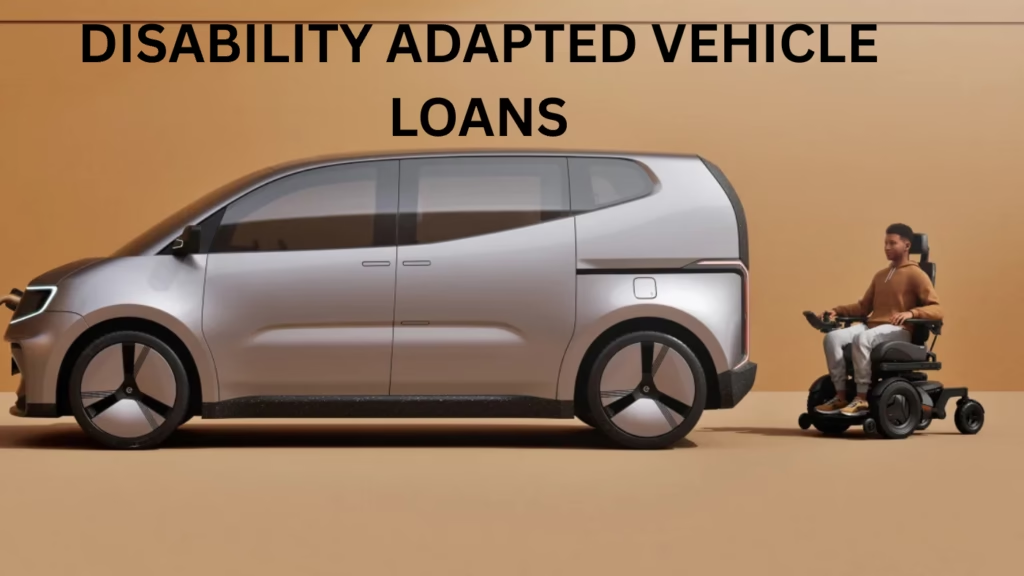
Disability Adapted Vehicle Loans, In today’s fast-paced world, mobility is more than a convenience—it’s a gateway to independence, employment, and meaningful connections with loved ones. For Canadians living with disabilities, accessing reliable transportation can be a significant challenge, often compounded by the high costs of vehicle adaptations.
Disability Adapted Vehicle Loans emerge as a vital financial lifeline, enabling individuals to purchase or modify vehicles equipped with features like wheelchair ramps, hand controls, and lowered floors. These loans not only bridge the gap between necessity and affordability but also align with broader accessibility goals outlined in Canada’s Accessible Canada Act.
By exploring options tailored to diverse needs, from federal tax credits to provincial grants, individuals can reclaim their freedom on the road. This guide delves into the intricacies of securing such financing, drawing on authoritative resources like government programs to empower informed decisions.
For those navigating this process, platforms like Quick Approvals Canada offer streamlined support in matching borrowers with suitable lenders, ensuring a smoother path to approval. Disability Adapted Vehicle Loans
Exploring Grants for Wheelchair Accessible Vehicles in Canada
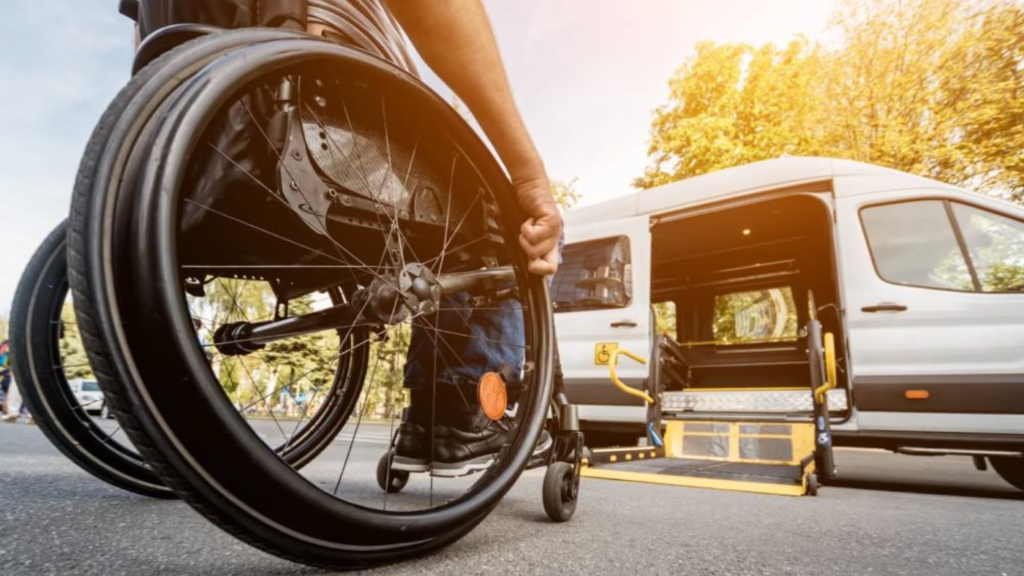
Grants represent one of the most accessible entry points into financing disability adapted vehicle loans, providing non-repayable funds specifically for mobility enhancements. Unlike traditional loans, these programs target the unique barriers faced by people with disabilities, covering everything from basic hand controls to full van conversions. In Canada, federal and provincial initiatives collaborate to distribute resources, with eligibility often hinging on medical documentation and residency status. Grants for Wheelchair Accessible Vehicles in Canada
At the national level, the GST/HST Specially Equipped Motor Vehicle Rebate reimburses taxes on modifications, effectively reducing upfront costs by hundreds or thousands of dollars. This rebate is particularly beneficial for families purchasing new wheelchair-accessible minivans, where adaptation expenses can exceed $20,000.
Provincially, variations abound: Ontario’s Home and Vehicle Modification Program (HVMP), administered through the March of Dimes, offers up to $15,000 every decade for vehicle alterations, prioritizing those with substantial mobility impairments. Applicants must first exhaust other funding sources, and those earning over $35,000 annually may contribute a portion of costs, fostering equitable distribution. Grants for Wheelchair Accessible Vehicles in Canada
Quebec’s Société de l’assurance automobile du Québec (SAAQ) provides reimbursements for adaptive equipment, limited to the least expensive viable solution, with no new adaptations permitted within seven years unless health changes warrant it.
For British Columbia residents, the At Home Program under Community Living BC supports up to $6,000 for maintenance on wheelchair-accessible vehicles, focusing on low- to moderate-income families. These grants not only alleviate financial strain but also encourage long-term vehicle use, typically requiring proof of regular personal utilization.
To illustrate the impact, consider a single parent in Toronto retrofitting a used SUV with a rear-entry ramp. Through HVMP, they secured $12,000, covering 80% of the $15,000 total, allowing them to commute to work without relying on costly paratransit services. Such stories underscore how grants for wheelchair accessible vehicles in Canada transform lives, promoting inclusion in a country where over 6 million people live with disabilities.
- Federal Grant Highlights: Tax rebates up to $5,000 for medical expenses related to vehicle purchases.
- Provincial Nuances: Ontario caps at $15,000/decade; Quebec emphasizes occupational therapist recommendations.
- Application Tips: Gather medical reports early to expedite approvals, often processed within 4-6 weeks.
Integrating these grants with disability adapted vehicle loans can maximize savings—pair a $10,000 grant with a low-interest loan for the balance, reducing monthly payments significantly.
How to Finance Disability Adapted Van in Ontario: Step-by-Step Guidance
Ontario stands out for its robust ecosystem of mobility support, where how to finance disability adapted van in Ontario involves a blend of public funding and private lending. The province’s Assistive Devices Program (ADP) covers 75% of eligible mobility aids, though it excludes direct automobile modifications—prompting residents to turn to HVMP for vehicle-specific needs. This layered approach ensures comprehensive coverage, but requires careful navigation.
Begin with an occupational therapy assessment to document needs, such as swivel seats or joystick steering. Submit this to March of Dimes for HVMP pre-approval, which can fund transferable equipment like lifts that move between vehicles. For the remaining costs—often $5,000-$30,000 depending on complexity—explore bank loans from institutions like Trillium Financial Services Brokers, which specialize in extended terms up to 10 years for adaptive purchases. Rates hover around 4-7% for qualified borrowers, with flexible payments tied to disability income sources like ODSP or CPP-D. How to Finance Disability Adapted Van in Ontario
A practical example: A wheelchair user in Ottawa financed a side-entry conversion van totaling $65,000. HVMP granted $14,000, a federal tax credit added $4,000, and a bank loan covered the rest at $450/month over 84 months. This strategy not only fits budgets but also builds credit, opening doors to future financing.
Beyond basics, consider manufacturer rebates: Honda offers up to $600 for adaptive installs in select models, stacking neatly with loans. Always compare quotes from NMEDA-certified dealers to ensure compliance and warranty protection. In essence, mastering how to finance disability adapted van in Ontario empowers proactive planning, turning potential obstacles into seamless transitions.
Navigating Loans for Adaptive Equipment on Vehicles Canada Wide
Across Canada, loans for adaptive equipment on vehicles Canada wide cater to the diverse landscape of disabilities, from spinal cord injuries to arthritis. These loans differ from standard auto financing by accommodating irregular income and prioritizing accessibility features. Financial institutions increasingly offer tailored products, recognizing the $80,000+ average cost of a fully adapted vehicle in 2025.
Federal programs like the Excise Gasoline Tax Refund provide ongoing relief ($0.015/liter), indirectly supporting loan affordability by offsetting operational costs. Provincially, Alberta’s Assured Income for the Severely Handicapped (AISH) integrates with loans for up to $10,000 in adaptations. Lenders assess based on total debt service ratios, often waiving down payments for disability-backed applications.
Key benefits include deferred interest options and co-signer flexibility for family units. A Vancouver couple, for instance, secured a $25,000 loan for lift installation, leveraging BC’s maintenance rebates to keep payments under $300/month. Challenges? Higher premiums for adapted insurance, averaging 20% above standard rates—mitigated by shopping via brokers.
| Province | Average Loan Amount for Adaptations | Typical Term | Interest Range |
|---|---|---|---|
| Ontario | $15,000-$40,000 | 60-120 months | 4.5%-6.5% |
| Quebec | $10,000-$30,000 | 48-96 months | 5%-7% |
| British Columbia | $12,000-$35,000 | 72-108 months | 4%-6% |
| Alberta | $8,000-$25,000 | 36-84 months | 5.5%-7.5% |
This table highlights regional variances, informed by trends from mobility financing reports. When pursuing loans for adaptive equipment on vehicles Canada, consult pre-approval tools to gauge eligibility without credit dings.
Unpacking Funding Options for Wheelchair Van Modifications
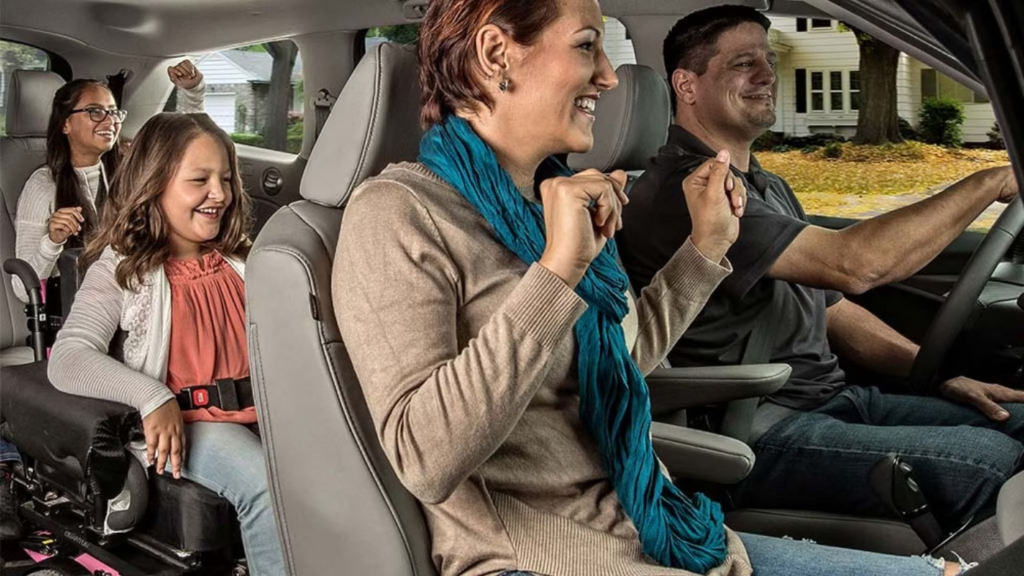
Funding options for wheelchair van modifications extend beyond loans to encompass charities, employer subsidies, and insurance settlements. Easter Seals Ontario, for youth under 19, provides up to $3,000 annually, ideal for growing families. Veterans Affairs Canada tailors coverage based on service-related disabilities, often fully funding conversions up to $20,000.
Tax strategies amplify impact: Claim 20% of a modified vehicle’s purchase price (up to $5,000) as a medical expense, plus full HST rebates on installs. For modifications averaging $25,000-$50,000, these deductions can save $5,000+. Non-profits like Lions Clubs offer ad-hoc grants, varying by chapter—networking locally yields results.
- Charity Pathways: Kin Canada clubs fund up to $2,000 for urgent needs.
- Insurance Angles: WSIB covers work-related adaptations fully.
- Hybrid Approaches: Combine rebates (e.g., Toyota’s $1,000) with loans for zero-down starts.
Real-world application: A Manitoba farmer modified his van for $35,000 using AISH grants ($8,000) and a bank loan, reclaiming farm access post-injury. These multifaceted funding options for wheelchair van modifications ensure no one is left sidelined.
Identifying the Best Loans for Disabled Person Vehicle Adaptation
Selecting the best loans for disabled person vehicle adaptation demands balancing rates, terms, and inclusivity. Top contenders include credit unions like Vancity, offering 3.99% APR for adaptive purchases with no prepayment penalties. National banks provide volume, but specialized lenders like those focused on mobility excel in nuance.
Criteria for “best”: Low origination fees (<1%), income flexibility (accepting EI/CPP-D), and adaptation coverage in loan docs. In 2025, green loans for electric adapted vans add incentives, with rebates up to $5,000 federally. Avoid pitfalls like variable rates spiking post-intro periods.
A comparative lens: A $30,000 loan at 5% over 72 months costs $4,200 in interest versus $5,500 at 6.5%. Borrowers with strong payment histories access prime rates, while building via secured cards paves the way. Ultimately, the best loans for disabled person vehicle adaptation align with lifestyle—short-term for urban commuters, extended for rural drives.
How to Apply for Accessible Vehicle Grants Canada: Essential Steps
The process for how to apply for accessible vehicle grants Canada starts with documentation: Secure a physician’s letter outlining mobility restrictions. Federal portals like Canada.ca streamline HST rebate claims, requiring invoices within four years. Provincially, Ontario’s HVMP applications via March of Dimes involve coordinator assessments, approving funds post-need verification.
Timeline: 2-8 weeks, faster with complete submissions. Common errors? Omitting bids from certified installers. Success stories abound—a Nova Scotia teacher received $11,000 for hand controls, enhancing classroom access. Pairing grants with loans via sites like Quick Approvals for Mobility Financing accelerates outcomes.
Pro tips: Appeal denials with updated medicals; track via provincial hotlines. This structured approach demystifies how to apply for accessible vehicle grants Canada, fostering empowerment.
Overview of Wheelchair Accessible Vehicle Financing Programs Ontario
Wheelchair accessible vehicle financing programs Ontario integrate grants and loans seamlessly. ADP funds peripheral aids (75% coverage), while HVMP targets core mods. Private programs from FCA Canada rebate $750 for Chrysler adaptations, stacking with bank terms up to 120 months.
Expanded in 2025, these programs now include EV incentives, reducing long-term costs amid rising fuel prices. A Hamilton family financed a $70,000 van: $15,000 HVMP, $1,000 rebate, $54,000 loan at 4.8%. Enrollment via dealer partnerships simplifies, with approvals in days.
| Program | Coverage | Max Funding | Eligibility Focus |
|---|---|---|---|
| HVMP | Vehicle Mods | $15,000/10 yrs | Mobility Impairment |
| ADP | Mobility Aids | 75% Cost | Long-Term Disability |
| FCA AutoAbility | Rebates | $750 | Adaptive Installs |
Such integration makes wheelchair accessible vehicle financing programs Ontario a model for accessibility.
Government Loans for Mobility Adapted Cars in Canada: Federal Insights
Government loans for mobility adapted cars in Canada are indirect, via guarantees or partnerships, but grants dominate direct aid. The Enabling Accessibility Fund supports community projects, indirectly benefiting individual adaptations through shared resources. For direct loans, banks leverage government-backed ODSP direct deposits for stability.
Federal tax refunds for gasoline ease burdens, refunding $0.0015/km for certified users. In practice, a Saskatchewan driver adapted a sedan for $18,000, using tax savings to offset 10% of loan interest. Policy evolves, with 2025 budgets allocating $50M more for mobility equity.
Assessing What Are the Costs of Adapting a Vehicle for Disability
Understanding what are the costs of adapting a vehicle for disability is crucial for budgeting. Basic hand controls run $1,500-$3,000; full wheelchair conversions $40,000-$80,000, per 2025 estimates. Annual ownership adds $6,500-$7,300 for insurance, maintenance, and fuel.
Factors: Vehicle type (minivans pricier than sedans), certification ($500+), and location (urban installs 15% higher). Breakdown: Lifts $10,000, seating $5,000, electronics $2,000. Mitigate via phased mods—start with essentials, expand as funds allow.
- Low-End: Pedal extenders ($800).
- Mid-Range: Roof raises ($15,000).
- High-End: Side-entry full conversion ($60,000+).
These figures highlight why layered financing is essential for disability adapted vehicle loans.
Securing Low Interest Loans for Wheelchair Van Purchase Canada
Low interest loans for wheelchair van purchase Canada prioritize affordability, with rates as low as 3.5% via credit unions for strong profiles. Volkswagen’s program adds $1,000 rebates, effectively lowering effective APR. Terms extend to 96 months, suiting fixed incomes.
Eligibility: Proof of disability, stable housing. A PEI retiree snagged 4.2% on $55,000, paying $550/month. Shop via aggregators for best matches, avoiding high-fee traps.
Mastering How to Get Funding for Adaptive Vehicle Equipment

How to get funding for adaptive vehicle equipment mirrors grant applications: Assess, document, apply. Federal medical expense credits cover 20% up to $5,000; provincials like Quebec’s SAAQ reimburse installs post-OT approval. Timeline: 1-3 months; tips: Bundle with loans for cash flow.
Example: $8,000 lift funded 50% via grant, 50% loan—total cost halved effectively.
Provincial Variations: Provincial Grants for Disability Vehicle Loans Quebec
In Quebec, provincial grants for disability vehicle loans Quebec via SAAQ focus on reimbursements, capping at essential costs for vehicles under 5 years old. Eligibility: OT recommendation, no prior aid. Amounts: Full for approved mods, up to $20,000 typically. Integrates with loans from Desjardins at 5%.
Montreal case: $25,000 conversion, $18,000 reimbursed, loan for balance. Quebec’s emphasis on safety inspections ensures quality.
Frequently Asked Questions
How to Finance Disability Adapted Van in Ontario?
Financing a disability adapted van in Ontario starts with HVMP grants up to $15,000, followed by bank loans. Assess needs via OT, apply online, and pair with rebates. For details, visit Ontario’s official program page: Home and Vehicle Modification Program. This covers 75-100% for many, with loans filling gaps at low rates.
How to Apply for Accessible Vehicle Grants Canada?

To apply for accessible vehicle grants Canada, compile medical docs and bids, submit to provincial admins like March of Dimes. Federal rebates via CRA. Expect 4-6 weeks; approvals boost disability adapted vehicle loans viability. Quebec’s SAAQ offers similar: SAAQ Vehicle Adaptation.
What Are the Costs of Adapting a Vehicle for Disability?

What are the costs of adapting a vehicle for disability range $5,000-$80,000, per mod type. Grants offset 20-75%; loans handle rest. Factor insurance hikes ($1,200/year extra). Detailed breakdowns aid budgeting for loans for adaptive equipment on vehicles Canada.
How to Get Funding for Adaptive Vehicle Equipment?
How to get funding for adaptive vehicle equipment involves OT reports and grant apps. Stack with tax credits for max savings. Ontario’s ADP funds aids; HVMP vehicles. Explore funding options for wheelchair van modifications via coordinators.
Best Loans for Disabled Person Vehicle Adaptation in Canada?
The best loans for disabled person vehicle adaptation feature 4-6% rates, 72+ month terms. Credit unions lead; pair with grants for wheelchair accessible vehicles in Canada. Pre-approve to lock savings.
Government Loans for Mobility Adapted Cars in Canada Availability?
Government loans for mobility adapted cars in Canada are grant-heavy, with indirect loan supports. Federal refunds aid repayments. Provincial like Quebec’s SAAQ integrate seamlessly.
Conclusion
Navigating disability adapted vehicle loans in Canada reveals a tapestry of opportunities—from grants for wheelchair accessible vehicles in Canada to specialized low interest loans for wheelchair van purchase Canada—designed to uphold dignity and independence. We’ve explored provincial nuances, like Ontario’s HVMP and Quebec’s SAAQ, alongside federal tax levers, emphasizing how strategic financing turns high costs into manageable steps. Whether through funding options for wheelchair van modifications or bank partnerships, the key is informed action: Assess, apply, and advocate.
As you consider your next move, authoritative government resources provide the foundation—delve into Ontario’s HVMP or provincial equivalents for tailored guidance. For personalized loan matching, Quick Approvals Canada stands ready to assist, ensuring your mobility journey is as smooth as the roads ahead. Reclaim your freedom today; the wheel is in your hands.