Buying a vehicle is a major financial commitment, and choosing how to pay for it can be just as important as choosing the vehicle itself. A traditional car loan gives you structured payments and is commonly secured against the vehicle, while a personal line of credit can provide more flexibility but typically comes with a variable interest rate. That makes the decision more complicated than simply choosing the option with the lower advertised rate.
For Canadians considering a car loan vs personal line of credit Canada comparison, the right choice depends on the borrowing amount, credit profile, repayment discipline, interest rate, vehicle price, and how long you expect to keep the car. A line of credit may look attractive because you only pay interest on the amount you use, while an auto loan can provide predictable repayment and a clear end date.
This guide explains how both options work, how their costs differ, when each may make sense, and what Canadian borrowers should check before signing an agreement. If you want to compare auto loan and credit line Canada options with greater confidence, the goal should not be finding the product with the smallest monthly payment. It should be finding the financing structure that produces an affordable total borrowing cost without putting unnecessary pressure on your finances. car loan vs personal line of credit Canada
What Is the Difference Between a Car Loan and a Personal Line of Credit in Canada?
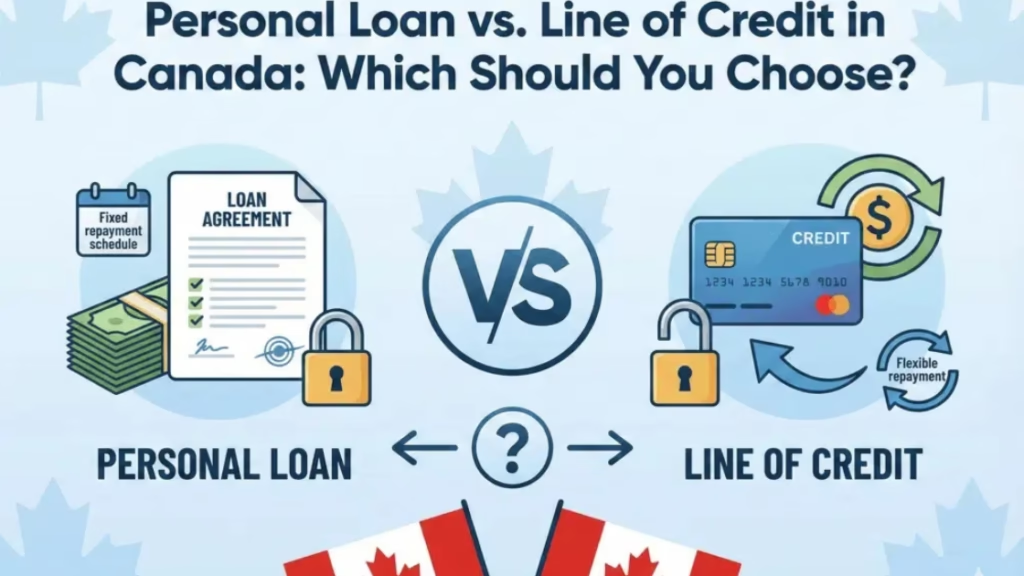
The basic distinction in a car loan vs personal line of credit Canada decision is how the borrowing is structured. A car loan is generally an instalment loan created specifically to finance a vehicle. You borrow a defined amount and repay it through scheduled payments over a specified term. A personal line of credit, by contrast, gives you access to a predetermined credit limit that you can draw from as needed and repay over time.
The Financial Consumer Agency of Canada explains that a car loan is a personal loan used to purchase a vehicle, and financing can be arranged through a dealership or directly through a financial institution. A personal line of credit does not normally have to be used for one particular purchase. You can borrow up to your approved limit, repay amounts, and potentially borrow again without submitting a new loan application each time. car loan vs personal line of credit Canada
That flexibility is the biggest difference. A car loan is designed around one purchase and one repayment schedule. A personal line of credit is revolving borrowing. However, flexibility does not automatically mean lower cost. A line of credit can carry a variable interest rate, meaning your borrowing cost can change when market rates change.
For someone trying to use LOC for car purchase Canada, the important question is therefore not simply whether the LOC can fund the vehicle. The question is whether its interest rate, repayment structure, fees, and variable-rate risk are appropriate for a large purchase that may take several years to repay.
How a Car Loan Works for a Canadian Vehicle Purchase

A car loan vs personal line of credit Canada comparison starts with understanding the conventional auto loan. You generally select a vehicle, determine how much you need to finance after accounting for a down payment or trade-in, and apply for financing. The lender evaluates your credit profile, income, existing debt, affordability, and other factors before making an offer.
Car loans may be arranged through banks, credit unions, independent finance companies, or dealership financing arrangements. The Financial Consumer Agency of Canada recommends obtaining multiple financing quotes and looking beyond the payment amount to compare the interest rate, fees, amount financed, payment schedule, and term.
One major advantage of an auto loan is structure. Your borrowing amount is established at the beginning, your payment schedule is known, and the loan is designed to reach a zero balance at the end of the agreed term if all scheduled payments are made.
A secured auto loan can also reduce lender risk because the vehicle may serve as collateral. Canadian government guidance explains that secured debts are backed by collateral and that lenders may charge lower rates on secured products because the collateral reduces their risk.
This makes a car loan particularly useful for borrowers who want a straightforward repayment plan and prefer knowing when the debt will be fully paid.
How a Personal Line of Credit Works for a Car
The when personal LOC better Canada question becomes more important when you understand how revolving credit works. A personal line of credit provides an approved borrowing limit rather than one fixed loan amount. You can use part or all of the available credit and generally pay interest on the amount you actually borrow. use LOC for car purchase Canada
For example, if a lender approves a $30,000 personal LOC and you use $20,000 toward a vehicle, interest generally applies to the amount borrowed rather than the unused portion. If you repay $5,000, you can potentially regain access to that amount, subject to the agreement.
The flexibility can be useful, but it introduces a significant behavioural risk. A line of credit does not necessarily force you to eliminate the debt through a fixed amortization schedule in the same way as a conventional car loan. FCAC notes that minimum payments on some lines of credit can primarily cover interest, meaning that making only the minimum payment may not reduce the principal meaningfully.
That is why use LOC for car purchase Canada should generally be considered only when the borrower has a clear repayment strategy. A lower minimum payment can create the illusion that the vehicle is affordable while the underlying debt remains outstanding for much longer.
Car Loan vs Personal Line of Credit Canada: Side-by-Side Comparison
| Factor | Car Loan | Personal Line of Credit |
|---|---|---|
| Main purpose | Vehicle financing | Flexible borrowing |
| Borrowing structure | Fixed loan amount | Revolving credit limit |
| Repayment | Scheduled instalments | Minimum payment plus interest under agreement |
| Interest type | Often fixed, depending on lender | Usually variable |
| Collateral | Often secured by vehicle | Can be secured or unsecured |
| Reusable credit | Usually no | Usually yes |
| Budget predictability | Higher | Lower if rate or balance changes |
| Flexibility | Lower | Higher |
| Risk of prolonged debt | Generally lower | Higher if only minimum payments are made |
| Best suited to | Structured vehicle financing | Borrowers needing flexible access to credit |
This compare auto loan and credit line Canada framework highlights an important point: neither product is automatically superior for every borrower. The better option depends on the financing offer and your ability to manage the debt.
Secured vs Unsecured Options Canada: Why the Difference Matters
Understanding secured vs unsecured options Canada is critical before deciding between an auto loan and a personal LOC. A secured loan or line of credit is backed by an asset. If the borrower defaults, the lender may have rights to the collateral depending on the agreement and applicable law. compare auto loan and credit line Canada
An unsecured product does not use a specific asset as collateral. A personal LOC is commonly unsecured, although secured lines of credit are also available. FCAC explains that secured lines of credit can use assets such as a home or car as collateral, while personal lines of credit can be unsecured.
The trade-off is straightforward. Secured borrowing may offer more favourable pricing because the lender has additional security. Unsecured borrowing can offer greater flexibility because there is no specific asset securing the debt, but the lender may compensate for the additional risk through its pricing and approval requirements. secured vs unsecured options Canada
For a vehicle purchase, this distinction matters because the car itself is a depreciating asset. Borrowing against a rapidly depreciating asset for a long period can create negative-equity risk, particularly when the loan term is long. FCAC specifically warns that longer car loans can result in borrowers owing more than their vehicle is worth when they want to trade or sell it. secured vs unsecured options Canada
Interest Rates and Cost Breakdown for Canadian Borrowers
A car loan vs personal line of credit Canada decision should always be based on the total cost of borrowing rather than the headline rate alone.
The Bank of Canada’s target overnight rate was 2.25% as of September 2, 2026. However, this is not the rate consumers automatically receive on car loans or personal LOCs. Lenders set consumer rates according to their own funding costs, underwriting policies, borrower risk, product structure, and other factors. (Bank of Canada)
The following examples are illustrations rather than guaranteed Canadian offers.
| Financing option | Amount | Illustrative rate | Term/repayment | Approx. payment* | Approx. interest* |
|---|---|---|---|---|---|
| Car loan | $25,000 | 6.5% fixed | 60 months | $489 | $4,325 |
| Car loan | $25,000 | 8.5% fixed | 60 months | $513 | $5,795 |
| Personal LOC | $25,000 | 7.5% variable | 60-month payoff target | $501 | $5,060 |
| Personal LOC | $25,000 | 10.5% variable | 60-month payoff target | $537 | $7,200 |
Illustrative calculations only. Actual payments and total interest vary according to lender terms, compounding, fees, payment frequency, and rate changes.
The key issue with the LOC examples is that the rate is variable. If the interest rate rises, your interest cost can rise as well. FCAC warns that rising interest rates can make variable-rate borrowing, including lines of credit, more expensive.
For that reason, someone comparing secured vs unsecured options Canada should stress-test the budget rather than assuming today’s rate will remain unchanged.
When a Personal LOC May Be Better for a Car Purchase
The when personal LOC better Canada question has no universal answer, but a personal line of credit can make sense in specific circumstances.
A LOC may be worth considering when the borrower already has an attractive rate, strong credit, substantial repayment capacity, and a disciplined plan to eliminate the balance quickly. It may also provide flexibility when the exact amount required is uncertain or when the borrower wants access to additional funds for related expenses.
For example, someone buying a relatively inexpensive used vehicle may prefer a personal LOC if the available rate is clearly competitive with the car financing being offered and the borrower expects to repay the balance aggressively. when personal LOC better Canada
Another situation involves borrowers who already maintain an established banking relationship and have a favourable LOC agreement. FCAC notes that financial institutions may offer different credit products and that a borrower’s existing relationship can sometimes influence available financing options.
However, a low LOC rate should not be treated as a reason to stretch the vehicle budget. Flexibility is valuable only when it supports disciplined repayment. when personal LOC better Canada
When a Car Loan Is Usually the More Practical Choice

For many Canadians, the traditional car loan is the more straightforward option. A car loan vs personal line of credit Canada decision often favours an auto loan when the borrower wants predictable payments, a defined payoff date, and financing specifically structured around the vehicle.
A car loan can also make budgeting easier because the borrower knows the scheduled payment and term before committing. This is particularly useful for households that want to keep monthly expenses predictable.
The security structure can also be important. When an auto loan is secured by the vehicle, the lender has collateral, potentially making the financing less risky from the lender’s perspective.
Most importantly, the borrower should compare the complete offers. A dealer’s advertised monthly payment does not tell you whether the financing is competitive. FCAC recommends comparing financing offers and considering the total cost rather than focusing only on the payment or interest rate.
Step-by-Step: How to Choose Between the Two
Step 1: Establish the Vehicle Budget
Before deciding on financing, determine how much vehicle you can realistically afford. Include insurance, fuel, maintenance, registration, taxes, and other ownership costs rather than looking only at the loan payment.
The car loan vs personal line of credit Canada decision should come after establishing the vehicle budget, not before.
Step 2: Check Your Credit Profile
Your credit history can affect the rates and credit limits available to you. TransUnion explains that lenders can use credit reports as part of their assessment when deciding whether to grant credit.
Review your credit information before submitting applications so that you can identify inaccurate information and understand your current position.
Step 3: Obtain Actual Financing Offers
Do not compare hypothetical rates indefinitely. Obtain actual offers from appropriate lenders and compare the amount financed, interest rate, fees, payment frequency, term, and total repayment.
Step 4: Compare the Same Amount
A fair compare auto loan and credit line Canada comparison requires identical borrowing amounts. Comparing a $25,000 car loan with a $20,000 LOC will produce misleading conclusions.
Step 5: Stress-Test a Variable Rate
If the LOC has a variable rate, calculate whether you could still comfortably make payments if the rate increased. This is one of the most important differences between many LOCs and fixed-rate auto loans.
Step 6: Choose the Shortest Affordable Repayment Period
FCAC warns that longer car-loan terms can significantly increase total interest costs. For example, its published illustration shows a $25,000 loan at 5% costing $1,974 in interest over 36 months compared with $4,681 over 84 months.
The same principle applies to revolving borrowing: paying debt off faster generally reduces the time interest accumulates.
Eligibility and Requirements for Car Loans and Personal LOCs
The eligibility requirements for a car loan vs personal line of credit Canada application vary between lenders, but both products typically involve an assessment of your financial position.
Lenders may review:
- Income and employment
- Existing debt obligations
- Credit history
- Credit score
- Housing and financial stability
- Requested borrowing amount
- Repayment capacity
- Identification and residency information
For a car loan, lenders may additionally review the vehicle, its value, age, mileage, purchase price, and other characteristics relevant to the financing agreement.
For a personal LOC, the lender will establish a credit limit based on its assessment of your finances. FCAC states that financial institutions generally consider income, existing debt, and credit report and score when determining a LOC’s credit limit and interest rate.
Strong documentation can make the process smoother. Depending on the lender, you may need identification, proof of income, employment information, banking details, and vehicle purchase information.
Banks vs Lenders vs Brokers: What Should Canadian Buyers Compare?
| Provider type | Potential advantage | Potential limitation |
|---|---|---|
| Banks | Established relationship and broad financial services | Underwriting may be less flexible for some borrowers |
| Credit unions | Local relationships and potentially different lending policies | Membership or product availability may vary |
| Auto finance lenders | Vehicle-specific financing expertise | Pricing and terms vary significantly |
| Brokers | May help compare multiple lender options | You should understand compensation, fees, and lender relationships |
| Dealership financing | Convenient and integrated into vehicle purchase | The first offer is not necessarily the lowest-cost option |
The best approach is not to assume that one provider type is always cheapest. FCAC explicitly recommends shopping around and getting multiple quotes because a dealership does not necessarily have to provide the lowest interest rate.
For borrowers researching compare auto loan and credit line Canada options, the same principle applies: compare actual offers rather than relying on assumptions about banks, dealers, brokers, or online lenders.
Canadian Case Study: Choosing a Car Loan
Consider a borrower purchasing a $30,000 vehicle with a stable income and good credit. The borrower receives a fixed-rate car loan with predictable monthly payments and also has access to a personal LOC.
The LOC appears attractive because its initial rate is lower. However, the borrower plans to take five years to repay the balance and does not want exposure to variable-rate increases.
In this situation, the car loan may be preferable even if the initial LOC rate looks competitive. The fixed repayment structure provides greater certainty, and the borrower knows exactly when the debt should be eliminated.
The lesson is important: car loan vs personal line of credit Canada should be judged according to the complete borrowing strategy, not simply the starting interest rate.
Canadian Case Study: When a LOC May Make Sense
Now consider a borrower with an established personal LOC at a competitive variable rate, substantial monthly cash flow, and a plan to repay a $15,000 vehicle balance within 18 months.
The borrower compares the LOC with a traditional auto loan and determines that the LOC provides sufficient flexibility while still allowing the debt to be eliminated quickly.
Here, when personal LOC better Canada becomes a reasonable consideration. The borrower is not using the LOC simply to obtain a lower minimum payment. Instead, the borrower has a defined payoff strategy and understands the risk of a variable rate.
The difference is discipline. A flexible credit product can become expensive if repayment is delayed indefinitely.
Expert Tips to Accelerate Approval and Improve Financing Terms

Preparation can improve the efficiency of the financing process.
First, know your budget before applying. Second, organize income and employment documentation. Third, review your credit information for errors. Fourth, reduce unnecessary outstanding debt where practical. Fifth, avoid applying for unnecessary credit immediately before a major vehicle purchase.
When comparing secured vs unsecured options Canada, understand what collateral is involved and what happens if payments are missed. Never choose secured financing simply because the rate appears lower without understanding the consequences of default.
You should also ask every lender for the complete cost of borrowing. FCAC says consumers should carefully review interest rates, fees, payment terms, and other agreement details before signing.
Finally, do not let a salesperson steer the discussion entirely toward monthly payments. A lower payment can be created by extending the repayment term, potentially increasing the total interest cost.
Critical Mistakes to Avoid
Choosing Based Only on the Monthly Payment
A low payment does not necessarily mean low-cost financing. Always calculate the total amount you will repay.
Assuming the LOC Rate Will Stay the Same
A personal LOC is commonly variable. Your borrowing cost may change as interest rates change.
Borrowing More Because Credit Is Available
An approved credit limit is not a recommended spending limit. Borrow only what fits your financial situation.
Ignoring Vehicle Depreciation
Long repayment terms can leave you owing more than the vehicle is worth, especially if you trade the vehicle before the loan ends.
Accepting the First Financing Offer
FCAC recommends shopping around and comparing financing offers from multiple dealers and lenders. (Canada)
Focusing on Rate Without Checking Fees
A slightly lower interest rate may not produce the cheapest financing if the agreement includes significant fees or other costs.
Making Only Minimum LOC Payments
FCAC warns that minimum LOC payments can sometimes primarily cover interest. If you do not make additional principal payments, the debt may take much longer to eliminate.
FAQs About Car Loan vs Personal Line of Credit Canada
Is a car loan cheaper than a personal line of credit in Canada?
Not automatically. The cheapest option depends on the actual rate, fees, borrowing amount, repayment period, and whether the LOC rate changes. A secured auto loan may offer pricing advantages because the vehicle provides collateral, while a personal LOC may provide a competitive rate to a strong borrower. Compare the complete offers rather than assuming one product is always cheaper.
Can I use a personal line of credit to buy a car in Canada?

Yes, a personal LOC can generally be used for flexible borrowing, and unlike a purpose-specific loan, it does not normally restrict the funds to one particular purchase. However, you should confirm the terms of your specific LOC and determine whether its interest rate and repayment structure make sense for the vehicle purchase. use LOC for car purchase Canada should be based on affordability and a clear repayment plan.
When is a personal LOC better than a car loan?

The when personal LOC better Canada question depends heavily on the borrower’s circumstances. A LOC may be attractive when you already have a competitive rate, strong repayment capacity, and intend to repay the balance quickly. It may be less suitable if you need predictable payments over several years or are uncomfortable with variable interest rates.
Is a car loan secured or unsecured?
Many traditional vehicle loans are secured because the vehicle serves as collateral. However, financing structures vary. A secured loan can potentially offer a lower interest rate because the lender has an asset supporting the debt. FCAC identifies car loans as an example of secured debt.
Should I choose a secured or unsecured option for a car?
The secured vs unsecured options Canada decision should consider interest cost, collateral, repayment terms, credit profile, and your ability to make payments. Secured borrowing can offer pricing advantages, but the collateral creates additional consequences if the borrower defaults. The cheapest rate is not necessarily the best option if the agreement does not fit your financial circumstances.
Does a personal line of credit affect my credit?
A personal LOC is a credit account and can be part of your credit profile. Credit bureaus receive information from lenders, although lenders do not necessarily report to both major Canadian credit bureaus at exactly the same time. TransUnion explains that credit reports contain information about credit history and payment behaviour and are used by credit grantors when assessing applications.
Should I get pre-approved before shopping for a car?
Obtaining financing information before negotiating a vehicle can help establish a realistic budget and provide a benchmark against which dealership financing can be compared. However, pre-approval does not mean you should automatically borrow the maximum amount offered. Your personal budget should determine the appropriate vehicle price.
What is the biggest mistake when comparing a car loan and LOC?
The biggest mistake is focusing on one number—usually the monthly payment or advertised interest rate. A proper compare auto loan and credit line Canada analysis considers the borrowing amount, total interest, fees, repayment period, rate structure, collateral, flexibility, and risk of prolonged debt.
Final Verdict: Car Loan vs Personal Line of Credit Canada
For most borrowers purchasing a vehicle as a straightforward long-term expense, a properly structured car loan can be easier to budget because it provides a defined amount, scheduled payments, and a clear repayment timeline. A personal line of credit can provide greater flexibility and may be attractive when the borrower already has a competitive rate and intends to repay the balance quickly.
The smartest car loan vs personal line of credit Canada decision is therefore not about declaring one product universally better. It is about matching the financing structure to your credit profile, budget, repayment discipline, and tolerance for interest-rate changes.
If you are evaluating use LOC for car purchase Canada, compare the LOC against actual auto-financing offers using the same borrowing amount and repayment target. If you are deciding between secured vs unsecured options Canada, understand both the potential pricing benefit and the consequences of using collateral. And if you are asking when personal LOC better Canada, focus on whether the flexibility genuinely improves your financial position rather than simply reducing today’s required payment.
Before signing, review the full agreement, verify the total cost of borrowing, and compare multiple offers. Canadian consumer guidance recommends looking beyond the payment and considering the complete financing picture.
For borrowers who want to explore vehicle financing options, Quick Approvals provides an online starting point for comparing financing possibilities and connecting with auto-financing specialists. (Quick Auto Loan Approvals)
Internal Links for QuickApprovals.ca
- https://quickapprovals.ca/
- https://quickapprovals.ca/car-loan-rates-comparison-canada/
- https://quickapprovals.ca/car-loan-calculator-canada/
- https://quickapprovals.ca/online-car-loan-approval-process-canada/
- https://quickapprovals.ca/bad-credit-auto-financing-canada/
- https://quickapprovals.ca/how-to-improve-chances-of-getting-a-car-loan-in-canada/
Authority Outbound References
- https://www.canada.ca/en/financial-consumer-agency/services/loans/financing-car/financing-options.html
- https://www.canada.ca/en/financial-consumer-agency/services/loans/loans-lines-credit.html
- https://www.canada.ca/en/financial-consumer-agency/services/loans/financing-car/shop-around.html
- https://www.canada.ca/en/financial-consumer-agency/services/loans/financing-car/risks.html
- https://www.bankofcanada.ca/core-functions/monetary-policy/key-interest-rate/
- https://www.transunion.ca/credit-report/