

car loan guide for beginners Canada, Buying a car is a significant milestone, but for first-time buyers or newcomers to Canada, navigating the financing process can feel overwhelming. This car loan guide for beginners Canada is designed to simplify the journey, offering clear, actionable advice to help you secure a car loan that fits your budget and needs.
Whether you’re wondering how to get a car loan in Canada, curious about what credit score is needed for a car loan in Canada, or exploring car loan options for new immigrants Canada, this guide covers it all. With insights from reputable sources like government and bank websites, and tools like the car loan calculator Canada, you’ll be equipped to make informed decisions. For a seamless loan approval process, consider visiting Quick Approvals.
What is a Car Loan and How to Get a Car Loan in Canada?
car loan guide for beginners Canada, A car loan is a personal loan used to purchase a vehicle, repaid over time with interest. In Canada, car loans are offered by banks, credit unions, dealerships, and online lenders. The process involves borrowing a specific amount, agreeing to a repayment term (typically 1-8 years), and paying interest based on your credit profile and the lender’s terms.
To understand how to get a car loan in Canada, start by assessing your financial situation. Lenders evaluate your credit score, income, and debt-to-income ratio. A good credit score (650 or higher) can secure lower interest rates, while a lower score may still qualify you for a loan, albeit at higher rates. You can obtain a loan through:
- Dealerships: Many arrange financing with banks or their financing divisions, offering convenience but potentially higher rates.
- Financial Institutions: Banks like RBC, CIBC, or Scotiabank may offer better rates, especially if you have an existing relationship with them.
- Online Lenders: Platforms like Quick Approvals provide quick pre-approval options, often catering to diverse credit profiles.
For more details on financing options, visit Canada.ca – Financing a Car.
What Are the Requirements for a Car Loan in Canada?
Securing a car loan requires meeting specific criteria. Lenders assess your ability to repay the loan based on several factors. Here’s what you’ll typically need:
- Credit Score: A score of 650 or higher is considered good, increasing your chances of favorable rates. Scores below 650 may qualify for loans but often with higher interest rates.
- Income and Employment: Lenders require proof of stable income, typically $1,200-$1,800 monthly, through pay stubs, bank statements, or an employer letter.
- Identification: A valid driver’s license and proof of residence (e.g., utility bills or lease agreements) are mandatory.
- Down Payment: While not always required, a down payment (often 10-20%) can lower your loan amount and interest rate. Some lenders, like CIBC, offer up to 100% financing.
- Insurance: Valid auto insurance is necessary to finalize the loan.
For newcomers, car loan options for new immigrants Canada are available through banks like RBC, which offer loans without a Canadian credit history, requiring alternative documentation like foreign income records. To check your credit score without impacting it, use RBC’s Credit Score Checker.
Credit Score Ranges and Implications
| Credit Score Range | Category | Implications for Car Loans |
|---|---|---|
| 300 – 559 | Poor | High interest rates, limited lender options |
| 560 – 659 | Fair | Moderate to high rates, more options |
| 660 – 724 | Good | Competitive rates, easier approval |
| 725 – 759 | Very Good | Excellent rates, flexible terms |
| 760 – 900 | Exceptional | Best rates, fastest approvals |
Can I Get a Car Loan with Bad Credit in Canada?
Yes, it’s possible to get a car loan with bad credit, though it comes with challenges. Lenders view lower credit scores (below 650) as higher risk, often resulting in higher interest rates or stricter terms. However, several strategies can help:
- Seek Specialized Lenders: Some lenders focus on subprime loans for those with bad credit, offering tailored solutions.
- Consider Secured Loans: Using the vehicle as collateral can improve approval chances and lower rates.
- Get a Co-Signer: A co-signer with good credit can strengthen your application.
- Make a Larger Down Payment: Reducing the loan amount can make lenders more willing to approve you.
Improving your credit score before applying—by paying bills on time or reducing debt—can also help. For personalized loan options, Quick Approvals can connect you with lenders who accommodate various credit profiles.
Steps to Apply for a Car Loan in Canada
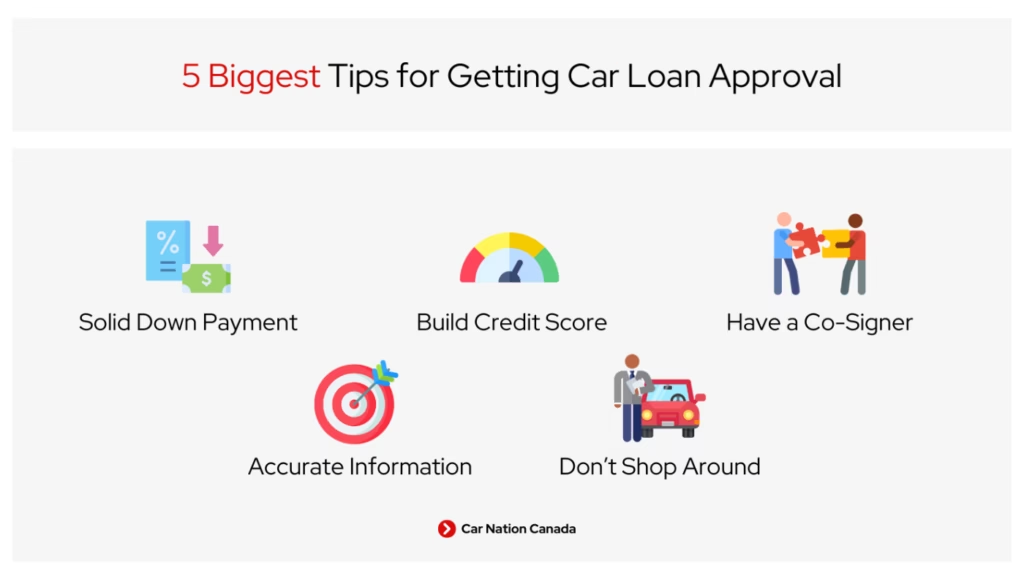
Applying for a car loan is a straightforward process if you follow these steps:
- Research Lenders: Compare rates and terms from banks, credit unions, and online platforms. Look for promotions like 0% financing, though these often require excellent credit.
- Check Your Credit Score: Obtain your score from Equifax or TransUnion to understand your eligibility.
- Determine Your Budget: Use a car loan calculator Canada to estimate monthly payments based on loan amount, interest rate, and term.
- Gather Documents: Prepare your driver’s license, proof of income, proof of residence, and insurance details.
- Get Pre-Approved: Pre-approval gives you a clear borrowing limit and strengthens your negotiating power at dealerships.
- Shop for a Car: Choose a vehicle within your budget, considering new or used options.
- Finalize the Loan: Complete the application with your lender or dealership, reviewing all terms before signing.
Pre-approval is particularly useful, as it allows you to shop with confidence and avoid high-pressure sales tactics at dealerships.
Types of Car Loans and Understanding Car Loan Terms Canada
Car loans in Canada come in various forms, each with unique features:
- New Car Loans: Often have lower interest rates due to lower risk for lenders. Terms can extend up to 96 months.
- Used Car Loans: Typically have higher rates but lower overall costs due to cheaper vehicle prices. Vehicles must usually be less than 7-10 years old.
- Secured vs. Unsecured Loans: Secured loans use the car as collateral, offering lower rates but with repossession risk. Unsecured loans have higher rates but no collateral requirement.
- Bank vs. Dealership Loans: Banks like Scotiabank offer loans up to $200,000 with flexible terms, while dealerships may provide convenience but higher rates.
- Leasing: A long-term rental option with lower monthly payments but no ownership at the end of the term.
Understanding car loan terms Canada is critical to avoid surprises. Key terms include:
- Interest Rate: The cost of borrowing, expressed as a percentage. Fixed rates remain constant; variable rates fluctuate.
- Loan Term: The repayment period, typically 12-96 months. Longer terms reduce monthly payments but increase total interest.
- Amortization: The process of paying off the loan through regular payments.
- Fees: Some loans include administration or origination fees, which should be factored into your budget.
Using a Car Loan Calculator Canada
A car loan calculator Canada is an essential tool for budgeting. By inputting the loan amount, interest rate, and term, you can estimate monthly payments and total interest. For example, a $20,000 loan at 5% interest over 60 months might result in monthly payments of approximately $377, with total interest of about $2,620. Calculators from banks like CIBC or Scotiabank allow you to test different scenarios to find affordable terms.
Car Loan for Beginners Canada and First-Time Buyers
For first-time buyers, a car loan for beginners Canada often comes with flexible terms to accommodate limited credit history. Lenders like CIBC offer loans with no down payment and terms up to 8 years, ideal for beginners. Key tips for first-time buyers include:
- Start Small: Choose an affordable vehicle to keep loan amounts manageable.
- Build Credit: Timely loan payments can improve your credit score for future financing.
- Explore Incentives: Some dealerships offer first-time buyer programs with lower rates or cash rebates.
Car Loan Options for New Immigrants Canada
Newcomers to Canada face unique challenges, such as lacking a Canadian credit history. Fortunately, banks like RBC and CIBC offer car loan options for new immigrants Canada. RBC’s Newcomer Automotive Loan Program, for instance, allows permanent residents and temporary foreign workers (in Canada less than 3 years) to apply without a credit history, requiring:
- Proof of income (e.g., foreign pay stubs or employer letter).
- A valid driver’s license.
- A down payment, often up to 15%.
CIBC’s newcomer program similarly offers up to 100% financing for vehicles up to 10 years old. These programs make car ownership accessible for those settling in Canada.
Best Car Loan Rates for First-Time Buyers Canada

Securing the best car loan rates for first-time buyers Canada requires preparation. Here are strategies to get competitive rates:
- Improve Your Credit: Pay down debts and correct credit report errors before applying.
- Shop Around: Compare offers from multiple lenders, including banks, credit unions, and online platforms like Quick Approvals.
- Consider 0% Financing: Available for new cars with excellent credit, though read the fine print for hidden fees.
- Opt for Shorter Terms: Shorter loans (e.g., 36-48 months) reduce total interest paid.
In 2025, average car loan rates in Canada range from 4-8% for good credit, but first-time buyers with fair credit may face rates of 8-12%. Comparing offers is key to finding the best deal.
Q&A Section
1. How to Get a Car Loan in Canada with Bad Credit?

Securing a car loan with bad credit is possible but may involve higher interest rates. Lenders specializing in subprime loans, secured loans using the vehicle as collateral, or co-signers can improve approval odds. Improving your credit score before applying—by paying bills on time or reducing debt—can also help. For tailored options, explore Quick Approvals.
2. What Are the Steps to Apply for a Car Loan in Canada?

The steps to apply for a car loan in Canada include researching lenders, checking your credit score, using a car loan calculator Canada to set a budget, gathering documents (ID, income proof), getting pre-approved, shopping for a car, and finalizing the loan. Pre-approval helps you negotiate better terms at dealerships.
3. What Credit Score is Needed for a Car Loan in Canada?

A credit score of 650 or higher is generally considered good for securing competitive rates. Scores below 650 may still qualify, but expect higher rates. Some lenders, like those offering car loan options for new immigrants Canada, may approve loans without a Canadian credit history, focusing on income and other factors.
4. Can I Get a Car Loan with Bad Credit in Canada?
Yes, you can get a car loan with bad credit in Canada, though rates may be higher. Specialized lenders, secured loans, or co-signers can help. Building credit through timely payments can improve future loan terms. For more information, check Canada.ca – Financing a Car.
5. What Are the Requirements for a Car Loan in Canada?
The requirements for a car loan in Canada include a valid driver’s license, proof of income ($1,200-$1,800/month), proof of residence, and auto insurance. A credit score of 650+ is ideal, but options exist for lower scores or newcomers. RBC’s newcomer program, for example, supports those without Canadian credit history.
6. How Can I Use a Car Loan Calculator Canada?
A car loan calculator Canada helps estimate monthly payments and total interest. Input the loan amount, interest rate, and term to see results. Tools from CIBC or Scotiabank are user-friendly and help you plan your budget effectively.
Conclusion
This car loan guide for beginners Canada equips you with the knowledge to navigate the car loan process confidently. From understanding how to get a car loan in Canada to exploring car loan options for new immigrants Canada, the steps and tips provided ensure you make informed decisions. Use tools like the car loan calculator Canada to budget wisely and compare lenders to secure the best car loan rates for first-time buyers Canada. For further insights, visit Canada.ca – Financing a Car or RBC – Car Loans for Newcomers. Ready to apply? Start your journey with Quick Approvals for a seamless loan approval process.