
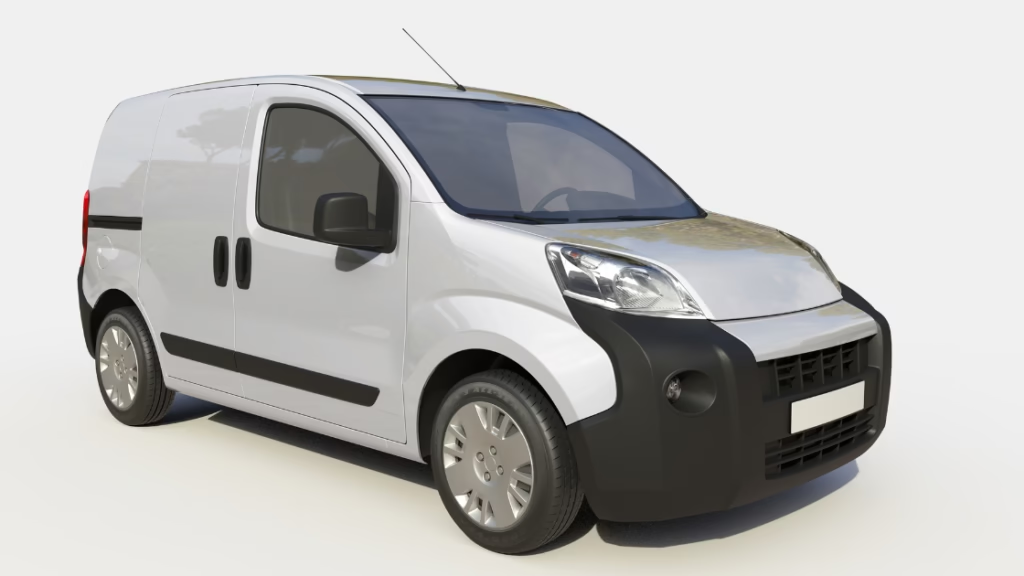
Buying a panel van is different from buying a personal vehicle. For a tradesperson, contractor, delivery operator, mobile service provider, or small-business owner, the van can be a productive asset rather than simply a way to get from one place to another. It may carry tools, equipment, inventory, materials, or supplies every working day. That makes choosing the right financing just as important as choosing the right vehicle.
A well-structured car loan for panel vans Canada can help you acquire the vehicle you need without putting unnecessary pressure on your working capital. However, the financing decision should not be based only on the monthly payment. The vehicle price, taxes, interest rate, term, down payment, credit profile, income, business stability, and expected use can all affect the overall cost.
For Canadians searching for panel van financing Canada, the most practical approach is to understand how lenders assess the application, prepare the right documentation, compare available financing structures, and choose a payment that remains manageable even when business revenue fluctuates.
The Financial Consumer Agency of Canada recommends comparing financing offers, understanding the total borrowing cost, and considering expenses beyond the payment itself. car loan for panel vans Canada
What Is a Car Loan for Panel Vans Canada?
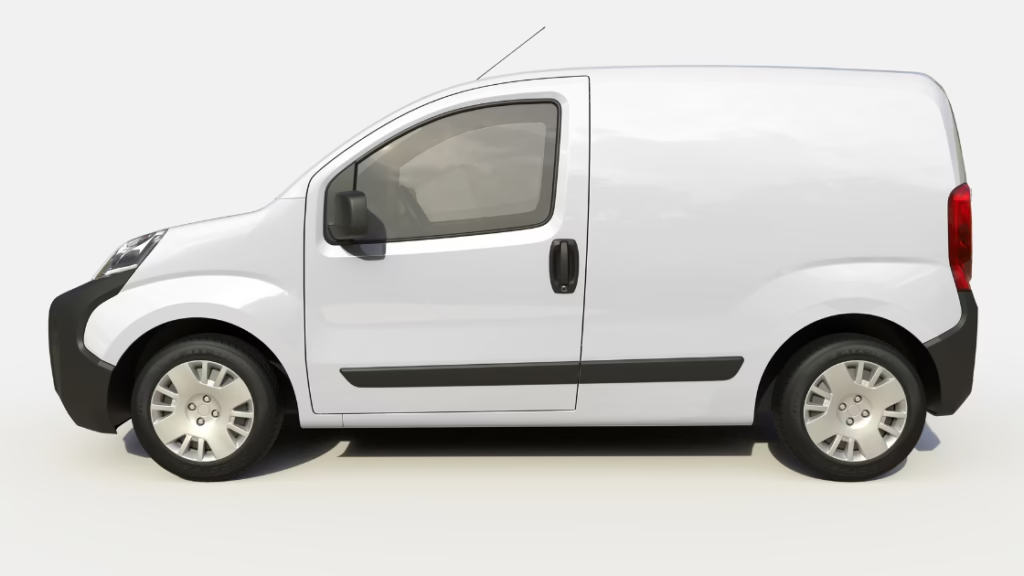
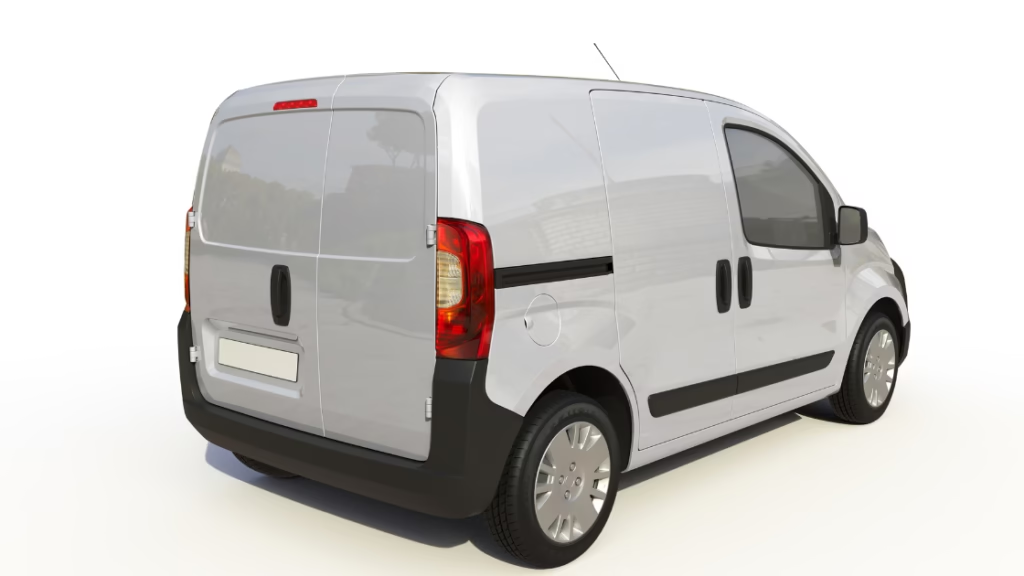
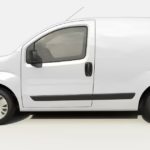
A car loan for panel vans Canada is financing used to purchase a panel van, whether the vehicle is new or used and whether it is primarily used for business or personal transportation. A panel van generally provides an enclosed cargo area behind the front seats, making it particularly useful when equipment, inventory, tools, or goods need to be transported securely and protected from weather.
For someone running an electrical, plumbing, HVAC, construction, landscaping, renovation, cleaning, courier, delivery, maintenance, or mobile-service operation, the vehicle can directly support revenue-producing work. That makes affordability especially important. A van that is too expensive can reduce cash flow, while a van that is too small or unsuitable can limit the number of jobs you can accept.
The financing structure can also differ depending on the borrower. An individual purchasing a van for work may be assessed primarily through personal income and credit history, while a business application may involve business registration, financial information, banking activity, and commercial use. The exact requirements vary by lender. Car Loan for Panel Vans Canada
Canada’s federal small-business financing program also recognizes commercial vehicles as an eligible type of equipment under its program for qualifying small businesses and start-ups, although eligibility, financing structure, and lender participation must be confirmed before relying on the program.
Why Panel Van Financing Canada Can Be Valuable for Working Professionals

The biggest advantage of panel van financing Canada is that it allows you to obtain a necessary vehicle without paying the entire purchase price upfront. For a business owner, preserving cash can be important because money may also be needed for payroll, fuel, insurance, inventory, tools, advertising, repairs, rent, or seasonal expenses.
Consider a contractor who needs a $45,000 panel van. Paying the entire amount immediately could leave the business with limited operating cash. Financing spreads the cost over an agreed period, allowing the owner to retain more working capital. The trade-off is that financing creates interest expense and a contractual monthly obligation.
This is why the right question is not simply, “Can I get approved?” A better question is, “Can I comfortably operate this vehicle and make every payment throughout the loan term?” A financially sustainable financing arrangement should leave enough room for fuel, insurance, maintenance, licensing, repairs, and slower business periods. Panel Van Financing Canada
How Enclosed Cargo Auto Loans Canada Work
Enclosed cargo auto loans Canada are particularly relevant when the vehicle is designed primarily for transporting equipment, products, or materials. From the lender’s perspective, the vehicle itself may serve as security for the loan, depending on the financing structure.
A typical process starts with an application containing personal information, employment or business information, income details, credit authorization, and vehicle information. The lender then evaluates the application and may verify income, residence, existing obligations, and the vehicle being purchased. Enclosed Cargo Auto Loans Canada
Canada’s Financial Consumer Agency of Canada explains that car financing may be arranged through a dealership, financial institution, or independent finance company. Borrowers can therefore compare different sources instead of assuming that the dealership’s first financing offer is automatically the best one.
For a panel van, the lender may also pay close attention to the vehicle’s age, mileage, purchase price, condition, and intended use. Older commercial vehicles can have different financing considerations because their resale value and remaining useful life may be more difficult to assess. Enclosed Cargo Auto Loans Canada
Who May Need Commercial Panel Vehicle Loans Canada?
Commercial panel vehicle loans Canada can be relevant to a wide range of Canadian operators. The vehicle might be used by a self-employed tradesperson, incorporated company, partnership, delivery business, contractor, mobile technician, or growing service company.
A panel van can make sense when the vehicle is directly connected to daily operations. A plumber may need dedicated storage for fittings and tools. An electrician may require organized compartments for cables and equipment. A delivery operator may need enclosed cargo capacity. A renovation company may need to move materials between job sites. Commercial Panel Vehicle Loans Canada
However, business use does not automatically guarantee approval. Lenders still need to determine whether the proposed payment is reasonable relative to the borrower’s financial position. A strong application clearly demonstrates the relationship between the vehicle and the applicant’s income-producing activity. Commercial Panel Vehicle Loans Canada
How Lenders Evaluate Trades Panel Van Rates Canada
People searching for trades panel van rates Canada often focus heavily on the interest rate. Rate matters, but it is only one component of the financing decision.
Lenders generally consider factors such as credit history, income, existing debts, loan amount, vehicle characteristics, down payment, repayment term, and overall risk. A borrower with strong credit and stable income may qualify for more competitive pricing than someone with weaker credit or inconsistent income.
The Bank of Canada held its target overnight rate at 2.25% on July 15, 2026. However, that policy rate should not be interpreted as the rate a consumer or business will receive on a panel-van loan. Vehicle financing rates are determined by lenders based on the specific application and financing arrangement. Trades Panel Van Rates Canada
The most useful comparison is therefore the actual financing offer presented to you, including the annual interest rate, term, fees, payment schedule, total amount financed, and total borrowing cost. Trades Panel Van Rates Canada
Eligibility Requirements for Car Loan for Panel Vans Canada
Eligibility for a car loan for panel vans Canada depends on the lender and the applicant, but a strong application generally provides clear evidence of identity, income, creditworthiness, and ability to repay.
Common documentation can include:
- Government-issued identification
- Proof of Canadian residence
- Recent proof of income
- Employment information
- Business registration information where applicable
- Recent bank statements where required
- Tax documents for self-employed applicants
- Vehicle purchase information
- Insurance information before funding
- Details of existing financial obligations
Self-employed applicants may face additional documentation requirements because income can be more complex to verify than a conventional salaried employee’s income. Keeping financial records organized before applying can reduce unnecessary delays.
Credit history is also important. TransUnion Canada notes that credit reports are commonly used in decisions involving auto loans and may influence both approval decisions and interest-rate determinations.
Step-by-Step Guide to Getting Panel Van Financing Canada
Step 1: Establish Your Realistic Vehicle Budget
Before applying for panel van financing Canada, determine the maximum total vehicle cost you can reasonably manage. Do not calculate affordability from the loan payment alone.
Include the expected cost of insurance, fuel, maintenance, licensing, repairs, and other operating expenses. If the vehicle is for business use, consider how much revenue it realistically supports rather than assuming every future job will materialize.
A practical budget should remain manageable during a weaker month.
Step 2: Review Your Credit Position
Reviewing your credit profile before submitting an application can help identify potential problems. Look for inaccurate information, unpaid accounts, excessive balances, or other issues that could affect a lender’s assessment.
Because credit information can influence auto-loan decisions, correcting legitimate reporting errors before applying may be worthwhile.
Step 3: Prepare Income and Business Documents
If you are employed, recent income documentation may be sufficient for some applications. If you are self-employed or operating a business, lenders may request additional documentation to understand the stability of your income.
Prepare documents before applying rather than waiting for a lender to request them. Faster document verification can make the overall process more efficient.
Step 4: Compare Financing Sources
Do not assume that the dealership, bank, credit union, or independent finance company will offer identical terms. The Financial Consumer Agency of Canada specifically recommends shopping around and comparing financing options before signing.
A financing comparison should look beyond the advertised payment. Compare the interest rate, term, fees, amount financed, total cost, and conditions attached to each offer.
Step 5: Choose the Panel Van Carefully
The vehicle itself matters. A lender may consider age, mileage, value, condition, and other vehicle characteristics when evaluating the application.
Choose a vehicle that fits the work you actually perform. Buying too much van can unnecessarily increase the loan balance, while buying too little may force you to replace it sooner.
Step 6: Review the Final Contract
Before signing, verify every important number. Confirm the vehicle price, down payment, taxes, financed amount, interest rate, payment frequency, term, fees, and total cost.
The Government of Canada recommends understanding the terms and conditions of an auto-financing agreement and obtaining multiple quotes before committing.
Interest Rates and Cost Breakdown
There is no single universal rate for car loan for panel vans Canada because financing pricing depends on the applicant, vehicle, lender, term, and other factors. Instead of presenting a misleading “average” rate as though it applies to everyone, use realistic examples to understand how the numbers work.
| Example | Vehicle Price | Down Payment | Amount Financed | Illustrative Rate | Term |
|---|---|---|---|---|---|
| A | $30,000 | $3,000 | $27,000 | 7.5% | 60 months |
| B | $45,000 | $5,000 | $40,000 | 8.5% | 60 months |
| C | $55,000 | $5,000 | $50,000 | 10.0% | 72 months |
These are illustrative examples only, not advertised or guaranteed financing offers. Actual terms can differ substantially.
For example, financing $40,000 at an illustrative 8.5% rate over 60 months produces a payment of roughly $820 per month before considering any additional financed costs. Extending the term can reduce the monthly payment, but it generally increases the total interest paid over the life of the loan.
That distinction is critical. A lower monthly payment does not necessarily mean a cheaper loan.
Example: Choosing Between a $40,000 and $50,000 Van
Imagine a tradesperson choosing between two panel vans. The first costs $40,000 and the second costs $50,000. The more expensive van may have additional features, but those features only make financial sense if they provide enough practical value.
If the cheaper van can safely carry the tools and equipment required for current contracts, the lower purchase price may preserve cash flow. If the more expensive vehicle materially improves productivity, capacity, reliability, or job availability, the additional cost may be justified.
The decision should therefore be based on business utility, not simply appearance or maximum borrowing capacity.
Banks vs Lenders vs Brokers for Commercial Panel Vehicle Loans Canada
| Financing Source | Potential Strength | Potential Limitation | Best Consideration |
|---|---|---|---|
| Banks | Established financial relationship | May have stricter underwriting | Strong financial profiles |
| Credit Unions | Potentially personalized service | Eligibility can vary | Members with stable finances |
| Independent Lenders | May serve broader credit profiles | Pricing can vary significantly | Applicants needing flexibility |
| Financing Brokers | Can compare multiple lending sources | Terms depend on available lenders | Borrowers wanting comparison |
A bank may be attractive when you already have a strong relationship and qualify for competitive terms. An independent lender may provide more flexibility for complex applications. A broker or financing platform may help borrowers compare potential options across different lending sources.
The important point is to understand exactly who is providing the financing and what the total borrowing cost will be.
Canadian Case Study: Electrician Purchasing a Panel Van
Consider a fictional Ontario electrician operating independently for several years. The electrician needs a panel van capable of carrying tools, ladders, cable, and electrical equipment. The applicant has stable business income but wants to avoid using a large amount of cash for the purchase.
Instead of choosing the most expensive vehicle available, the electrician identifies a van that satisfies the operational requirements and sets aside money for the down payment, insurance, maintenance, and emergency repairs.
The applicant prepares identification, income documentation, business information, and vehicle details before applying. The financing offers are then compared on total cost rather than monthly payment alone.
This approach improves the quality of the decision because the vehicle is treated as part of the business’s operating plan rather than simply as a purchase.
Canadian Case Study: Delivery Operator Expanding Capacity
A second fictional example involves a small delivery company that already owns one vehicle and needs another panel van because demand has increased. The owner expects the additional vehicle to support more delivery routes but recognizes that revenue can fluctuate.
Rather than financing the maximum amount available, the owner calculates the expected monthly vehicle cost and compares it against conservative projected cash flow.
This is an important lesson for panel van financing Canada: approval capacity and affordability are not the same thing. A lender may approve a larger amount than the borrower should actually spend.
How to Accelerate Approval
A well-prepared application can reduce avoidable delays. The first step is accuracy. Make sure names, addresses, income figures, employment details, and vehicle information are consistent across the application and supporting documents.
The second step is documentation. Have proof of income and identification available before applying. Business applicants should also have relevant registration and financial information ready.
The third step is vehicle selection. Avoid choosing a vehicle that creates unnecessary complications because of age, condition, price, or financing eligibility.
The fourth step is transparency. If your income is self-employed, seasonal, commission-based, or otherwise non-traditional, explain it accurately and provide documentation that demonstrates the underlying financial picture.
Quick Approvals states that its online process is designed to simplify vehicle financing applications and connect applicants with lenders. Its website currently offers financing pathways for cars, trucks, vans, and SUVs.
Mistakes to Avoid When Seeking Trades Panel Van Rates Canada
Focusing Only on the Monthly Payment
A low payment can be created by extending the loan term. Always examine the total amount repaid.
Choosing the Maximum Loan Amount
Being approved for a larger loan does not mean the larger vehicle is financially sensible.
Ignoring Operating Costs
Fuel, insurance, maintenance, tires, repairs, licensing, and downtime can materially affect the real cost of owning a panel van.
Applying Without Documentation
Missing income or identification documents can create unnecessary delays.
Failing to Compare Offers
The first financing offer is not necessarily the best available option. Government guidance recommends comparing financing offers and understanding the total borrowing cost.
Ignoring the Vehicle’s Condition
A cheaper used panel van can become expensive if major repairs arrive shortly after purchase. The purchase price should always be considered alongside condition and expected maintenance.
How to Make Car Loan for Panel Vans Canada More Affordable
There are several ways to reduce the financial pressure of a panel-van purchase. A larger down payment can reduce the amount borrowed, although using too much cash upfront may weaken business liquidity. A less expensive vehicle can also reduce both principal and interest costs.
A shorter loan term can reduce total interest, although the monthly payment will generally be higher. Conversely, a longer term can lower monthly payments but increase the period during which the borrower remains obligated.
Improving credit before applying may also help, depending on the lender’s underwriting criteria. Keeping debt manageable, making payments on time, and correcting inaccurate credit-report information are sensible preparation steps.
The goal should not be to find the smallest possible payment. The goal should be to create a financing structure that remains affordable throughout the entire repayment period.
Frequently Asked Questions
Can I get a car loan for panel vans Canada if I am self-employed?
Yes, self-employed applicants may be able to obtain financing, although lenders can require additional income verification. Instead of relying solely on a conventional paycheque, a lender may review tax documents, bank statements, business information, or other evidence of income. Requirements vary between lenders, so preparation is important. A self-employed applicant should present a consistent and accurate financial picture and avoid overstating income or business performance.
Is panel van financing Canada available for used vehicles?

Used panel vans may qualify for financing, subject to lender and vehicle requirements. Factors such as age, mileage, condition, purchase price, and vehicle value can affect eligibility and terms. A lower purchase price can reduce the amount borrowed, but borrowers should carefully inspect the vehicle because unexpected repairs can undermine the savings created by buying used.
Are enclosed cargo auto loans Canada different from ordinary car financing?
They can be structured differently depending on how the vehicle is classified and how it will be used. A panel van purchased for business purposes may involve additional information about the business and intended use. However, there is no single financing structure that applies to every applicant. The lender determines the appropriate product and underwriting requirements based on the application and vehicle.
What affects trades panel van rates Canada?
Rates can be influenced by credit history, income, existing obligations, vehicle characteristics, amount financed, term, down payment, and lender-specific underwriting. Market conditions also influence the broader cost of borrowing. The Bank of Canada’s policy rate was 2.25% as of July 15, 2026, but that is not the same as an individual vehicle-financing rate.
Can a small business finance a commercial panel van?
Potentially, yes. Qualifying Canadian small businesses can access financing for certain commercial vehicles through different lending arrangements. The Canada Small Business Financing Program specifically identifies new or used equipment, including commercial vehicles, among potentially eligible uses for qualifying businesses.
Should I make a down payment on a panel van?
A down payment can reduce the amount financed and therefore potentially reduce interest costs. However, business owners should avoid using so much cash for the down payment that they cannot comfortably cover operating expenses or unexpected repairs. The appropriate amount depends on the borrower’s financial position and financing terms.
Is a longer loan term better for commercial panel vehicle loans Canada?
Not necessarily. A longer term usually reduces the required monthly payment but can increase the total interest paid. It can also mean that the borrower remains responsible for payments for longer while the vehicle depreciates. Compare the total borrowing cost rather than choosing a term solely because it produces the lowest monthly payment.
How can I prepare for faster financing approval?
Prepare accurate identification, income information, business documents where applicable, and vehicle details before submitting the application. Review your credit profile and make sure the application is complete. Shopping for a realistic vehicle price can also help. The more complete and consistent the information supplied to the lender, the fewer avoidable verification delays are likely to occur.
Final Thoughts on Car Loan for Panel Vans Canada
A panel van can be one of the most useful investments for a Canadian tradesperson, contractor, delivery operator, or service business. It can protect equipment, increase carrying capacity, improve organization, and help an operator take on more work. But the financing should support the business rather than become a financial burden.
The strongest approach to a car loan for panel vans Canada starts with a realistic budget, accurate financial information, appropriate vehicle selection, and comparison of financing options. Understand the interest rate, loan term, total borrowing cost, fees, operating expenses, and long-term commitment before signing.
For applicants exploring panel van financing Canada, preparation can make the process clearer and more efficient. Compare available options, ask questions about the financing contract, and select a payment that remains manageable even when business conditions change.
If you are ready to explore financing for a panel van, Quick Approvals provides an online application process designed to connect Canadian borrowers with financing options. Start by reviewing your budget and vehicle requirements, then submit accurate information so potential financing options can be evaluated based on your circumstances.
Internal Links for QuickApprovals.ca
- Quick Approvals – Car Loan Financing Canada
- Car Loan Pre-Approval Canada
- Car Loan Requirements in Canada
- How to Improve Your Chances of Getting a Car Loan in Canada
- Car Loan Approval Time in Canada
- Car Loan for Cargo Vans Canada
Authority Outbound References
- Financial Consumer Agency of Canada – Financing a Car
- Financial Consumer Agency of Canada – Car Financing Options
- Financial Consumer Agency of Canada – Shopping Around for Auto-Financing
- Bank of Canada – Policy Interest Rate
- Innovation, Science and Economic Development Canada – Canada Small Business Financing Program
- TransUnion Canada – Credit Report & Score Basics