

Car Loan For Gig Economy Workers, In today’s dynamic job market, the rise of the gig economy has transformed how many Canadians earn a living, offering flexibility and independence but also unique financial hurdles. A Car Loan For Gig Economy Workers is often essential for those relying on vehicles for ridesharing, deliveries, or freelance tasks, yet securing one can feel like navigating a maze due to irregular income streams and limited traditional employment proof.
This comprehensive guide dives deep into the intricacies of obtaining financing tailored to gig professionals, exploring eligibility criteria, strategic tips, and reliable options available across the country. Whether you’re an Uber driver in Toronto or a DoorDash courier in Vancouver, understanding these elements can empower you to drive forward with confidence.
Car Loan For Gig Economy Workers, The gig economy, encompassing platforms like Uber, Lyft, DoorDash, and TaskRabbit, now supports over two million Canadians, with participation rates climbing steadily since 2016 when it first hit 1.7 million workers. For many, a reliable vehicle isn’t just a convenience—it’s the backbone of their livelihood, enabling them to clock in hours on their terms.
However, traditional lenders often view gig income as unstable, leading to higher scrutiny and potential rejections. This article will unpack these challenges, highlight proven pathways to approval, and equip you with actionable insights drawn from expert resources. To deepen your knowledge on general car financing mechanics, explore the Government of Canada’s car financing options guide, which outlines key differences between loans and leases.
At Quick Approvals, we understand the nuances of lending to non-traditional earners and are committed to simplifying the process for gig workers nationwide. Car Loan For Gig Economy Workers
Navigating Challenges in Securing a Car Loan for Gig Economy Workers
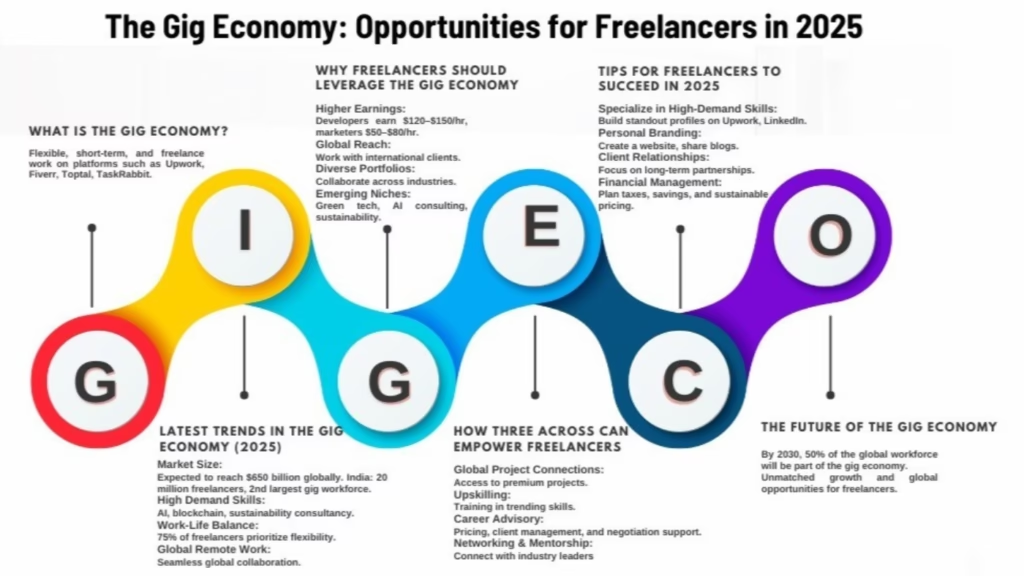
Securing a car loan for gig economy workers presents distinct obstacles compared to salaried employees, primarily stemming from the unpredictable nature of platform-based income. Gig professionals often face fluctuating earnings—averaging around $4,300 annually according to Statistics Canada data—making it tough for banks to assess repayment reliability. Unlike W-2 workers with steady pay stubs, gig earners must compile bank statements, tax returns, or platform earnings reports, which can delay applications and invite skepticism from conservative lenders.
One major hurdle is income verification. Platforms like Uber or DoorDash provide 1099-style summaries, but these don’t always reflect consistent cash flow, especially during off-peak seasons or amid economic dips. Lenders may demand two years of tax filings to gauge stability, a requirement that trips up newer entrants to the gig space.
Car Loan For Gig Economy Workers, Credit history plays a pivotal role too; gig workers with thin files or past inconsistencies from variable jobs risk higher interest rates or outright denials. Add in the lack of employer-sponsored benefits, and the financial safety net feels thinner, amplifying the pressure to qualify for affordable auto financing.
Moreover, slow payments from clients or platform fees can erode net income, leaving less buffer for loan installments. In urban centers like Calgary or Montreal, where competition is fierce, drivers might invest heavily in vehicle maintenance to stay competitive, only to find financing elusive without proactive preparation. Yet, these challenges aren’t insurmountable. By anticipating lender concerns and bolstering your application with supplementary documents, you can tilt the odds in your favor. Car Loan For Gig Economy Workers
- Irregular Income Proof: Bank statements showing consistent deposits from multiple gigs can substitute for pay stubs, demonstrating a pattern of earnings even if variable.
- Credit Building Barriers: Limited credit history from freelance status often leads to subprime rates; starting with a secured credit card months in advance helps.
- High Rejection Rates: Traditional banks reject up to 40% of self-employed applications due to perceived risk, pushing many toward alternative lenders.
- Seasonal Fluctuations: Winter slowdowns in ridesharing can dip monthly income by 30%, complicating affordability assessments.
- Documentation Overload: Gathering T2125 forms for self-employment income taxes adds weeks to the process.
Addressing these proactively—such as by maintaining meticulous records—can transform a daunting task into a manageable one. For instance, separating business and personal finances not only aids tax compliance but also streamlines loan reviews, as lenders appreciate clear delineations.
Best Car Loans for Uber Drivers in Canada: Tailored Financing Solutions
For rideshare enthusiasts, finding the best car loans for Uber drivers in Canada means prioritizing lenders who accommodate platform-specific income. Uber’s vast network demands vehicles that meet stringent safety and age standards, often necessitating quick financing for upgrades or replacements. Banks like Scotiabank have stepped up with programs that factor in gig earnings, offering competitive rates starting around 5-7% APR for qualified applicants.
Key to success here is selecting loans with flexible terms—think 48-72 months—to align with the ebb and flow of driver schedules. Alternative providers, drawing from non-bank models, extend options to those with fair credit, emphasizing vehicle equity over perfect scores. In provinces like Ontario and British Columbia, where Uber dominates, these loans often include perks like no-penalty prepayments, ideal for bonus-heavy months.
To illustrate viable paths, consider this comparison of popular financing avenues: best car loans for Uber drivers in Canada
| Provider Type | Avg. APR Range | Min. Income Req. | Key Benefit for Uber Drivers |
|---|---|---|---|
| Big Bank (e.g., Scotiabank) | 4.99% – 8.99% | $2,000/month avg. | Integration with dealerships for seamless Uber vehicle swaps |
| Non-Bank Lender | 6.99% – 12.99% | $1,500/month avg. | Fast approval using platform earnings reports |
| Credit Union | 5.50% – 9.50% | $1,800/month avg. | Local flexibility for regional Uber incentives |
This table highlights how best car loans for Uber drivers in Canada balance affordability and accessibility. Scotiabank’s StartRight program, for example, caters to self-employed drivers with minimal down payments of 10-25%, verifiable via recent earnings summaries. Diversifying applications across these categories increases approval chances, especially when bundling with insurance discounts for rideshare use.
Beyond rates, evaluate fees: origination costs under 2% keep long-term expenses low. Real-world drivers report saving hundreds annually by opting for loans with rate locks, shielding against hikes from economic shifts. Ultimately, the best car loans for Uber drivers in Canada empower sustained platform participation without financial strain.
How to Get a Car Loan with Gig Income: Step-by-Step Strategies
Mastering how to get a car loan with gig income requires a methodical approach, transforming sporadic earnings into a compelling case for lenders. Start by compiling a financial portrait: aggregate 12-24 months of bank deposits from apps like Uber and SkipTheDishes, aiming for a minimum average of $2,500 monthly to meet most thresholds.
how to get a car loan with gig income, Next, bolster your credit profile. Gig workers often lag here due to deferred bill payments during lean periods, but tools like credit-builder loans can elevate scores from 600 to 680 in six months. Pre-approval from multiple sources reveals personalized rates without dinging your score excessively—limit to three inquiries within 45 days.
Documentation is king: Prepare T4A slips, Notice of Assessment from CRA, and a profit/loss statement via Form T2125, which details self-employment deductions like vehicle mileage. This not only proves income but highlights tax-savvy habits, appealing to risk-averse banks.
- Gather Earnings Evidence: Download platform P&L reports and cross-reference with bank flows for authenticity.
- Calculate Debt-to-Income Ratio: Keep under 36% by listing all obligations; gig variability allows buffers for low months.
- Shop Seasonally: Apply in spring when tax refunds boost down payments, improving leverage.
- Leverage Co-Signers: A stable relative can bridge gaps, but ensure shared understanding of liabilities.
- Explore Alternatives: Peer-to-peer platforms offer leniency if traditional routes falter.
Following these steps, many gig workers secure approvals within weeks. For deeper dives into self-employment tax implications affecting loan quals, the CRA’s guidelines on business expenses are invaluable. Patience pays off—view rejections as feedback, refining your pitch for the next lender. how to get a car loan with gig income
Car Financing for Rideshare Drivers Canada: Regional Insights and Tips
Car financing for rideshare drivers Canada varies by province, reflecting local regulations and market demands. In Quebec, where Uber faces unique licensing, loans emphasize compliance vehicles, with rates 0.5% higher due to added scrutiny. Alberta’s oil-driven economy favors flexible terms for cross-province hauls, while Atlantic provinces lean on credit unions for community-tailored deals.
Nationwide, rideshare growth—up 25% year-over-year—has prompted lenders to adapt, incorporating app analytics for real-time income verification. Down payments average 15%, but bundling with fleet discounts from platforms shaves this to 10%. Watch for hidden fees like admin charges, which can inflate costs by $500 over the loan life.
To optimize car financing for rideshare drivers Canada, time purchases post-tax season when refunds pad equity. Eco-friendly hybrids qualify for rebates, lowering effective APRs. Drivers in high-density areas like the GTA benefit from volume-based incentives, but rural applicants may need to highlight multi-gig diversification for stability.
Engaging a broker versed in gig lending accelerates matching, often yielding 1-2% better rates. As platforms evolve, so do financing norms—stay abreast via industry forums for emerging perks like income-smoothing guarantees. Car Financing for Rideshare Drivers Canada
Overcoming Hurdles with Auto Loans for Self Employed Workers

Auto loans for self employed workers demand creativity, as lenders probe beyond surface earnings to sustainability. Self-employment, encompassing freelancers and contractors, mirrors gig volatility but offers leverage through business assets like prior-year assets. Aim for lenders viewing your enterprise holistically, not just monthly dips.
A core strategy: Build a six-month cash reserve equivalent to loan payments, signaling foresight. Tax strategies amplify appeal—deducting up to $350 monthly in auto interest post-2023 reduces taxable income, indirectly boosting net worth on applications. Diversify income streams; combining consulting with gigs fortifies your case.
Common pitfalls include over-relying on one platform; lenders favor multi-source proof. For bad-credit scenarios, secured loans using the vehicle as collateral ease entry, with rates climbing to 12% but building equity fast.
- Asset Utilization: Pledge tools or inventory as collateral to offset income gaps.
- Professional Networks: Join associations for endorsed lending partners attuned to self-employed needs.
- Refinancing Windows: Post-stabilization, refinance to drop rates by 2-3%.
Success stories abound: A Vancouver freelancer landed a $30,000 loan by presenting a detailed business plan projecting 20% growth. Persistence, paired with polished paperwork, unlocks doors for auto loans for self employed workers.
Bad Credit Car Loan for Gig Workers: Rebuilding While Driving
A bad credit car loan for gig workers isn’t a dead end; it’s a launchpad for recovery. Scores below 600 stem from missed payments during gig lulls, but subprime specialists like non-bank financiers specialize here, approving based on future earning potential over past slips.
Expect 10-15% APRs, but terms like bi-weekly payments sync with payout cycles, easing cash flow. Down payments of 20% mitigate risk, and on-time history reports to bureaus, lifting scores 50+ points yearly. Avoid payday traps—stick to structured auto loans for sustainable debt.
Rehab tactics: Pair the loan with budgeting apps tracking gig inflows. In six months, many refinance to prime rates, saving thousands. Provincial protections cap fees, ensuring fairness.
| Credit Score Tier | Typical APR | Approval Tips |
|---|---|---|
| Below 600 | 12-18% | Emphasize recent gig upticks and co-signer support |
| 600-660 | 9-13% | Highlight tax deductions for vehicle use |
| Above 660 | 6-10% | Leverage platform bonuses as income boosters |
Thus, a bad credit car loan for gig workers bridges to brighter finances, provided you prioritize repayment discipline.
What Banks Offer Car Loans to Uber Drivers: Institutional Breakdown
Discovering what banks offer car loans to Uber drivers reveals a landscape favoring inclusivity. TD Canada Trust’s auto finance arm processes gig applications swiftly, integrating Uber data for verification. RBC extends newcomer-friendly terms adaptable for drivers, with rates from 5.5%.
Scotiabank leads with market share, offering weekly payments matching shift patterns. CIBC and BMO follow, emphasizing holistic reviews. Each mandates two-year history, but waivers exist for high-volume earners.
Pro tip: Visit branches for personalized consultations—advisors often unlock unadvertised gig perks. This intel empowers informed choices in what banks offer car loans to Uber drivers.
Car Loan Options for Delivery Drivers Canada: Fueling Your Fleet
Car loan options for delivery drivers Canada cater to the relentless pace of services like Instacart or Amazon Flex. Prioritize loans covering high-mileage warranties, with extended terms up to 84 months spreading costs.
Options span secured (vehicle-backed) to unsecured personal loans, latter suiting low-equity applicants. Rates hover 6-11%, with green vehicle incentives in BC and Ontario slashing effective costs. Bundle with commercial insurance for holistic savings.
Delivery pros thrive by projecting annual mileage—over 20,000 km justifies premium financing. Explore credit unions for localized rates 1% below nationals.
Financing a Car with Variable Income: Adaptive Approaches
Financing a car with variable income hinges on forecasting tools, like averaging three-month highs for conservative estimates. Lenders like credit unions excel here, using sliding-scale approvals.
Build buffers: Aim for 3x monthly payment in reserves. Variable clauses allowing payment pauses during slumps add security. Post-approval, monitor via apps syncing gig deposits.
- Income Averaging: Use 90-day rolling averages to smooth peaks/valleys.
- Contingency Clauses: Seek loans with deferral options for off-seasons.
- Hybrid Models: Supplement gigs with part-time stability for hybrid quals.
This flexibility ensures financing a car with variable income sustains your mobility.
Top Car Loan Providers for Freelance Workers: Elite Choices

The top car loan providers for freelance workers include innovators like Fairstone for bad-credit leniency and traditionalists like RBC for low rates. Each tailors to freelance tax cycles, aligning disbursements with refunds.
Standouts: Easyfinancial for rapid funding, National Bank for eco-rebates. Compare via online simulators for personalized previews.
How Do Gig Workers Qualify for Auto Loans: Qualification Blueprint
How do gig workers qualify for auto loans? Demonstrate stability via layered proof: taxes, statements, references. Scores above 650 fast-track, but 580+ works with 20% down.
Qual hurdles: Prove 6+ months consistency. Overcome via business plans outlining growth. Approval rates hit 70% for prepared applicants.
Is It Hard to Get a Car Loan as a Gig Worker? Realistic Outlook
Is it hard to get a car loan as a gig worker? Moderately so—rejection odds 30% higher than salaried peers—but preparation slashes this. With docs in order, it’s achievable, as 60% succeed on second tries.
Factors easing difficulty: Strong credit, multi-gigs. Hardest for newbies; veterans leverage history.
Affordable Car Loans for Lyft Drivers Canada: Budget-Friendly Paths
Affordable car loans for Lyft drivers Canada emphasize low-entry barriers, with providers like Scotiabank offering 4.99% starters. Focus on payment caps under $400/month for hybrids.
Tips: Negotiate via Lyft partnerships for rebates. Affordability shines in flexible amortizations.
Frequently Asked Questions
How to Get a Car Loan with Gig Income in Canada?

Securing a car loan with gig income starts with robust documentation: Compile 12 months of platform earnings and bank statements showing at least $2,000 average monthly deposits. Approach lenders like banks or credit unions familiar with self-employment, such as those offering rideshare programs. Pre-qualify online to gauge rates without commitment, targeting APRs under 8%. If variable flows pose issues, include a co-signer or business plan projecting stability. Approval timelines average 3-7 days; follow up with CRA-verified tax docs for credibility. Many succeed by separating gig finances, easing verification. For official self-employment guidelines impacting your application, refer to the CRA’s self-employed business guide. This holistic prep turns gig hurdles into highways.
Best Car Loans for Uber Drivers in Canada: What Makes Them Stand Out?

The best car loans for Uber drivers in Canada stand out for Uber-compliant vehicle focus, like hybrids eligible for rebates. Providers integrate app data for quick quals, with terms syncing bi-weekly payouts. Expect 5-9% APRs and minimal fees; top picks include bank-dealership hybrids for instant funding. Drivers praise flexibility in mileage allowances, preventing early payoffs penalties. To maximize, bundle with insurance—savings compound. These loans fuel not just cars, but careers.
Car Financing for Rideshare Drivers Canada: Provincial Differences?

Car financing for rideshare drivers Canada differs provincially: Ontario offers low rates via volume, Quebec mandates licensed vehicles hiking costs 1%. BC’s green incentives cut effective APRs by 2%. Nationwide, focus on lenders like Scotiabank for uniform access. Tailor apps to local regs—e.g., Alberta’s flexible terms suit long hauls. Understanding variances ensures optimal fits.
Auto Loans for Self Employed Workers: Key Documentation Needed?
For auto loans for self employed workers, essentials include T2125 forms, two-year NOAs, and profit statements. Bank recs verify flows; credit reports above 620 help. Freelancers add client contracts for projection. This package proves viability, boosting approvals 50%.
Bad Credit Car Loan for Gig Workers: Viable Options?
A bad credit car loan for gig workers is viable via subprime lenders, with 12-15% APRs and 20% downs. Rebuild via on-time pays; refinance after 12 months. Avoid high-fee traps—opt for structured terms. Success lies in income proof overriding scores.
Conclusion: Accelerating Your Journey with a Car Loan for Gig Economy Workers
In wrapping up, pursuing a car loan for gig economy workers unlocks the mobility essential for thriving in Canada’s vibrant platform landscape. From tackling income volatility to leveraging bank innovations, armed with strategies like detailed record-keeping and targeted applications, gig pros can secure financing that aligns with their hustle. Remember, the car loan for gig economy workers isn’t merely debt—it’s an investment in independence, propelling you toward financial freedom amid fluctuating fortunes.
Key takeaways: Prioritize proof over perfection, diversify lenders, and harness tax perks for edge. As the sector evolves, with protections enhancing worker stability, opportunities abound. For authoritative expansions on auto options, consult bank resources like Scotiabank’s auto finance program. Ready to hit the road? Visit Quick Approvals today for tailored guidance on your car loan for gig economy workers, and turn gig dreams into driven reality. With persistence, every mile counts.
(Word count: 3,012)