

Car Loans for Small Business Owners in Canada, In the fast-paced world of small business, reliable transportation can be a game-changer. For many Canadian entrepreneurs, a vehicle is essential for delivering goods, meeting clients, or providing mobile services. A Car Loans for Small Business Owners in Canada offers a practical way to finance a vehicle while preserving cash flow and potentially unlocking tax benefits. This guide explores the ins and outs of business car loans, including types of financing, eligibility, government support, and tips for securing the best deal. Whether you’re a sole proprietor or running a corporation, this article will help you navigate your options.
For personalized financing solutions, check out quickapprovals.ca.
Understanding Business Car Loans
A Car Loans for Small Business Owners in Canada is a financing product tailored for businesses to purchase or lease vehicles used primarily for business purposes. Unlike personal car loans, these loans cater to the unique needs of businesses, offering features like higher loan amounts, longer repayment terms, and tax advantages. They also help separate business and personal expenses, simplifying accounting and tax reporting.
Benefits of Business Car Loans
- Tax Deductions: Interest, depreciation, and operating expenses (e.g., fuel, maintenance) may be deductible if the vehicle is used for business.
- Flexible Terms: Lenders often provide repayment periods up to 8 years, easing cash flow management.
- Higher Loan Amounts: Businesses can access larger loans, sometimes up to $1 million, depending on the lender.
- Simplified Accounting: A dedicated business loan keeps financial records clear, avoiding the mixing of personal and business expenses.
Types of Car Financing Options for Small Business Owners in Canada
Choosing the right financing option depends on your business’s goals, cash flow, and whether you want to own or lease the vehicle. Below are the main types of car financing options for small business owners in Canada:
1. Hire Purchase (HP)
- Description: You pay installments over a fixed period, owning the vehicle outright at the end.
- Pros: Ownership at term’s end, predictable payments.
- Cons: Higher monthly payments compared to leasing.
- Best For: Businesses aiming for long-term vehicle ownership.
2. Hire Purchase with Balloon
- Description: Similar to HP but with a large final “balloon” payment, reducing monthly costs.
- Pros: Lower monthly payments, flexibility to refinance or trade in.
- Cons: Large final payment requires planning.
- Best For: Businesses expecting future cash flow to cover the balloon payment.
3. Sale and Leaseback
- Description: Sell your vehicle to a financier and lease it back, freeing up capital.
- Pros: Immediate cash flow, continued vehicle use.
- Cons: Ongoing lease payments, no ownership.
- Best For: Businesses needing quick capital without losing vehicle access.
4. Finance Lease
- Description: Lease the vehicle for a fixed period, returning it at the end without ownership.
- Pros: Lower upfront costs, flexibility to upgrade.
- Cons: No ownership, potential mileage restrictions.
- Best For: Businesses wanting to avoid long-term commitment.
5. Operating Lease
- Description: A lease that often includes maintenance and services, typically for shorter terms.
- Pros: Predictable costs, maintenance included.
- Cons: No ownership, potential penalties for excess mileage.
- Best For: Businesses seeking hassle-free vehicle use.
6. Contract Hire
- Description: Rent the vehicle for a fixed period, often with additional services like insurance.
- Pros: Predictable costs, tax-efficient for some businesses.
- Cons: No ownership, strict terms.
- Best For: Businesses prioritizing cost certainty and flexibility.
Each option impacts cash flow, taxes, and ownership differently, so evaluate your business’s needs carefully.
Eligibility and Requirements for Car Loans for Small Business Owners in Canada
To secure a Car Loans for Small Business Owners in Canada, lenders typically require:
- Business Registration: Proof of incorporation, partnership, or sole proprietorship.
- Financial Statements: Balance sheet, income statement, and cashflow forecast.
- Bank Statements: Last 6 months of business bank statements.
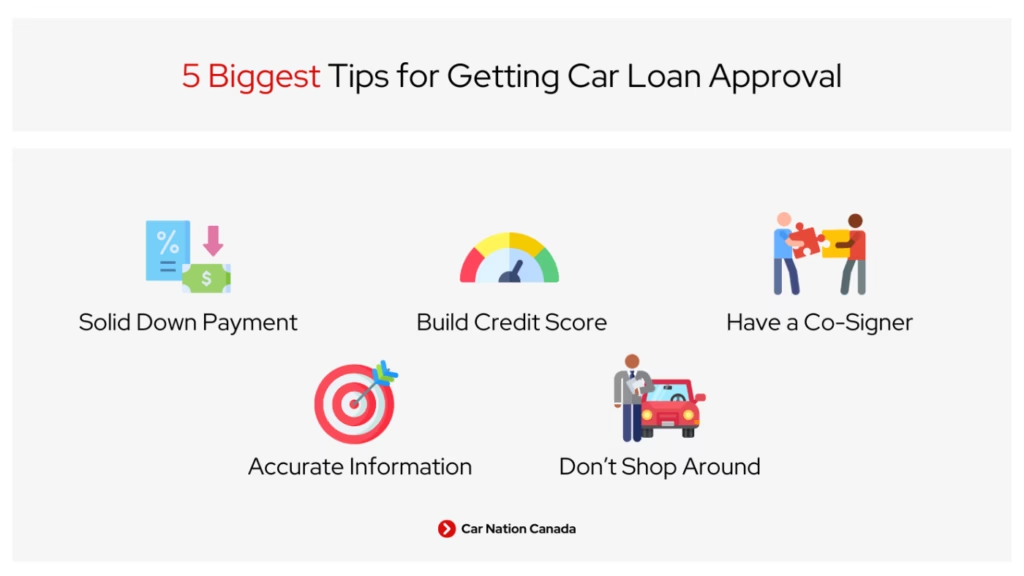
- Credit Score: A score above 700 is ideal, but options exist for how to finance a car with bad credit in Canada or how to get approved for a car loan with no credit in Canada.
- Personal Guarantee: May be required, especially for new businesses.
- Business Plan: A detailed plan showing revenue projections and vehicle use.
For businesses with limited credit history, a co-signer or larger down payment can improve approval chances. Lenders like Swoop CA may offer car financing for self-employed in Canada, accommodating sole proprietors with flexible requirements.
Government Support: Canada Small Business Financing Program (CSBFP)

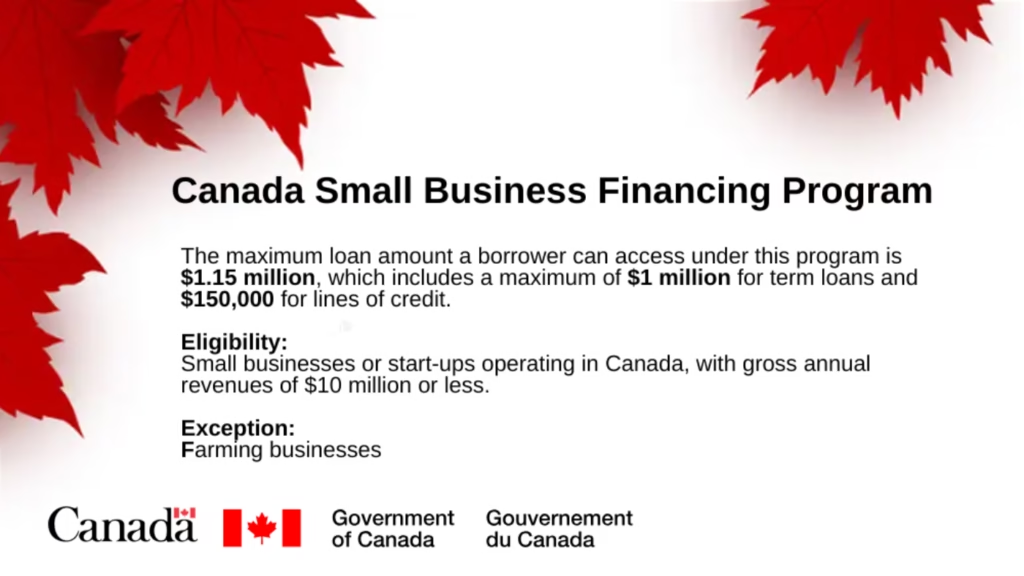
The Canada Small Business Financing Program (CSBFP) is a government-backed initiative that shares lending risk with financial institutions, making it easier for small businesses to secure loans. It’s an excellent option for financing business vehicles.
CSBFP Key Features
- Loan Amounts: Up to $1.15 million ($1 million for term loans, $350,000 for lines of credit).
- Eligible Uses: Purchasing equipment (including vehicles), leasehold improvements, or working capital.
- Terms: Up to 15 years for real property, 10 years for equipment.
- Interest Rates: Based on the lender’s prime rate plus a margin.
- Eligibility: Businesses with gross annual revenues of $10 million or less (excludes farming).
The CSBFP is offered through banks like TD, RBC, and CIBC, making it accessible for quick car loan approval for businesses in Canada.
Comparing Lenders for Best Car Loans for Small Business Owners in Canada
Choosing the right lender is critical for securing the best car loans for small business owners in Canada. Below is a comparison of major lenders:
| Lender | Loan Amount | Interest Rates | Terms | Special Features |
|---|---|---|---|---|
| TD Canada Trust | Up to $250,000 | Competitive fixed/variable | Up to 84 months | No down payment, flexible terms |
| RBC Royal Bank | Up to $750,000 | Competitive, special rates | Up to 96 months | No early payoff penalty, co-signer option |
| CIBC | Up to $1 million | Fixed or variable | Flexible | 100% financing, no prepayment charges |
| Swoop CA | Varies by type | As low as 3% | Varies | Fast car financing for small businesses in [City], Canada, 48-hour funding |
Each lender offers unique benefits, so compare based on your business’s financial situation and vehicle needs.
Application Process for Car Loans for Small Business Owners in Canada
Applying for a Car Loans for Small Business Owners in Canada involves several steps:
- Assess Needs: Determine the vehicle type and financing amount required.
- Check Credit: Review your personal and business credit scores. For how to finance a car with bad credit in Canada, consider alternative lenders or co-signers.
- Gather Documents: Prepare what to bring when applying for car financing in Canada, including business registration, financial statements, and bank statements.
- Research Lenders: Explore banks, government programs, and alternative lenders like quickapprovals.ca.
- Seek Pre-Approval: Get car loan pre-approval for small businesses near me in Canada to understand your borrowing capacity.
- Submit Application: Apply online or in-person with complete documentation.
- Review Offer: Negotiate terms if possible.
- Finalize Loan: Sign the agreement and receive funds.
Preparation and accurate documentation are key to securing quick car loan approval for businesses in Canada.
Tax Implications and Benefits
A Car Loans for Small Business Owners in Canada offers significant tax advantages:
- Interest Deductions: Loan interest is often deductible as a business expense.
- Depreciation (CCA): Claim Capital Cost Allowance on owned vehicles.
- Operating Expenses: Deduct fuel, maintenance, and insurance for business use.
- Electric Vehicle Incentives: Federal and provincial rebates (e.g., iZEV program) reduce costs for EVs.
- Benefits in Kind (BiK): Personal use of the vehicle may incur BiK tax, based on usage and vehicle value.
Consult a tax professional to maximize these benefits, especially for low interest car loans for businesses in Canada.
Choosing the Right Finance Option
Selecting the best car loans for small business owners in Canada depends on:
- Cash Flow: Leasing offers predictable payments, while HP suits stable cash flow.
- Ownership Goals: Choose HP for ownership, leasing for flexibility.
- Tax Strategy: Leasing may provide higher deductions, while ownership offers depreciation benefits.
- Credit Profile: Car financing for self-employed in Canada may require alternative lenders if credit is poor.
- Business Structure: Sole proprietors may face different requirements than corporations.
Evaluate these factors to align financing with your business goals.
Case Studies: Real-World Applications
Startup Delivery Service
John, a Toronto-based delivery service owner, needs a van but has no business credit. He opts for a hire purchase with a balloon payment from Swoop CA, securing fast car financing for small businesses in Toronto, Canada with manageable payments.
Established Construction Company
Mary’s construction firm, operating for 5 years, needs new trucks. She secures a CSBFP loan through TD Canada Trust, financing $250,000 with flexible terms.
Freelance Consultant
Sarah, a self-employed consultant, chooses an operating lease from RBC for its maintenance inclusion and tax benefits, ideal for car financing for self-employed in Canada.
Q&A: Common Questions About Car Loans for Small Business Owners in Canada
Q1: How to Finance a Car with Bad Credit in Canada?

A: Lenders like Swoop CA offer options for bad credit, often requiring higher deposits or interest rates. A co-signer or larger down payment can improve approval odds.
Q2: What to Bring When Applying for Car Financing in Canada?
A: Bring business registration, financial statements, bank statements, personal ID, and a vehicle quote. Check specific lender requirements for additional documents.
Q3: How to Get Approved for a Car Loan with No Credit in Canada?

A: Provide a detailed business plan, financial projections, and consider a co-signer. Lenders like RBC allow co-signers for newer businesses.
Q4: Where to Get Car Loan Pre-Approval for Small Businesses Near Me in Canada?
A: Banks like TD and RBC offer pre-approval, as do alternative lenders like quickapprovals.ca, which can streamline the process.
Q5: What Are the Best Car Financing Options for Small Business Owners in Canada?
A: Options include bank loans (TD, RBC, CIBC), CSBFP loans, and alternative financing from Swoop CA. Compare based on rates, terms, and business needs.
Conclusion
Securing a Car Loans for Small Business Owners in Canada is a strategic move to enhance your business’s mobility and efficiency. With options ranging from bank loans to government-backed programs like the CSBFP and alternative lenders, there’s a solution for every business, whether you’re a startup or an established firm. By understanding financing types, preparing necessary documents, and leveraging tax benefits, you can make an informed decision that supports your business goals. For tailored financing solutions, visit quickapprovals.ca to explore your options and drive your business forward.