
Buying a vehicle is one of the largest financial commitments many Canadians make outside of purchasing a home. While most borrowers focus on securing a competitive interest rate and affordable monthly payment, few fully understand how their loan balance declines over time. This lack of understanding can lead to higher borrowing costs, longer repayment periods, and missed opportunities to save money.
A car loan amortization calculator Canada helps borrowers see exactly how each payment is applied throughout the life of the loan. Instead of viewing auto financing as a simple monthly obligation, Canadians can gain a detailed understanding of principal reduction, interest charges, payoff timelines, and the financial impact of making additional payments.
Whether you are financing a new vehicle, refinancing an existing loan, or planning to become debt-free faster, understanding loan amortization can help you make smarter financial decisions. This guide explains how auto loan amortization works in Canada, how to interpret payment schedules, how extra payments affect loan costs, and how borrowers can use amortization data to save thousands of dollars over the life of a vehicle loan.
What Is a Car Loan Amortization Calculator Canada?
A car loan amortization calculator Canada is a financial tool that breaks down every payment made on an auto loan over the entire repayment period. Rather than simply displaying a monthly payment amount, the calculator provides detailed insights into how much of each payment goes toward principal and how much goes toward interest.
Most Canadian vehicle loans follow an amortized repayment structure. This means each scheduled payment includes both interest charges and principal repayment. During the early stages of the loan, a larger portion of the payment is allocated toward interest. As the loan balance decreases, more of each payment is applied toward reducing the principal balance.
Using an amortization calculator provides transparency into the true cost of borrowing. It allows consumers to understand exactly when they will become debt-free, how much interest they will pay overall, and how different loan terms affect total financing costs.
For borrowers comparing financing offers from dealerships, banks, credit unions, and alternative lenders, an amortization calculator serves as an essential decision-making tool. car loan amortization calculator Canada
Understanding an Auto Loan Payoff Schedule Canada
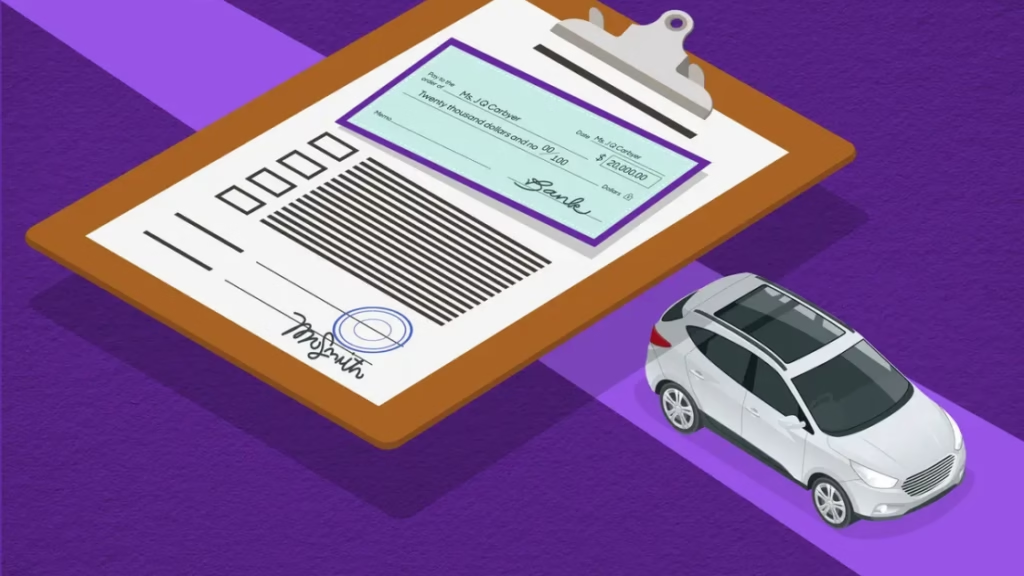
An auto loan payoff schedule Canada outlines every payment required to fully repay a vehicle loan. The schedule typically includes:
| Payment Component | Description |
|---|---|
| Payment Number | Sequence of payments throughout the loan |
| Payment Date | Scheduled payment timing |
| Principal Portion | Amount reducing the loan balance |
| Interest Portion | Cost of borrowing |
| Remaining Balance | Outstanding amount after payment |
| Total Interest Paid | Cumulative interest paid to date |
A payoff schedule allows borrowers to track progress and evaluate repayment strategies more effectively. It also helps identify opportunities to reduce interest expenses through accelerated repayment plans.
For example, a borrower financing $35,000 over 72 months can clearly see how the outstanding balance declines with every monthly payment and estimate when positive equity begins building in the vehicle. Auto Loan Payoff Schedule Canada
How Monthly Interest Breakdown Canada Works
One of the most valuable features of an amortization calculator is the monthly interest breakdown Canada function. This breakdown reveals the exact interest charge applied during each payment period.
Interest is generally calculated using the remaining principal balance. Since the balance is highest at the beginning of the loan, interest charges are also highest during the initial repayment period.
Consider the following simplified example: Monthly Interest Breakdown Canada
| Month | Payment | Principal | Interest | Balance |
|---|---|---|---|---|
| 1 | $620 | $420 | $200 | $34,580 |
| 12 | $620 | $450 | $170 | $29,350 |
| 24 | $620 | $490 | $130 | $23,700 |
| 48 | $620 | $560 | $60 | $10,400 |
| 72 | $620 | $615 | $5 | $0 |
As the loan progresses, interest charges decrease while principal repayment increases. This shift accelerates balance reduction and improves borrower equity.
Understanding this process helps borrowers recognize why early extra payments can generate substantial savings. Monthly Interest Breakdown Canada
Understanding an Amortization Table Car Loans Canada
An amortization table car loans Canada provides a complete payment-by-payment breakdown of an auto financing agreement.
The table generally includes: Amortization Table Car Loans Canada
Loan Details
- Vehicle financing amount
- Interest rate
- Loan term
- Payment frequency
- Total repayment amount
Payment Analysis
- Principal reduction
- Interest expense
- Remaining balance
- Total accumulated interest
Financial Forecasting
- Expected payoff date
- Total financing costs
- Potential savings from accelerated payments
An amortization table transforms a complex loan agreement into a clear and understandable repayment roadmap. This information empowers borrowers to make proactive decisions rather than simply making payments without understanding the underlying mechanics.
Step-by-Step Guide to Using a Car Loan Amortization Calculator Canada
Using an amortization calculator is straightforward, but accuracy is critical.
Step 1: Enter Loan Amount
Input the total amount financed after down payment, trade-in value, and applicable taxes have been accounted for.
Example:
- Vehicle price: $40,000
- Down payment: $5,000
- Loan amount: $35,000
Step 2: Enter Interest Rate
Use the annual percentage rate provided by the lender.
Examples include:
- Prime borrower: 4.99%–7.99%
- Near-prime borrower: 8.99%–14.99%
- Non-prime borrower: 15.99% and above
Step 3: Select Loan Term
Common Canadian auto loan terms include:
| Loan Term | Typical Use |
|---|---|
| 36 Months | Lower total interest |
| 48 Months | Balanced option |
| 60 Months | Popular financing term |
| 72 Months | Lower monthly payments |
| 84 Months | Maximum affordability focus |
Step 4: Review Payment Schedule
Analyze:
- Monthly payment
- Interest costs
- Principal reduction
- Loan payoff timeline
Step 5: Test Additional Payment Scenarios
Evaluate the impact of lump-sum payments or recurring extra contributions to reduce financing costs.
Eligibility and Requirements for Canadian Auto Financing

Understanding loan eligibility is essential before using amortization projections.
Income Requirements
Most lenders require:
- Stable employment
- Consistent income source
- Ability to support monthly payments
Acceptable income may include:
- Employment earnings
- Self-employment income
- Pension income
- Disability benefits
- Government benefits in certain cases
Credit Requirements
Canadian lenders generally categorize borrowers as:
| Category | Credit Profile |
|---|---|
| Prime | Strong credit history |
| Near Prime | Moderate credit challenges |
| Non-Prime | Limited or damaged credit |
| New Credit | Little credit history |
Documentation Requirements
Common documents include:
- Government-issued identification
- Proof of income
- Proof of address
- Banking information
- Driver’s license
Meeting lender requirements improves financing options and may result in lower borrowing costs.
Interest Rates and Cost Breakdown
The following example demonstrates how financing costs can vary based on interest rates.
Example: $35,000 Vehicle Loan for 72 Months
| Interest Rate | Monthly Payment | Total Interest | Total Cost |
|---|---|---|---|
| 4.99% | $563 | $5,536 | $40,536 |
| 7.99% | $614 | $9,208 | $44,208 |
| 11.99% | $682 | $14,104 | $49,104 |
| 17.99% | $798 | $22,456 | $57,456 |
The table illustrates how even small changes in interest rates can significantly affect overall borrowing costs. Borrowers should evaluate total loan costs rather than focusing solely on monthly affordability.
Using an Extra Payment Impact Calculator Canada
An extra payment impact calculator Canada helps borrowers understand how accelerated payments affect their loan.
Even modest additional contributions can generate significant savings.
Example Scenario
Original Loan:
- Balance: $35,000
- Rate: 7.99%
- Term: 72 Months
Additional Payment:
- Extra $100 monthly
Potential Benefits: Extra Payment Impact Calculator Canada
| Metric | Standard Loan | With Extra Payments |
|---|---|---|
| Payoff Time | 72 Months | Approximately 59 Months |
| Interest Paid | Higher | Significantly Lower |
| Debt-Free Date | Later | Earlier |
Because extra payments directly reduce principal, future interest charges are calculated on a smaller balance.
This strategy can shorten repayment periods by months or even years.
Canadian Case Study: First-Time Vehicle Buyer
Sarah from Ontario purchased a used SUV and financed $28,000 over 72 months.
Initially, she focused only on achieving a manageable monthly payment. After reviewing her amortization schedule, she discovered she would pay thousands of dollars in interest throughout the loan term.
By making bi-weekly accelerated payments and occasionally adding extra principal payments when receiving work bonuses, she reduced her repayment timeline substantially.
The result was a faster payoff date, lower overall financing costs, and improved financial flexibility.
This example highlights why understanding amortization can have a meaningful impact on long-term financial outcomes.
Canadian Case Study: Borrower Improving Credit
Michael obtained vehicle financing after recovering from previous credit difficulties.
His loan carried a higher interest rate because of his credit profile. After two years of consistent payments, he reviewed his amortization schedule and realized a large balance remained despite making regular payments.
He improved his credit score, refinanced the remaining balance at a lower rate, and reduced total interest costs significantly.
Analyzing amortization data allowed him to identify an opportunity that saved money while shortening the remaining repayment period.
Comparing Financing Sources in Canada
Banks vs Credit Unions vs Alternative Lenders
| Feature | Banks | Credit Unions | Alternative Lenders |
|---|---|---|---|
| Interest Rates | Competitive | Competitive | Higher Risk-Based Rates |
| Credit Flexibility | Moderate | Moderate | High |
| Approval Speed | Moderate | Moderate | Fast |
| Income Flexibility | Limited | Moderate | Flexible |
| Credit Challenges Accepted | Sometimes | Sometimes | Frequently |
| Refinancing Options | Available | Available | Available |
The ideal lender depends on credit profile, income stability, vehicle type, and financing goals.
Expert Approval Acceleration Tips
Borrowers seeking vehicle financing can improve approval odds by following several best practices.
Increase Down Payment
A larger down payment lowers lender risk and reduces the amount financed.
Improve Debt Ratios
Reducing existing obligations can strengthen affordability calculations.
Verify Credit Reports
Reviewing credit information before applying helps identify potential inaccuracies.
Maintain Stable Employment
Lenders generally favor borrowers with consistent employment histories.
Consider Co-Applicants
A stronger co-borrower may improve financing options and interest rates.
Choose Affordable Vehicles
Financing within budget reduces approval challenges and lowers repayment stress.
Critical Mistakes to Avoid

Focusing Only on Monthly Payments
A lower payment often means a longer term and higher total interest costs.
Ignoring the Amortization Schedule
Without reviewing repayment details, borrowers may miss opportunities to save money.
Skipping Extra Payments
Even small additional contributions can significantly reduce interest expenses.
Financing Beyond Budget
Stretching affordability increases financial risk and potential payment difficulties.
Neglecting Refinancing Opportunities
Improved credit profiles may qualify borrowers for better rates later.
Choosing the Longest Possible Term
Extended financing periods typically increase total borrowing costs.
Frequently Asked Questions
What does a car loan amortization calculator show?

A car loan amortization calculator displays every scheduled payment throughout the loan term. It shows how much goes toward principal, how much goes toward interest, and how the remaining balance decreases over time. This information helps borrowers understand the true cost of financing and plan repayment strategies effectively.
Why is an auto loan payoff schedule important?

An auto loan payoff schedule provides complete transparency into the repayment process. Borrowers can track loan progress, estimate future balances, identify opportunities for early repayment, and make informed financial decisions regarding refinancing or additional payments.
How does a monthly interest breakdown help borrowers?

A monthly interest breakdown reveals how interest charges change over time. Because interest is typically higher at the beginning of a loan, understanding this pattern helps borrowers recognize the value of making extra principal payments early in the repayment cycle.
Can extra payments reduce total interest costs?
Yes. Extra payments reduce the outstanding principal balance faster than scheduled. Since future interest charges are calculated on a smaller balance, borrowers often save substantial amounts over the life of the loan and reach payoff sooner.
Is a longer loan term always better?
Not necessarily. Longer terms generally reduce monthly payments but increase total interest expenses. Borrowers should balance affordability with overall borrowing costs when selecting a repayment period.
Can I refinance my auto loan later?
Many Canadian borrowers refinance after improving their credit profile or when interest rates become more favorable. Refinancing can lower monthly payments, reduce interest expenses, or shorten the remaining loan term.
How often should I review my amortization table?
Reviewing your amortization table at least annually is a good practice. It allows you to monitor progress, evaluate refinancing opportunities, and determine whether additional payments could accelerate debt repayment.
Who benefits most from an amortization calculator?
Any borrower financing a vehicle can benefit. First-time buyers, borrowers rebuilding credit, individuals considering refinancing, and consumers seeking to reduce interest costs can all use amortization data to make more informed decisions.
Conclusion
Understanding your vehicle financing is just as important as choosing the right vehicle. A car loan amortization calculator Canada provides valuable insight into repayment schedules, interest costs, payoff timelines, and long-term borrowing expenses. By reviewing an auto loan payoff schedule Canada, analyzing a monthly interest breakdown Canada, studying an amortization table car loans Canada, and using an extra payment impact calculator Canada, borrowers can make smarter financial decisions and potentially save thousands of dollars.
Before signing any financing agreement, take time to evaluate the complete repayment picture—not just the monthly payment. A clear understanding of amortization can help you reduce debt faster, improve financial stability, and gain greater control over your vehicle financing journey.
If you’re exploring vehicle financing options in Canada, compare loan structures carefully, review amortization schedules thoroughly, and choose a repayment strategy that supports both your budget and long-term financial goals.
Suggested Internal Links for quickapprovals.ca
- https://quickapprovals.ca/car-loan-pre-approval-guide-canada/
- https://quickapprovals.ca/how-auto-financing-interest-rates-work-in-canada/
- https://quickapprovals.ca/vehicle-loan-refinancing-strategies-canada/
- https://quickapprovals.ca/bad-credit-car-loan-approval-tips-canada/
- https://quickapprovals.ca/understanding-car-loan-terms-and-repayment-options/
- https://quickapprovals.ca/calculate-total-cost-of-auto-financing-canada/